
travel · 12min read · 2026-03-23
Sake Brewery Tours in Japan: A Complete Guide to Tasting, Regions, and Etiquette
Plan your sake brewery tour across Japan's top regions — Niigata, Fushimi, Nada, Saijo, and Yamagata. Tasting tips, etiquette, and seasonal advice included.
Key Takeaways
- Japan has over 900 active sake breweries spread across nearly every prefecture
- Niigata, Fushimi, Nada, Saijo, and Yamagata are the five major sake regions
- Multiple parallel fermentation is unique to sake and produces 15-20% alcohol
- Brewery visits during January to March offer peak brewing season access
- Understanding seimaibuai polishing ratio and koji transforms the tasting experience
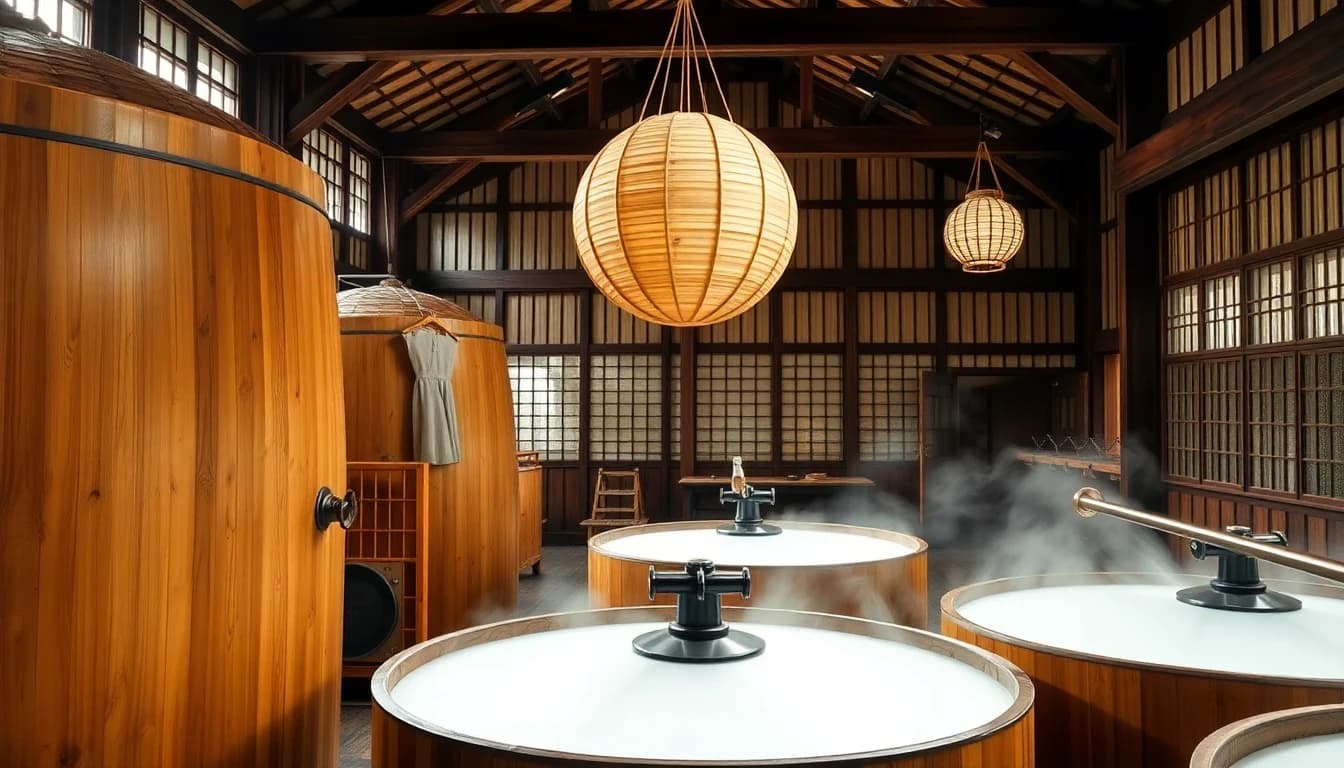
The first thing that strikes visitors at a Niigata brewery is not the taste. It is the smell. Cold, mineral air laced with fermenting rice -- a scent that no bottle, no restaurant, no sommelier's description has ever conveyed. Standing inside a centuries-old kura in January, watching breath mix with the steam rising from a wooden vat, it becomes clear why the Japanese call sake "the drink of the gods."
Japan has over 900 active sake breweries spread across nearly every prefecture (Source: Sakura Sake Ten Export Data). Many of them open their doors to visitors — some with polished English tours, others with nothing but a hand-drawn map and a smiling toji (master brewer) who will pour you something you cannot buy anywhere else.
This guide covers everything you need to plan a sake brewery tour: what sake actually is, where to go, how to behave, what to taste, and when to visit.
What Is Sake? The Basics Before You Visit
Understanding a few fundamentals transforms a brewery visit from pleasant tourism into genuine education. You do not need to be an expert. But knowing these terms lets you ask better questions — and the brewers love good questions.
Sake is not rice wine. The brewing process is closer to beer — starch is converted to sugar, then fermented. But unlike beer, both conversions happen simultaneously in the same tank. This "multiple parallel fermentation" is unique to sake and produces alcohol levels of 15-20%, far higher than wine or beer without distillation.
Key Terms Worth Knowing
- Seimaibuai (polishing ratio) — The percentage of rice grain remaining after polishing. Lower numbers mean more polishing. Daiginjo sake uses rice polished to 50% or less, removing proteins and fats that create rough flavors
- Nihonshu-do (sake meter value) — Measures sweetness versus dryness on a scale. Positive numbers indicate drier sake, negative numbers sweeter. A +3 is moderately dry, while a -2 leans sweet
- Koji — A mold (Aspergillus oryzae) sprinkled onto steamed rice to convert starch into fermentable sugar. This is the heart of sake brewing, and the koji room is often the most closely guarded space in any brewery
- Toji — The master brewer. Historically, toji came from specific regional guilds, each with distinct techniques. Today some breweries have young, university-trained toji who blend tradition with science
- Junmai — "Pure rice." Sake made with only rice, water, koji, and yeast — no added alcohol. The label distinction between junmai and non-junmai (honjozo) is the first fork in any tasting
The Four Major Sake Categories
- Junmai — Full-bodied, rice-forward. Best served slightly warm. Pairs well with hearty dishes
- Ginjo / Junmai Ginjo — Polished to 60% or less. Fruity, aromatic. Serve chilled. Lighter cuisine
- Daiginjo / Junmai Daiginjo — Polished to 50% or less. The pinnacle of refinement. Delicate, complex. Always chilled
- Honjozo — A small amount of brewer's alcohol added. Light, clean, versatile. Good warm or chilled
Brewery Visit Etiquette: What Every Visitor Must Know
Japanese breweries are working facilities, not theme parks. Your behavior directly affects the sake being made. Follow these rules and you will be welcomed warmly.
What to wear: Comfortable walking shoes with good grip — brewery floors can be wet and cold. Layers are essential: the koji room may be 35 degrees Celsius while the fermentation hall hovers near freezing. Leave heavy coats and bags at the entrance if asked.
Japan's Five Great Sake Regions
Each region produces sake shaped by its water, rice, climate, and centuries of local technique. Visiting even two or three of these areas will give you a genuine understanding of how geography becomes flavor.
1. Niigata — The Snow Country Capital
Niigata is the emotional heart of Japanese sake. The prefecture has 85 active breweries — more than any other in Japan (Source: Sakura Sake Ten). Heavy snowfall insulates fermentation cellars naturally, and the soft, mineral-poor water produces sake that is clean, dry, and famously smooth.
Why visit: Niigata sake is tanrei karakuchi — "light and dry." If you have only tasted warm, heavy sake at a sushi restaurant abroad, Niigata will rewrite your expectations. The regional style is precision, not power.
Must-visit breweries:
- Imayo Tsukasa (Niigata City) — Founded over 250 years ago when Niigata was a major port on Japan's kitamaebune shipping route. The guided tour lasts about 30 minutes and takes you through a brewing hall where three distinct styles of fermentation tanks — wooden, enamel, and stainless steel — still operate side by side. Paid English tours run once daily on weekdays. The premium tasting (1,000 yen / ~$7) lets you sample nearly the entire range (Source: Japan Travel)
- Ponshukan (Echigo-Yuzawa Station) — Not a brewery but an essential stop. Pay 500 yen for a tasting cup and five tokens, then sample from over 100 Niigata sakes dispensed from vending-style machines. It is the fastest education in regional variety you will find anywhere (Source: Japan Guide)
- Kikusui Sake (Shibata City) — Known for their Funaguchi nama-zake (unpasteurized), which arrives in distinctive gold cans. The brewery museum is free and the surrounding rice paddies are beautiful in autumn
Access: Niigata City is 2 hours from Tokyo by Joetsu Shinkansen. Echigo-Yuzawa is just 70 minutes
Best season: January through March. Brewing season is in full swing, the air is thick with fermentation aromas, and fresh shinshu (new sake) is available only at the source
Insider move: Many Niigata breweries release limited "shizuku" (drip-pressed) sake only in winter, never bottled for retail. Ask the toji what is available "kura dake" (brewery-only). The worst they can say is no.
2. Kyoto Fushimi — The Refined Classic
Fushimi sits on some of the purest underground water in Japan. Where Niigata's soft water creates clean dryness, Fushimi's medium-soft water produces sake described as "feminine" — round, smooth, gently sweet. The district has over 20 breweries clustered along canal-lined streets (Source: Kyoto Insider Sake Experience).
Why visit: Fushimi is the most accessible sake district in Japan. You can walk between breweries, eat lunch at a brewery restaurant, and return to central Kyoto in 20 minutes. For visitors already in Kyoto, there is no excuse not to go.
Must-visit breweries:
- Gekkeikan Okura Sake Museum — One of Japan's oldest sake brands, founded in 1637. The museum occupies a renovated Meiji-era brewery with English exhibits tracing the full brewing process. Admission is approximately 600 yen (~$4), and includes a tasting of three varieties (Source: Kyoto Insider Sake Experience)
- Kizakura Kappa Country — Brewery, restaurant, and museum combined. Their nama-zake (unpasteurized draft sake) is available only here — you will not find it bottled in shops
- Torisei Honten — A yakitori restaurant inside a working brewery. Grilled chicken paired with the house sake, brewed steps away, is one of Kyoto's best-kept dining secrets
Access: Keihan Line to Chushojima or Fushimi-Momoyama Station from central Kyoto, approximately 15 minutes
Best season: January through March for brewing season. October and November for new sake releases. For a broader guide to Fushimi and other Kyoto craft districts, see our Kyoto Artisan Walks Guide
3. Nada (Kobe, Hyogo) — The Production Powerhouse
Nada is to sake what Bordeaux is to wine: the undisputed capital of volume and tradition. The "Nada-Gogo" (Five Villages of Nada) produce roughly 25% of all sake in Japan — a staggering concentration. The secret is miyamizu, a naturally hard mineral water discovered in the 1840s that produces bold, structured sake (Source: Hyogo Sake Guide).
Why visit: Nada sake is otoko-zake — "masculine sake." Rich, firm, built for food pairing. The contrast with Fushimi (just an hour away by train) is a masterclass in how water shapes flavor.
Must-visit breweries:
- Hakutsuru Sake Brewery Museum — A renovated 1910s brewery with life-size figures re-enacting traditional brewing processes. Free admission. The tasting room offers seasonal specials not available in stores (Source: TripAdvisor)
- Sawanotsuru Museum — Destroyed in the 1995 Great Hanshin Earthquake and painstakingly rebuilt in 1999. The museum's survival story mirrors Nada's resilience. Extremely detailed brewing exhibits with English signage (Source: Japan Guide)
- Kiku-Masamune Sake Brewing Museum — Focuses on the traditional kimoto brewing method, the oldest and most labor-intensive fermentation technique. Their kimoto junmai is a reference point for the style
Access: JR or Hanshin Line from Kobe-Sannomiya, approximately 15 minutes to the Nada brewery district. Also reachable from Osaka in about 40 minutes
Best season: Year-round. The museums are indoor-focused and well-maintained. February's Nada Sake Festival offers special events
4. Saijo (Hiroshima) — The Seven-Brewery Walk
Saijo is the most compact sake destination in Japan. Seven breweries sit within a 10-minute walk of JR Saijo Station, connected by the atmospheric "Sake Brewery Street" lined with white-walled kura buildings and distinctive red-brick chimneys (Source: VISIT Higashihiroshima).
Why visit: You can taste your way through seven distinct brewing philosophies in a single afternoon without transport. Hiroshima's soft water produces gentle, well-rounded sake — the ginjo style was essentially invented here.
Must-visit breweries:
- Kamotsuru Shuzo — Their "Tokusei Gold Kamotsuru Daiginjo" was served at the 2016 US-Japan summit. Premium tours explain why Hiroshima brewers pioneered the ginjo brewing technique
- Kirei Shuzo — Small, family-run, with a focus on organic and natural methods. Their tasting room feels like visiting someone's home
- Hakubotan Shuzo — Produces "Biho," a sake specifically designed to pair with Hiroshima oysters. If you visit during oyster season (October-March), this pairing is unforgettable
The guided 7-brewery tour runs every Monday and Friday, 1:00 PM to 3:00 PM, with an English-speaking guide. Advance reservation is available through Viator. If spots remain, day-of booking is possible before 9:00 AM (Source: VISIT Higashihiroshima).
Access: JR Sanyo Line from Hiroshima Station to Saijo Station, approximately 40 minutes
Best season: October is ideal — the annual Saijo Sake Matsuri (festival) draws over 200,000 visitors and offers unlimited tasting with a single ticket. Book accommodation months ahead
5. Yamagata — The Kingdom of Ginjo
Yamagata is the rising star. Around 80% of sake produced in Yamagata qualifies as ginjo grade — more than twice the national average (Source: National Geographic). The prefecture has quietly built a reputation as Japan's quality leader, and the brewery visits here tend to be intimate, unhurried, and deeply informative.
Why visit: Yamagata offers the closest you will get to a Burgundy-style terroir experience in the sake world. Small breweries, obsessive quality standards, and mountain water that carries snowmelt minerals. The region is also home to Dewa Sanzan, three sacred mountains representing birth, death, and rebirth — a spiritual dimension that infuses the local brewing culture.
Must-visit breweries:
- Dewazakura (Tendo City) — Perhaps Yamagata's most internationally recognized brewery. Founded in 1892, the guided tour includes their iconic KURA tasting room and a curated flight of five sakes. The "Oka" (cherry bouquet) ginjo introduced many Western drinkers to premium sake for the first time. English tours available with advance reservation (Source: Dewazakura Official)
- Gassan Shuzojo — Named after Mount Gassan, one of the three sacred peaks. Their sake uses snowmelt water that has filtered through volcanic rock for decades. Small-batch production only
- Takeda Shuzoten — Home of the acclaimed "Dewanoyuki" brand. The brewery sits in a converted samurai residence, and the toji is known for experimental koji techniques
Access: Yamagata Shinkansen from Tokyo to Yamagata Station, approximately 2 hours 40 minutes. Tendo City is one additional stop (10 minutes)
Best season: Winter for brewing season atmosphere and fresh shinshu. Autumn for the combined appeal of sake, fall foliage, and hot spring towns. The Dewa Sanzan pilgrimage trails are best June through October
How to Taste Sake Like a Brewer
Brewers taste differently than drinkers. They are evaluating, not just enjoying. Adopting even a few of their techniques will deepen your experience at every tasting.
Temperature and Pairing Quick Reference
- Daiginjo / Junmai Daiginjo — Serve chilled (5-10C). Pairs with sashimi, light salads, white fish
- Ginjo / Junmai Ginjo — Serve chilled to cool (8-15C). Pairs with tempura, grilled vegetables, chicken
- Junmai — Versatile. Room temperature to warm (15-45C). Pairs with grilled meat, stews, rich cheese
- Honjozo — Chilled or warm (5-45C). Pairs with izakaya fare: edamame, karaage, yakitori
- Kimoto / Yamahai — Room temperature to warm (15-50C). Pairs with game, mushrooms, aged cheese
- Nama-zake (unpasteurized) — Always chilled (5C). Pairs with fresh seafood, fruit desserts
The water matters as much as the sake. Every good brewery tasting includes water from their source well. Taste it first. Soft water (Niigata, Fushimi) produces delicate sake. Hard water (Nada) produces bold sake. Once you taste the water, the sake makes sense.
Planning Your Sake Brewery Trip
Best Time to Visit
- Peak season (January-March): Active brewing. Steam, aromas, fresh shinshu. Cold weather. Some small breweries close to visitors during peak production — call ahead
- Shoulder season (October-November): New sake releases, autumn festivals (Saijo Sake Matsuri in October), comfortable weather, fall foliage
- Off-season (April-September): Breweries are quieter, tours less crowded, but the atmospheric brewing activity is absent. Good for museums and tasting rooms
Budget Planning
- Brewery museum admission: Free to 600 yen (~$4)
- Guided brewery tour: Free to 2,000 yen (~$13)
- Tasting flights (3-5 sakes): 500-1,500 yen ($3-$10)
- Premium tasting (10+ sakes): 1,000-3,000 yen ($7-$20)
- Bottle purchases at breweries: 800-5,000 yen ($5-$33) for standard. Daiginjo and limited editions: 3,000-15,000 yen ($20-$100)
- English guided group tour (e.g., Saijo 7-brewery): 5,000-8,000 yen ($33-$53)
Booking and Reservations
Most brewery tours require advance reservation, especially for English-language tours. Here is what works.
- Direct contact: Email the brewery 2-4 weeks ahead. Most large breweries have English-capable staff. Smaller ones may respond in Japanese — Google Translate handles brewery email well
- Tour platforms: Viator, ByFood, and Klook offer curated sake tours with guaranteed English guides, typically at a modest premium
- Walk-in: Ponshukan (Niigata), the Nada museum district, and Fushimi's Gekkeikan Museum welcome walk-ins. Smaller craft breweries rarely do
Combine sake with onsen. Every major sake region sits near excellent hot spring towns. Niigata has Echigo-Yuzawa onsen. Yamagata has Ginzan Onsen and Zao. Hiroshima has Miyajima. The rhythm of tasting, soaking, and sleeping defines the best sake trips. For hidden onsen recommendations, see our Hidden Onsen Guide.
Transport Tips
- Japan Rail Pass covers shinkansen access to all five regions described in this guide
- Rent a car only in Yamagata if you plan to visit multiple rural breweries — but designate a non-drinking driver
- Drink and ride: Trains and buses are the safe, easy default. Never drive after tasting
- Luggage forwarding: Use takkyubin (luggage delivery service, available at any convenience store) to ship sake purchases directly to your hotel or the airport. Breweries often offer this service as well
What to Bring Home
- Nama-zake (unpasteurized sake): Must be kept refrigerated. Only viable if you are returning home within 1-2 days and can keep it cold
- Aged koshu: Heat-stable and travel-friendly. Unique amber color and sherry-like complexity
- Sake cups: Kikichoko tasting cups, handmade ceramic guinomi, masu cedar boxes — functional, lightweight, meaningful
- Sake kasu products: Skincare products made from sake lees (the byproduct of pressing). Popular at Fushimi breweries. Compact and TSA-friendly
⚕️ Disclaimer
Please drink responsibly. The legal drinking age in Japan is 20 years old. Brewery tours involving tastings are restricted to guests aged 20 and over. Pace yourself during multi-brewery visits — palate fatigue is real, and the goal is appreciation, not accumulation. Drinking and driving is strictly prohibited in Japan, with severe legal penalties.
Suggested Itineraries
Weekend Trip: Kyoto-Kobe Sake Corridor (2 Days)
- Day 1: Fushimi sake district (Gekkeikan Museum, Kizakura, lunch at Torisei Honten). Afternoon: explore Fushimi Inari if time permits
- Day 2: Train to Kobe-Nada (40 min). Hakutsuru Museum, Sawanotsuru Museum, Kiku-Masamune. Evening: Kobe beef dinner paired with Nada sake
Deep Dive: Niigata Sake and Snow (3 Days)
- Day 1: Tokyo to Echigo-Yuzawa. Ponshukan tasting. Onsen evening
- Day 2: Train to Niigata City. Imayo Tsukasa tour and tasting. Kikusui Brewery. Evening: Furumachi dining district
- Day 3: Visit one or two smaller craft breweries (Takachiyo, Koshi no Kanbai) if arranged in advance. Return to Tokyo via shinkansen
Grand Sake Tour (7 Days)
- Days 1-2: Niigata (as above)
- Day 3: Shinkansen to Yamagata. Dewazakura brewery tour. Evening: Ginzan Onsen or Zao Onsen
- Day 4: Travel to Kyoto. Afternoon: Fushimi sake district
- Day 5: Morning: Kobe-Nada brewery district. Afternoon: free
- Day 6: Shinkansen to Hiroshima. Saijo 7-brewery walking tour. Evening: Hiroshima okonomiyaki
- Day 7: Miyajima Island morning visit. Return to Tokyo or Osaka
For ryokan accommodation along these routes, see our Best Ryokan in Japan Guide.
Frequently Asked Questions
“The rice comes from our fields. The water comes from our mountain. The cold comes from our sky. We just bring them together in the right order at the right time.
Sake brewery visits connect you to a 2,000-year tradition that is simultaneously ancient and alive. The brewers are not preserving a museum piece — they are pushing forward, experimenting, and competing fiercely while honoring the fundamentals. Go in winter if you can. Taste the water first. And when the toji pours you something that exists nowhere else on earth, say kampai and mean it.
For more craft and artisan experiences across Japan, explore our Hidden Artisan Towns Guide and Japan Artisan Trail Guide.
Written by Hiro Miyamoto
Founder & CEO of Scratch Second. Starting from corporate sales at a South American food supplier, Hiro went on to spearhead the Japan market launch as VP of Sales at a Silicon Valley foodtech company — placing products in 2,400+ convenience stores and supplying ingredients for an international expo. He currently leads business development across Asia at one of the world's largest tech companies. Off the clock, he's a dedicated yachtsman, yogi, and sauna enthusiast who writes about the intersection of modern healthtech and Japan's timeless wellness traditions.
Related Articles
travel
Wellness Tourism in Japan: 7 Hidden Onsen Towns for the Healing Traveler
Discover 7 secret onsen towns in Japan where ancient toji healing meets modern wellness tourism. Practical guide with budgets, access, and insider tips.
travel
Tea Ceremony Experience in Japan: A First-Timer's Complete Guide to Chado
Everything you need to know about experiencing a Japanese tea ceremony: etiquette, what to expect, best venues in Kyoto, Tokyo, and Kanazawa, and booking tips.
travel
Craft Tourism in Japan 2026: A Guide to Pottery, Bladesmithing & Indigo Dyeing
The complete guide to hands-on craft experiences in Japan for 2026. Pottery, bladesmithing, and indigo dyeing — with booking tips, prices, access, and recommended regions.