
travel · 11min read · 2026-04-05
Tea Ceremony Experience in Japan: A First-Timer's Complete Guide to Chado
Everything you need to know about experiencing a Japanese tea ceremony: etiquette, what to expect, best venues in Kyoto, Tokyo, and Kanazawa, and booking tips.
Key Takeaways
- Chado is built on four principles: harmony, respect, purity, and tranquility
- Urasenke, Omotesenke, and Mushakojisenke are the three main tea schools
- A typical ceremony session lasts 45 to 90 minutes with matcha and seasonal wagashi
- Kyoto, Tokyo, and Kanazawa offer the best booking options for visitors
- Sen no Rikyu codified the tea ceremony principles in the sixteenth century
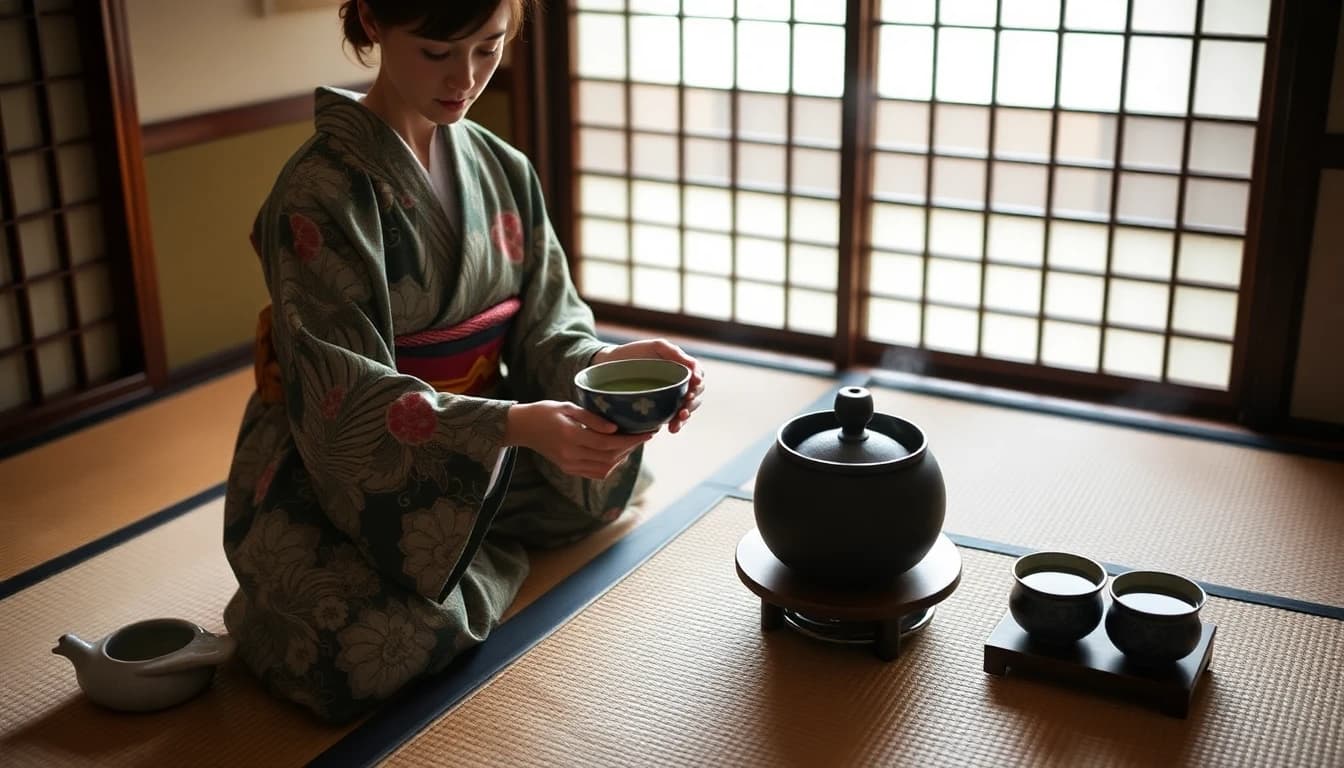
The room is barely eight tatami mats wide. Afternoon light filters through shoji screens, casting paper-soft shadows across the clay wall. The host kneels before a cast-iron kettle, folds a purple silk cloth into precise quarters, and wipes the tea scoop without a word. The first thing that registers is the sound: the whisper of bamboo against ceramic, the low murmur of simmering water that the Japanese call matsukaze, "wind through the pines." For those few minutes in a Kyoto tearoom, the city outside stops existing.
A tea ceremony is not a performance. It is a live act of care, compressed into a bowl of matcha and a single seasonal sweet. And the best part? You do not need years of training to participate. You just need to know what to expect.
This guide covers everything a first-time guest needs: the philosophy behind chado, the etiquette that will keep you comfortable, what a typical session looks like step by step, and where to book the best experiences across Kyoto, Tokyo, and Kanazawa.
What Is Chado? The Way of Tea, Explained
Chado (literally "the way of tea") is a disciplined art form built on four principles codified by the tea master Sen no Rikyu in the sixteenth century (Source: JNTO):
- Wa (harmony) -- between host, guest, the room, and the season
- Kei (respect) -- expressed through every gesture, from the bow at the threshold to the placement of utensils
- Sei (purity) -- the ritual cleansing of tools and space before tea is prepared
- Jaku (tranquility) -- the stillness that emerges when the first three principles align
A tea ceremony is sometimes called chanoyu ("hot water for tea"), which emphasizes that the act itself is simple. The depth comes from intention. Every element in the room -- the scroll in the alcove, the flower arrangement, the shape of the tea bowl -- is chosen to reflect the current season and the specific gathering of guests.
The Three Main Schools
Tea ceremony practice in Japan is organized into schools (ryuha), each descended from Sen no Rikyu's lineage:
- Urasenke -- the largest school, with the most international outreach and English-friendly workshops. If you attend a tourist-oriented ceremony, it is most likely Urasenke style (Source: Urasenke Konnichian)
- Omotesenke -- known for a quieter, more restrained aesthetic. Uses a thinner whisk and slightly different hand movements
- Mushakojisenke -- the smallest of the three, emphasizing simplicity and rustic beauty
For first-time visitors, the school distinction matters less than the quality of the host. What you want is a teacher who can explain each step clearly in English (or your language) without rushing.
What to Expect: A Tea Ceremony Step by Step
A standard tea ceremony for visitors lasts between 45 and 90 minutes. Formal multi-course ceremonies (chaji) can last up to four hours, but these are rarely offered to first-time guests. Here is the typical flow.
Tea Ceremony Etiquette: The Rules That Matter
Etiquette can feel intimidating, but here is the truth: hosts at visitor-friendly venues expect beginners. They will guide you through every step. Still, knowing these basics will make you feel more at ease and show respect (Source: MAIKOYA).
Before You Arrive
- Dress modestly. Muted, solid colors work best. Avoid strong perfumes -- they compete with the incense and tea aroma
- Remove jewelry. Rings, bracelets, and watches can scratch centuries-old tea bowls. Leave them at the hotel
- Wear clean socks. White is traditional and always appropriate. No bare feet
- Skip heavy meals. The wagashi sweet is part of the experience. Arrive with a light stomach
Inside the Tea Room
- Kneel in seiza (on your heels). If your knees cannot handle it, most venues now offer chairs or allow you to sit cross-legged. Ask when booking
- Follow the host's lead. When unsure, pause and watch. Imitation is a perfectly acceptable strategy
- Do not step on the borders of tatami mats. Walk on the woven center only
- Keep your phone silent and away. Some venues allow photos during specific moments, but never during the actual preparation
Common Mistakes (and Why They Are Fine)
- Sitting in the wrong position -- the host will gently redirect you
- Rotating the bowl the wrong direction -- simply correct it when reminded
- Forgetting to eat the sweet first -- the host will pause and gesture
- Making noise while drinking -- a soft slurp on the last sip is actually proper etiquette
The point of chado is not perfection from the guest. The host's role is to create a space where you feel welcomed. Your role is simply to be present.
⚕️ Disclaimer
Types of Tea Ceremony Experiences
Not all ceremonies are the same. Choosing the right format makes a significant difference in what you take away from the experience.
Casual Workshop (Taiken)
- Duration: 45-60 minutes
- Group size: 5-20 guests
- Price range: $20-50 / 3,000-7,500 yen
- Best for: First-timers, families, travelers with limited time
- What you get: Brief explanation, watch the host prepare tea, make your own matcha, enjoy a sweet
Semi-Formal Ceremony (Ryakubon or Chakai)
- Duration: 60-90 minutes
- Group size: 2-8 guests
- Price range: $50-120 / 7,500-18,000 yen
- Best for: Those who want genuine immersion without a four-hour commitment
- What you get: Full temae (preparation ritual), seasonal scroll and flowers, two types of tea (koicha and usucha), high-quality wagashi
Full Formal Ceremony (Chaji)
- Duration: 3-4 hours
- Group size: 3-5 guests (by invitation)
- Price range: $200-500+ / 30,000-75,000 yen
- Best for: Serious students of Japanese culture, return visitors
- What you get: Kaiseki meal, charcoal-setting ceremony, thick tea (koicha), thin tea (usucha), full ritualized progression through all four seasons of the gathering
Best Tea Ceremony Venues: Kyoto
Kyoto is the spiritual home of chado. The density of tea schools, historic teahouses, and master practitioners here is unmatched anywhere in Japan.
1. Tea Ceremony Ju-An at Jotoku-ji Temple
- Style: Urasenke, semi-formal
- Duration: 60 minutes
- Price: From 3,300 yen (~$22)
- Location: Jotoku-ji Temple, central Kyoto (10 min walk from Shijo Station)
- Language: English
- Why it stands out: Held inside a functioning Buddhist temple, this experience places the ceremony in its original spiritual context. The garden view from the tearoom changes dramatically with the seasons. The host explains each movement with clarity and warmth
(Source: Grand Tea Ceremony)
2. Camellia Garden at Kodai-ji Temple
- Style: Urasenke, casual to semi-formal
- Duration: 45-60 minutes
- Price: From 2,000 yen (~$13)
- Location: Kodai-ji Temple, Higashiyama
- Language: English support
- Why it stands out: Set in one of Kyoto's most beautiful Zen temple gardens, with a direct view of the moss-covered hillside. The affordability makes it accessible for every budget
3. Tea Ceremony En (Gion)
- Style: Urasenke, casual workshop
- Duration: 45-60 minutes
- Price: From 3,200 yen (~$21)
- Location: Gion district
- Language: English
- Why it stands out: Small-group setting in a traditional machiya townhouse. Consistently rated among the top cultural experiences in Kyoto with over 2,500 five-star reviews on TripAdvisor
(Source: TripAdvisor)
4. MAIKOYA Kyoto (Gion or Nishiki)
- Style: Urasenke, casual workshop with kimono option
- Duration: 60-90 minutes
- Price: From 3,520 yen (
$23), kimono + tea ceremony package from 7,480 yen ($50) - Location: Multiple locations in Gion and near Nishiki Market
- Language: English
- Why it stands out: Held in registered Cultural Property townhouses. The kimono rental option creates a full immersion package. Ideal if you want both experiences in a single session
(Source: MAIKOYA)
Best Tea Ceremony Venues: Tokyo
Tokyo offers a different flavor of tea ceremony -- often more contemporary in setting, but no less authentic in practice.
5. Shizu-Kokoro (Asakusa)
- Style: Urasenke, semi-formal
- Duration: 90 minutes
- Price: From 4,620 yen (~$31)
- Location: Asakusa, between Senso-ji and Kappabashi
- Language: Full English
- Why it stands out: Instructor Mika Soka Haneishi is licensed by the Urasenke headquarters in Kyoto and speaks fluent English. You participate as both host and guest, which gives you a deeper understanding of the dual roles in chado. Monthly themes mean each visit feels distinct
(Source: Shizu-Kokoro)
6. Happo-en Garden (Shirokanedai)
- Style: Omotesenke, semi-formal
- Duration: 60 minutes
- Price: From 3,300 yen (~$22)
- Location: Happo-en Garden, Shirokanedai (5 min from Shirokanedai Station)
- Language: English support
- Why it stands out: A 400-year-old garden with ancient bonsai trees and a koi pond. The tearoom overlooks the garden, and the contrast between the Edo-era landscape and the Minato-ku skyscrapers visible beyond the tree line captures something essential about modern Japan
7. MAIKOYA Tokyo (Shinjuku)
- Style: Urasenke, casual workshop
- Duration: 60 minutes
- Price: From 3,520 yen (~$23)
- Location: Shinjuku
- Language: English
- Why it stands out: Convenient location for travelers staying in central Tokyo. Same quality as the Kyoto branches, with the added option of a calligraphy or origami combo workshop
Best Tea Ceremony Venues: Kanazawa
Kanazawa's tea culture runs deep. The city's feudal lords were famous patrons of chado, and that legacy is still alive in the city's tea districts and confectionery shops.
8. Kenrokuen Garden Tea Experience
- Style: Casual to semi-formal
- Duration: 60 minutes
- Price: From 3,500 yen (~$23) + garden entry 320 yen
- Location: Inside Kenrokuen Garden
- Language: English
- Why it stands out: You drink tea inside one of Japan's three most celebrated landscape gardens. The wagashi is prepared by a historic Kanazawa confectioner, and Kanazawa is widely considered Japan's finest city for wagashi craftsmanship
(Source: Visit Kanazawa)
9. Shima Geisha House (Higashi Chaya District)
- Style: Historical tea presentation
- Duration: 30-45 minutes
- Price: 500 yen entry + optional matcha 700 yen (~$8 total)
- Location: Higashi Chaya district
- Language: Japanese (English pamphlet)
- Why it stands out: This restored 1820s geisha house gives you tea in the rooms where geisha once entertained samurai guests. The architecture alone is worth the visit -- lacquered corridors, vermillion walls, and original Kaga-style decorations
Booking Tips and Practical Advice
When to Book
- Peak season (March-May, October-November): Book at least two weeks in advance. Popular venues like Tea Ceremony En sell out daily
- Off-season (January-February, June-September): Same-week booking is usually possible. Summer sessions are less crowded and often discounted
- Private sessions: Book one month ahead. These require the host to prepare the room specifically for your group
How to Book
- Direct website: Always check the venue's own site first. Direct bookings often include extras (like a tea-themed souvenir) not available through platforms
- GetYourGuide / Klook / Viator: Convenient for comparison shopping and free cancellation. Prices may be slightly higher due to platform fees
- Hotel concierge: High-end ryokan and hotels often have relationships with private tea masters who do not advertise publicly
Budget Planning
- Budget option: Casual workshop at a temple, $15-25 per person
- Mid-range: Semi-formal ceremony at a dedicated tea school, $30-60 per person
- Premium: Private ceremony with kimono rental in a historic venue, $80-150 per person
- Luxury: Full chaji with kaiseki meal, $200-500 per person
Accessibility
- Seiza alternatives: Most tourist-friendly venues now offer chairs or allow cross-legged sitting. Mention any mobility needs when booking
- Wheelchair access: Limited in traditional tearooms due to raised floors and narrow entrances. MAIKOYA locations in Kyoto and Tokyo have barrier-free options
- Children: Generally welcome at casual workshops (ages 6+). Semi-formal and formal ceremonies are best suited for ages 12+
For a deeper exploration of Kyoto's craft culture beyond tea, see our guide to Kyoto artisan walks. If you are interested in the craft of Japanese tea itself, our Japanese tea and matcha guide covers the production process from field to cup. And if you plan to stay overnight in a traditional setting, our best ryokan in Japan guide pairs perfectly with a day of tea ceremony exploration.
Frequently Asked Questions
Written by Hiro Miyamoto
Founder & CEO of Scratch Second. Starting from corporate sales at a South American food supplier, Hiro went on to spearhead the Japan market launch as VP of Sales at a Silicon Valley foodtech company — placing products in 2,400+ convenience stores and supplying ingredients for an international expo. He currently leads business development across Asia at one of the world's largest tech companies. Off the clock, he's a dedicated yachtsman, yogi, and sauna enthusiast who writes about the intersection of modern healthtech and Japan's timeless wellness traditions.
Related Articles
travel
Wellness Tourism in Japan: 7 Hidden Onsen Towns for the Healing Traveler
Discover 7 secret onsen towns in Japan where ancient toji healing meets modern wellness tourism. Practical guide with budgets, access, and insider tips.
travel
Craft Tourism in Japan 2026: A Guide to Pottery, Bladesmithing & Indigo Dyeing
The complete guide to hands-on craft experiences in Japan for 2026. Pottery, bladesmithing, and indigo dyeing — with booking tips, prices, access, and recommended regions.
travel
Japan Culture Festivals Abroad 2026: LA, London & Paris Event Guide
Complete guide to Japan culture events in LA, London, and Paris for 2026. Japan House, Hyper Japan, Japan Expo — dates, highlights, and preparation tips for visitors and exhibitors.