
travel · 12min read · 2026-03-07
Kumano Kodo Pilgrim Trail Guide: Walking Japan's Sacred Routes
A complete guide to hiking the Kumano Kodo: routes (Nakahechi, Kohechi, Ohechi, Iseji), difficulty levels, best season, accommodation, packing list, and multi-day itinerary.
Key Takeaways
- The Kumano Kodo is one of only two UNESCO-listed pilgrimage routes worldwide
- Four main routes cross the Kii Peninsula: Nakahechi, Kohechi, Ohechi, and Iseji
- Over a millennium of continuous pilgrimage connects three grand Kumano shrines
- Dual Pilgrim certification is available for completing both Kumano Kodo and Camino de Santiago
- The Nakahechi route is the most popular and accessible for first-time walkers
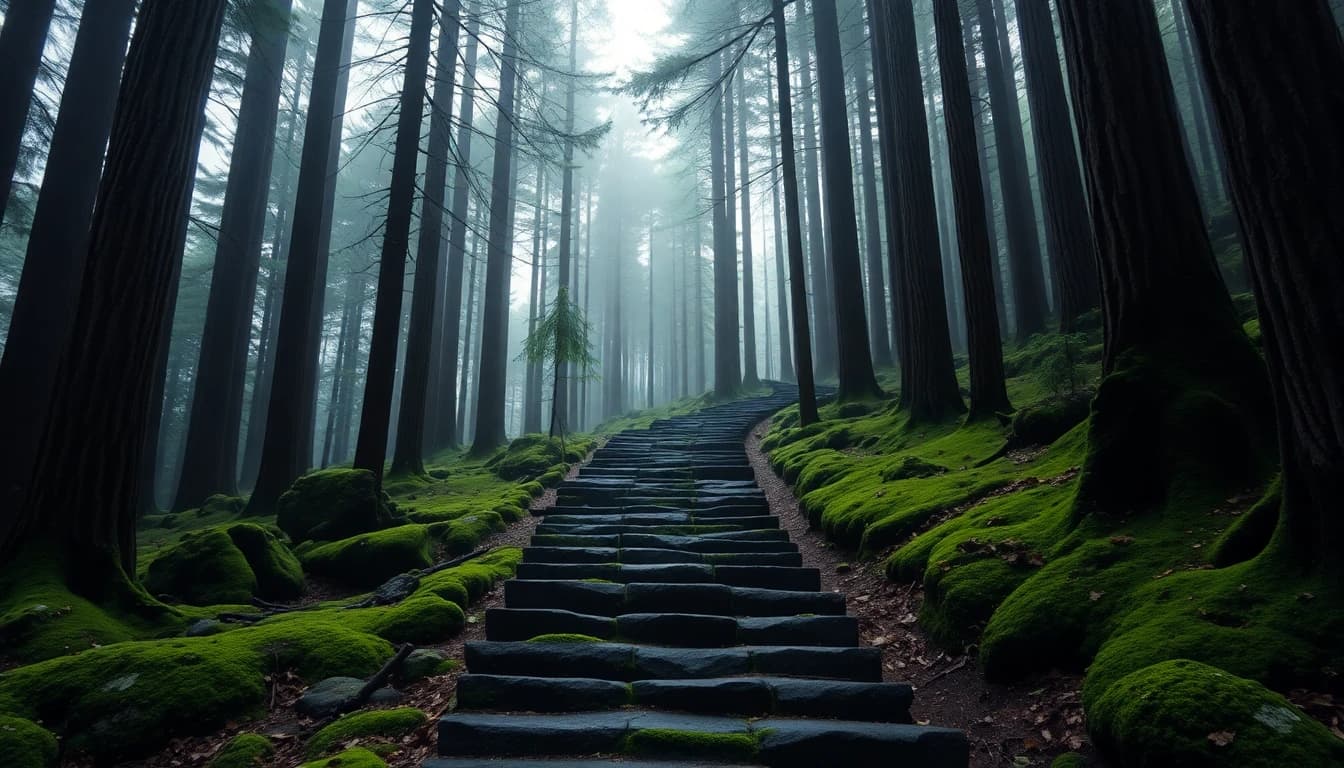
On the third morning of walking the Nakahechi route, I came around a bend in the trail and the forest opened onto a clearing where a small stone shrine sat at the junction of two paths. Moss covered every surface except the offering platform, where someone had placed a fresh mandarin orange and a one-yen coin. Cedar trees towered overhead, their canopy so dense that the clearing existed in a kind of permanent twilight. I had been walking for two hours without seeing another person. The shrine had been standing at this crossroads for, by my best estimate, eight hundred years. I sat on a stone and ate a rice ball and felt, for the first time on the trail, the specific quality of stillness that a thousand years of continuous pilgrimage leaves behind in a landscape.
The Kumano Kodo is a network of ancient pilgrimage trails crossing the Kii Peninsula in southern Japan. These paths connect Tanabe on the western coast, Ise on the eastern coast, and Koyasan in the north to the three grand shrines of Kumano -- Hongu Taisha, Hayatama Taisha, and Nachi Taisha. For over a millennium, emperors, aristocrats, monks, and commoners have walked these trails seeking spiritual renewal, healing, and connection to one of Japan's most sacred landscapes.
In 2004, UNESCO designated the Kumano Kodo as a World Heritage Site under "Sacred Sites and Pilgrimage Routes in the Kii Mountain Range." It is one of only two pilgrimage routes in the world to receive this designation -- the other being Spain's Camino de Santiago. Pilgrims who complete both trails can receive a Dual Pilgrim certificate, a recognition shared by no other walking routes on earth (Source: Tanabe City Kumano Tourism Bureau).
This guide covers every route, difficulty level, accommodation option, and practical detail you need to plan your walk.
⚕️ Disclaimer
History of the Kumano Pilgrimage
(Source: Wikipedia, Kumano Kodo)
The Four Main Routes
The Kumano Kodo is not a single trail but a network of routes approaching the Kumano grand shrines from different directions. Each route offers a fundamentally different experience in terms of landscape, difficulty, duration, and infrastructure.
Nakahechi Route (Most Popular)
- Distance: Approximately 65 km (40 miles) from Takijiri-oji to Nachi Taisha
- Duration: 4-6 days
- Difficulty: Moderate -- well-maintained trails through forested mountains with some steep sections
- Starting point: Takijiri-oji (accessible by bus from Tanabe or Kii-Tanabe Station)
- Ending point: Nachi Taisha / Nachi Falls
- Highest elevation: Approximately 800 meters (Ogumotori-goe pass)
- Accommodation: Multiple options at each overnight stop -- minshuku, guesthouses, ryokan, and hot spring hotels
The Nakahechi is the classic Kumano Kodo route and the one walked by the imperial court from the 10th century onward. It traverses the width of the Kii Peninsula from west to east, passing through deep cedar forests, along mountain ridges, and through small villages that have served pilgrims for centuries. The trail passes all three grand shrines and culminates at Nachi Falls, Japan's tallest single-drop waterfall at 133 meters.
This is the route recommended for first-time walkers. The infrastructure is the best of any Kumano Kodo route: trail markers are clear, accommodation is readily available at each stage, luggage transfer services operate daily, and English-language support from the Tanabe City tourism bureau is excellent.
The most challenging section is the Ogumotori-goe pass between Koguchi and Nachi, which involves significant elevation gain over rocky terrain. Many walkers consider this the hardest day on the Nakahechi but also the most rewarding -- the descent into Nachi through virgin forest is magnificent.
(Source: Kumano Travel, Nakahechi Trek)
Kohechi Route (Most Challenging)
- Distance: Approximately 65 km (40 miles) from Koyasan to Hongu Taisha
- Duration: 3-4 days
- Difficulty: Very difficult -- four mountain passes over 1,000 meters with steep ascents and descents
- Starting point: Koyasan (Mount Koya)
- Ending point: Hongu Taisha
- Highest elevation: Over 1,000 meters on each of the four passes
- Accommodation: Limited -- minshuku and guesthouses in small mountain villages
The Kohechi runs north-to-south through the center of the Kii Peninsula, connecting the Buddhist mountaintop temple complex of Koyasan to the Kumano grand shrines. It is the steepest and most physically demanding of the main routes, crossing four mountain passes that each exceed 1,000 meters in elevation.
The Kohechi's unique advantage is its spiritual narrative: it begins at the home of Shingon Buddhism (Koyasan, founded by the monk Kukai in 816 CE) and descends to the heart of the Kumano faith, making it a journey between two of Japan's most important religious landscapes. The trail passes through remote mountain villages where accommodation is basic but hospitable.
This route should not be attempted by anyone who is not in good physical condition and experienced with multi-day mountain hiking. Facilities are limited, cell phone reception is unreliable, and the terrain demands careful navigation. The reward is proportionate -- the Kohechi offers solitude, mountain grandeur, and a sense of genuine pilgrimage that the more popular Nakahechi cannot match.
(Source: Tanabe City Kumano Tourism Bureau, Difficulty Rating)
Ohechi Route (Coastal)
- Distance: Approximately 92 km (57 miles) from Tanabe to Nachi/Kushimoto
- Duration: 4-5 days
- Difficulty: Moderate to easy -- largely coastal with some forested sections
- Starting point: Tanabe
- Ending point: Nachi or Kushimoto
- Highest elevation: Low -- mostly at or near sea level with occasional hill sections
- Accommodation: More frequent options along the coast -- hotels, minshuku, guesthouses
The Ohechi follows the western and southern coastline of the Kii Peninsula, offering an experience completely unlike the mountain routes. Wide ocean views, rocky shorelines, fishing villages, and coastal temples replace the cedar forests and mountain passes of the Nakahechi and Kohechi. This is the best route for winter hiking, as coastal elevations mean milder temperatures and less risk of snow or ice.
The Ohechi is less restored and less walked than the Nakahechi, which gives it a quieter, more exploratory character. Some sections follow modern roads rather than ancient trail, which can diminish the immersive quality of the walk. However, the combination of sea air, fishing village culture, and coastal shrines creates a distinct and underrated pilgrim experience.
Iseji Route (Longest)
- Distance: Approximately 170 km (106 miles) from Ise to Hongu Taisha
- Duration: 1-2 weeks
- Difficulty: Moderate -- long but without the extreme elevation of the Kohechi
- Starting point: Ise Grand Shrine (Ise Jingu)
- Ending point: Hongu Taisha
- Highest elevation: Several passes in the 500-800 meter range
- Accommodation: Variable -- some sections have limited options requiring careful planning
The Iseji is the longest Kumano Kodo route, connecting the Ise Grand Shrine on the eastern coast to the Kumano shrines. It was historically the route used by pilgrims from eastern Japan, who would first visit Ise Jingu (the most sacred Shinto shrine) before continuing south and west to Kumano. The trail crosses through river plains, valleys, forests, beaches, and rice paddies, offering the most diverse landscape of any route.
The Iseji requires the most planning and time commitment. Some sections pass through areas with limited accommodation, and the route's length means walkers need to manage physical recovery carefully. English-language resources are less developed than for the Nakahechi.
Best Season to Walk
Choosing the right season fundamentally shapes your Kumano Kodo experience.
Spring (March - May) -- Recommended
- Daytime temperatures: 10-20 degrees Celsius, rising to 18-24 in May
- Cherry blossoms in lower elevations (late March to mid-April)
- Fresh green foliage emerging on deciduous trees
- Moderate rainfall
- Growing accommodation demand -- book 2-4 weeks ahead
Autumn (October - November) -- Recommended
- Daytime temperatures: 10-18 degrees Celsius
- Stunning autumn colors throughout the mountain forests
- Lower humidity than spring
- Peak season for international walkers -- book accommodation 3-4 weeks ahead
- Clear, stable weather in October; more rain in late November
Summer (June - August) -- Not Recommended
- Hot and humid, with temperatures exceeding 30 degrees Celsius
- Rainy season (tsuyu) in June brings sustained heavy rainfall
- Typhoon season from July through September
- Trail conditions can be dangerous: slippery stones, swollen river crossings, reduced visibility
- Leeches and insects are at their most active
Winter (December - February) -- Limited
- Cold temperatures, possible snow at higher elevations
- Mountain routes (Nakahechi Ogumotori-goe, Kohechi) may be impassable due to ice
- Coastal routes (Ohechi, Iseji) remain walkable in mild coastal conditions
- Very few other walkers -- maximum solitude
- Some accommodation closes for the season
Planning Your Walk: Step-by-Step
Accommodation Along the Trail
Minshuku (Family-Run Guesthouses)
The primary accommodation type on the Kumano Kodo. Minshuku are small, family-operated guesthouses offering tatami rooms, futon bedding, communal baths, and home-cooked meals. Most include dinner and breakfast in the nightly rate.
- Price range: 7,000-12,000 yen per person per night with two meals
- What to expect: Tatami rooms (shared or private), communal bathroom, Japanese-style dinner and breakfast, basic amenities (towels, yukata robes)
- Language: Limited English at most minshuku -- the tourism bureau can assist with bookings and communication
- Atmosphere: Warm, personal, and deeply connected to the local community. Many minshuku owners are descendants of families that have hosted pilgrims for generations
Ryokan and Hot Spring Hotels
Available at key stops including Yunomine Onsen, Kawayu Onsen, and Wataze Onsen near Hongu. These offer a higher level of comfort with private rooms, onsen bathing, and more elaborate kaiseki-style meals.
- Price range: 15,000-35,000 yen per person per night with two meals
- Standout: Yunomine Onsen -- a tiny hot spring village in a narrow valley where the public bath Tsuboyu is itself a UNESCO World Heritage Site (the only hot spring in the world with that designation)
For more on Japan's hidden hot springs, see our onsen guide.
Guesthouses and Hostels
A growing number of modern guesthouses and hostels serve the Kumano Kodo, particularly near Hongu and along the Nakahechi. These offer dormitory or private rooms at lower prices, often with shared kitchen facilities.
- Price range: 3,500-6,000 yen per person per night (meals not included)
- Best for: Budget walkers, solo travelers, and those who prefer to self-cater
Temple Lodging (Shukubo)
Available primarily at Koyasan (the starting point of the Kohechi route). Over 50 temples on Mount Koya offer overnight stays with vegetarian temple cuisine, morning prayer ceremonies, and zazen meditation.
- Price range: 12,000-25,000 yen per person per night with two meals
- Experience: A pilgrimage within the pilgrimage -- combining Koyasan temple stay with the Kohechi walk is one of the most profound multi-day experiences in Japan
Our meditation retreat guide covers Koyasan temple stays in detail.
What to Pack
Packing for the Kumano Kodo requires balancing preparedness with weight management. If you use the luggage transfer service, you only need to carry a daypack while walking.
Daypack Essentials (Carry While Walking)
- Water: 1.5-2 liters minimum (refill at villages and designated water points)
- Rain jacket: Waterproof and breathable -- rain is frequent in the Kii Mountains regardless of season
- Rain cover for backpack: Essential insurance for electronics and clothing
- Trail snacks: Energy bars, rice balls (onigiri, available at convenience stores in Tanabe), dried fruit, nuts
- Paper map or downloaded offline map: Cell service is unreliable on mountain sections
- Small first aid kit: Blister plasters, pain relief, antiseptic wipes, personal medications
- Headlamp: In case you are caught out at dusk
- Cash: Many minshuku and village shops do not accept credit cards. Carry 30,000-50,000 yen in cash for a multi-day walk
Main Luggage (Forwarded by Takkyubin)
- Hiking boots or trail shoes: Broken-in, waterproof, with good ankle support. The trails are rocky and root-covered, with steep stone stairs on many sections
- Trekking poles: Highly recommended, especially for steep descents. Collapsible poles pack easily
- Clothing layers: Quick-dry base layer, insulating mid-layer (fleece or light down), waterproof outer layer
- Change of clothes: One walking outfit, one evening outfit for accommodation
- Toiletries: Many minshuku provide soap and shampoo but not toothbrushes or razors
- Knee support: If you have any knee sensitivity, bring compression sleeves or braces. The stone stairs are demanding on joints
- Pilgrimage credential: Pick up at Takijiri-oji or order in advance from the tourism bureau
Nakahechi 5-Day Itinerary
This is the most popular itinerary for international walkers, covering the full Nakahechi route from Takijiri to Nachi.
Day 1: Takijiri-oji to Takahara (3.7 km, 2-3 hours)
- A short first day that serves as an introduction to the trail
- Steep initial climb from Takijiri-oji through cedar forest to the mountain village of Takahara
- Takahara sits at approximately 300 meters and is known as "the village in the mist" for its frequent cloud cover
- Overnight in Takahara with views across the Tonda River valley
Day 2: Takahara to Chikatsuyu (12 km, 5-7 hours)
- The first full day of walking, crossing two mountain ridges
- Trail passes through dense cedar plantation and natural forest
- Multiple oji (subsidiary shrines) along the route for rest and contemplation
- Lunch spot at Gyubadoji-oji, a mossy clearing with stone markers
- Overnight in Chikatsuyu, a small riverside village with several minshuku and an onsen
Day 3: Chikatsuyu to Hongu/Yunomine (20 km, 7-9 hours)
- The longest and most demanding day on the Nakahechi
- Crosses the Waroda-ishi rock and descends to the Kumano River
- Arrival at Kumano Hongu Taisha, the largest of the three grand shrines
- Visit the Oyunohara -- the original shrine site, marked by Japan's tallest torii gate (33.9 meters)
- Overnight at Yunomine Onsen (30 minutes by bus from Hongu), where the 1,800-year-old hot spring village offers the ultimate post-walk recovery
Day 4: Hongu to Koguchi (15 km, 6-7 hours) via Boat and Trail
- Morning option: take the traditional flat-bottomed boat down the Kumano River from Hongu to Hayatama Taisha in Shingu (a recreation of the imperial pilgrimage route)
- Alternatively, walk or bus to the start of the Kogumotori-goe section
- Trail through remote mountain forest to the tiny village of Koguchi
- Koguchi has very limited accommodation -- book early
Day 5: Koguchi to Nachi Taisha (14 km, 7-8 hours)
- The final and most dramatic day
- Ogumotori-goe pass -- the highest and steepest section of the Nakahechi route
- Dense forest gives way to mountain views before the descent into Nachi
- Arrival at Nachi Taisha, perched on a hillside overlooking Nachi Falls (133 meters, Japan's tallest single-drop waterfall)
- The pagoda framing the waterfall is one of Japan's most iconic images
- From Nachi, buses and trains connect to Shingu, Osaka, and beyond
The Three Grand Shrines of Kumano
Kumano Hongu Taisha
The spiritual center of the Kumano faith and the primary destination for pilgrims walking the Nakahechi. The current shrine was rebuilt on its present hilltop location after the catastrophic flood of 1889 destroyed the original site at Oyunohara on the riverbank below. The Oyunohara site, marked by the massive 33.9-meter torii gate, remains a place of extraordinary atmosphere -- a broad gravel clearing surrounded by forest where the scale of the original shrine complex becomes apparent.
Kumano Hayatama Taisha
Located in the coastal city of Shingu at the mouth of the Kumano River. Hayatama Taisha is distinguished by a sacred nagi tree (Nageia nagi) in its precincts, estimated to be over 1,000 years old and designated a Natural Monument. The shrine's proximity to the river made it the traditional arrival point for pilgrims traveling by boat.
Kumano Nachi Taisha
Adjacent to Nachi Falls and Seiganto-ji temple, Nachi Taisha offers the most visually dramatic setting of the three shrines. The vermillion shrine buildings, the three-story pagoda, and the thundering waterfall form a composition that appears in countless photographs, paintings, and woodblock prints. The waterfall itself is considered a deity (kami) and is the object of worship at the shrine.
Connecting the Kumano Kodo to Broader Travel
The Kumano Kodo sits within a region rich with experiences that complement the pilgrimage walk.
Koyasan Connection
If you walk the Kohechi route from Koyasan, or if you visit Koyasan independently before or after the Nakahechi, you connect two of Japan's deepest spiritual landscapes. The contrast between Shingon Buddhism on the mountaintop and the nature-worship of the Kumano shrines below creates a philosophical journey as well as a physical one.
Onsen Recovery
The Kii Peninsula is one of Japan's great hot spring regions. Yunomine Onsen, Kawayu Onsen (where you can dig your own hot spring in the riverbed), and Wataze Onsen are all accessible from Hongu. After days of mountain walking, soaking in mineral water is not luxury -- it is medicine for your legs.
See our hidden onsen guide for comprehensive coverage of Japan's best springs.
Artisan Trails
The Kii Peninsula's remote mountain villages have preserved craft traditions that urban Japan has largely lost. If your interests extend beyond pilgrimage into Japanese making culture, our Japan artisan trail guide maps routes through regions where traditional craft and contemplative walking overlap.
Ryokan Stays
For walkers who want to elevate their accommodation experience on rest days, the region around Hongu and along the coast near Nachi offers traditional ryokan with kaiseki cuisine and private onsen baths. Our ryokan guide covers the best options across Japan.
My Experience: Walking the Nakahechi
I walked the Nakahechi in late October, when the deciduous trees along the ridgelines were turning copper and gold while the cedars in the valleys remained their permanent deep green. The contrast was extraordinary -- every bend in the trail produced a different palette.
The first day to Takahara was short but steep, and by the time I reached the village I was breathing hard and my calves were protesting. The minshuku owner, a woman in her seventies, greeted me with green tea and a hot towel and said, "Everyone arrives looking like you. By tomorrow you will walk differently." She was right. Something shifted on the second day -- my body found a rhythm with the trail, my breathing synchronized with my steps, and the walking became less effort and more flow.
The third day -- the long stage to Hongu -- broke me and rebuilt me. Twenty kilometers of mountain trail, much of it on stone stairs laid by pilgrims centuries ago, left my knees aching and my water bottle empty by mid-afternoon. But arriving at Kumano Hongu Taisha and walking through the massive torii gate into the shrine's cedar grove produced a feeling I have struggled to name since. Relief, yes. Achievement, partially. But also something closer to recognition -- as though this place had been expecting me, the way it had expected every pilgrim for a thousand years.
That evening at Yunomine Onsen, I soaked in the public bath until my skin was pink and my muscles had forgotten the day's punishment. The village is tiny -- a single narrow valley with steam rising from the hot spring river and a few ryokan and minshuku clustered along the banks. I ate dinner in my yukata: grilled river fish, mountain vegetables, pickled plum, miso soup, rice. I slept ten hours and woke at dawn feeling restored in a way that went beyond physical recovery.
The final day over Ogumotori-goe was the hardest and the most beautiful. The pass demanded everything I had left, but the forest on the descent into Nachi was primeval -- massive trees, hanging moss, streams cutting through stone. When the trail opened and I saw Nachi Falls for the first time, white water dropping 133 meters against a wall of green, I understood why the ancients called it a god.
Budget Breakdown (Nakahechi, 5 Days)
- Accommodation (5 nights, minshuku with meals): 40,000-60,000 yen
- Luggage transfer (4 days): 8,000-12,000 yen
- Transportation (Osaka to Tanabe, Nachi to Osaka): 10,000-15,000 yen
- Trail snacks and lunches (5 days): 3,000-5,000 yen
- Bus fares (local, trailhead access): 2,000-4,000 yen
- Shrine offerings and stamps: 1,000-2,000 yen
- Total estimate: 64,000-98,000 yen (approximately $425-650 USD)
Frequently Asked Questions
Written by Hiro Miyamoto
Founder & CEO of Scratch Second. Starting from corporate sales at a South American food supplier, Hiro went on to spearhead the Japan market launch as VP of Sales at a Silicon Valley foodtech company — placing products in 2,400+ convenience stores and supplying ingredients for an international expo. He currently leads business development across Asia at one of the world's largest tech companies. Off the clock, he's a dedicated yachtsman, yogi, and sauna enthusiast who writes about the intersection of modern healthtech and Japan's timeless wellness traditions.
Related Articles
travel
Wellness Tourism in Japan: 7 Hidden Onsen Towns for the Healing Traveler
Discover 7 secret onsen towns in Japan where ancient toji healing meets modern wellness tourism. Practical guide with budgets, access, and insider tips.
travel
Tea Ceremony Experience in Japan: A First-Timer's Complete Guide to Chado
Everything you need to know about experiencing a Japanese tea ceremony: etiquette, what to expect, best venues in Kyoto, Tokyo, and Kanazawa, and booking tips.
travel
Craft Tourism in Japan 2026: A Guide to Pottery, Bladesmithing & Indigo Dyeing
The complete guide to hands-on craft experiences in Japan for 2026. Pottery, bladesmithing, and indigo dyeing — with booking tips, prices, access, and recommended regions.