
travel · 11min read · 2026-04-02
Shinrin-Yoku Guide: How to Practice Forest Bathing in Japan
A complete guide to shinrin-yoku (forest bathing) in Japan: scientific benefits, best forests, step-by-step practice, and certified guides for deep nature immersion.
Key Takeaways
- Shinrin-yoku was coined in 1982 by Japan's Ministry of Agriculture
- A three-day forest visit increased natural killer cell activity by approximately 50%
- Over 60 forests in Japan hold official Forest Therapy Base certification
- The practice emphasizes slow sensory immersion, not hiking or exercise
- Phytoncides released by trees trigger measurable immune system improvements
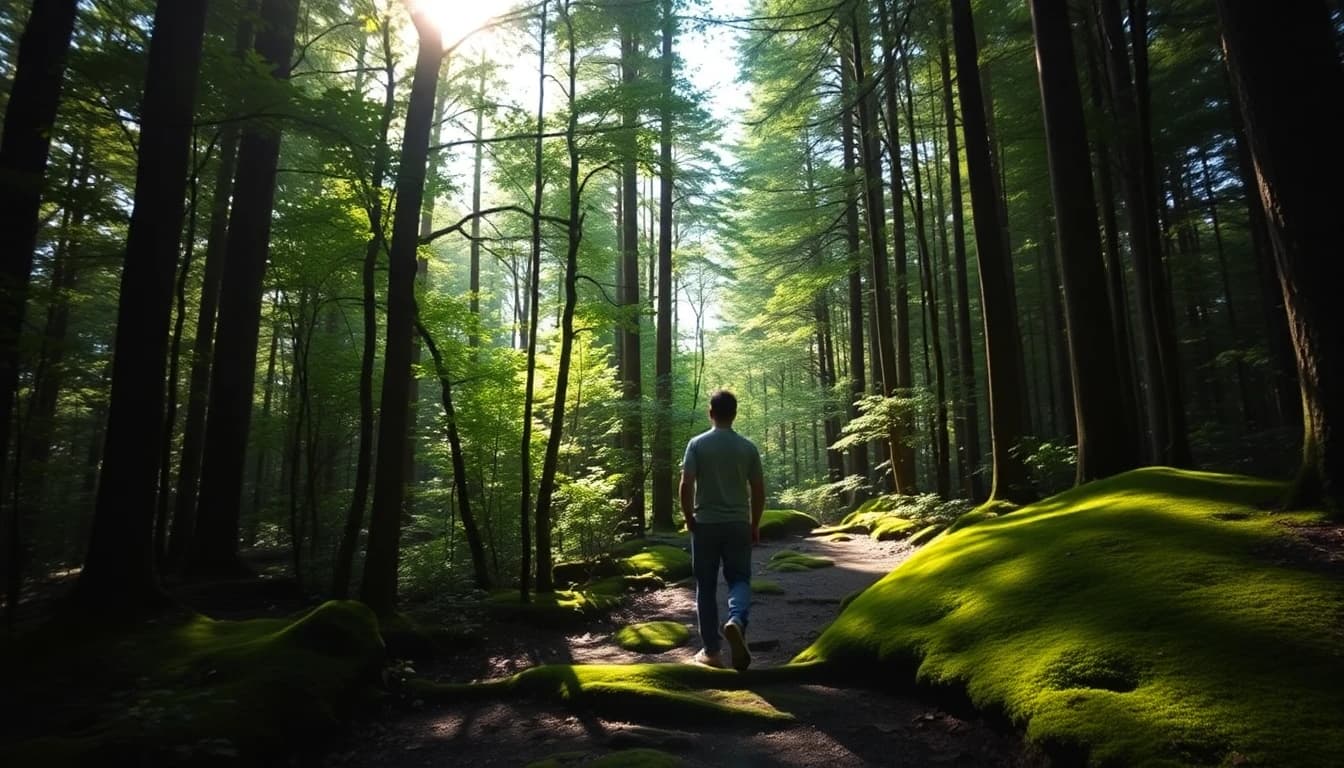
The first thing I noticed in Yakushima was the sound of water. Not a single stream, but dozens of them -- trickling through moss-covered roots, dripping from fern fronds three meters above, pooling in granite hollows where cedar trees older than written history pushed their roots into stone. The air was so saturated with moisture that breathing felt like drinking. I had been walking for forty minutes but had covered less than a kilometer. That was the point.
Shinrin-yoku -- literally "forest bath" -- is not hiking. It is not exercise. It is the practice of slowing down inside a forest until your senses recalibrate and the boundaries between your body and the environment begin to soften. Japan coined the term in 1982, built an entire scientific discipline around it, and certified more than 60 forests as official therapy sites. What started as a public health initiative by a government ministry has become one of the most evidence-backed wellness practices on the planet.
This guide covers the science, the practice, the best forests in Japan, and how to find a certified guide. Whether you have two hours in Nagano or five days in Yakushima, the forest is waiting.
⚕️ Disclaimer
What Is Shinrin-Yoku?
The term shinrin-yoku was introduced in 1982 by Tomohide Akiyama, then head of Japan's Ministry of Agriculture, Forestry, and Fisheries. The concept was simple: encourage citizens to spend time in forests for their health. But behind the simplicity was a growing body of evidence that forests did something measurable to human physiology -- something beyond fresh air and pleasant scenery (Source: Japanese Government, Highlighting Japan, May 2024).
Shinrin-yoku is distinct from hiking or nature photography in three ways:
- Pace: You move slowly, often covering less than two kilometers in two hours
- Sensory engagement: You deliberately activate all five senses -- touching bark, smelling soil, listening to birdsong, tasting forest air, watching light filter through canopy
- No goal: There is no summit, no distance target, no step count -- the absence of destination is the practice
The practice has since spread globally, but Japan remains the world leader in both scientific research and infrastructure for forest therapy. Over 60 forests across the country hold official Forest Therapy Base or Forest Therapy Road designations from the Forest Therapy Society, meaning their health effects have been scientifically verified through controlled studies (Source: Forest Therapy Society).
The Science Behind Forest Bathing
Shinrin-yoku is not folklore. It is one of the most rigorously studied nature-health interventions in modern medicine. Here is what the research shows.
Immune System: Natural Killer Cell Activation
Dr. Qing Li at Nippon Medical School conducted landmark studies showing that a three-day forest visit increased natural killer (NK) cell activity by approximately 50 percent. NK cells are lymphocytes that destroy virus-infected cells and tumor cells. The effect persisted for more than 30 days after the forest visit. A single day trip to a forest park also significantly increased NK cell counts and the expression of anti-cancer proteins including perforin, granulysin, and granzymes (Source: Li Q., Environmental Health and Preventive Medicine, 2010).
The mechanism involves phytoncides -- volatile organic compounds released by trees as a defense against insects and disease. When humans inhale phytoncides, the compounds trigger increased NK cell activity and elevated levels of intracellular anti-cancer proteins (Source: Effect of forest bathing trips on human immune function, PMC).
Stress Hormones: Cortisol Reduction
A systematic review and meta-analysis published in the International Journal of Biometeorology analyzed multiple studies and found that cortisol levels were significantly lower after forest exposure in nearly all studies examined. Forest environments consistently outperformed urban control environments in reducing salivary cortisol concentrations (Source: Antonelli et al., International Journal of Biometeorology, 2019).
Cardiovascular Effects
A field study across 24 forests in Japan measured physiological responses in 280 participants. Forest environments significantly reduced systolic and diastolic blood pressure, pulse rate, and sympathetic nervous system activity compared to urban environments. Parasympathetic nervous system activity -- the "rest and digest" response -- increased significantly in forest settings (Source: Park et al., Environmental Health and Preventive Medicine, 2010).
Mental Health
A 2022 review in Environmental Health and Preventive Medicine consolidated evidence showing that forest bathing is associated with reduced anxiety, depression, anger, and fatigue, while increasing vigor and positive mood states. The psychological benefits appear even in sessions as short as 15 minutes, though two-hour sessions produce more robust and lasting effects (Source: Li Q., Environmental Health and Preventive Medicine, 2022).
How to Practice Shinrin-Yoku: A Step-by-Step Guide
Forest bathing has no rigid rules, but following a structured approach will deepen your experience, especially if you are practicing for the first time.
Best Forests for Shinrin-Yoku in Japan
Japan offers forest bathing experiences across every major island, from subtropical Yakushima to the birch forests of Hokkaido. These five locations represent the finest the country has to offer.
1. Akasawa Natural Recreation Forest, Nagano
- Why it matters: This is where shinrin-yoku was born. In 1982, the Japanese government designated Akasawa as the first official forest bathing site in the country
- Forest type: Native Kiso hinoki (Japanese cypress), many trees over 300 years old
- Elevation: 1,080 meters above sea level
- Trails: Seven walking paths of varying length and difficulty, all maintained for slow sensory walking
- Guides: Certified forest therapy guides available by reservation
- Access: Approximately 90 minutes by car from Matsumoto, or take the JR Chuo Line to Agematsu Station and then a local bus (seasonal service, typically May to November)
- Best season: June through October, with peak phytoncide concentration in midsummer
- Cost: Free entry to the forest, guided sessions from 3,000 yen per person
Akasawa sits at the headwaters of the Kiso River in a dense valley of cypress that Japan has protected for centuries. The Tokugawa shogunate designated these forests as off-limits to logging in the Edo period, which is why the trees tower at heights rarely seen elsewhere. The air smells intensely of hinoki -- a clean, citrus-sharp scent that clings to your clothing for hours afterward.
(Source: JNTO, Akasawa Natural Recreation Forest)
2. Yakushima, Kagoshima
- Why it matters: A UNESCO World Heritage island with cedar trees over 1,000 years old and annual rainfall exceeding 4,000mm in the highlands
- Forest type: Ancient yakusugi (cryptomeria cedar), subtropical broadleaf, and moss-covered old growth
- Key trail: Seibu Rindo forest path -- approximately 15 kilometers through virgin World Heritage forest beneath a tunnel-like green canopy
- Iconic tree: Jomon Sugi, estimated between 2,000 and 7,200 years old
- Guides: Local nature guides widely available, many English-speaking
- Access: 30-minute flight from Kagoshima or 2-hour high-speed ferry from Kagoshima Port
- Best season: March to May and September to November (summer is hot and extremely wet)
- Cost: Jomon Sugi trail entrance fee 1,000 yen, guided full-day tours from 15,000 yen
Yakushima receives more rainfall than almost anywhere else in Japan. The result is a forest so saturated with moisture that every surface -- rock, root, branch -- is covered in luminous green moss. Walking through Yakushima's old growth feels less like visiting a forest and more like entering a living organism. The Japanese director Hayao Miyazaki used Yakushima as the visual reference for the forest in Princess Mononoke.
(Source: Japan National Parks, Yakushima)
3. Oirase Gorge, Aomori
- Why it matters: A 14-kilometer stream-side walking path through one of Japan's most pristine deciduous forests
- Forest type: Beech, oak, and maple with dense understory ferns
- Key feature: The Oirase River runs the entire length of the trail with cascading waterfalls every few hundred meters
- Guides: Forest therapy sessions available through local tourism associations
- Access: 90 minutes by bus from Aomori Station or 75 minutes from Hachinohe Station
- Best season: Late May through June (fresh green season) and October (autumn color peak)
- Cost: Free access to the gorge, guided sessions from 5,000 yen
The combination of forest canopy and flowing water makes Oirase one of the most multi-sensory environments in Japan. The negative ions generated by the waterfalls, the sound of rushing water, and the dappled light through beech leaves create conditions that Japanese researchers have identified as particularly effective for parasympathetic activation.
4. Chizu Forest Therapy, Tottori
- Why it matters: One of Japan's most developed forest therapy programs, adopted by Japanese corporations as part of employee wellness training
- Forest type: Mixed conifer and broadleaf forest
- Key feature: Professionally structured multi-day forest therapy programs with certified therapists
- Guides: Full-time certified forest therapists on staff year-round
- Access: Approximately 90 minutes by car from Tottori City
- Best season: April through November
- Cost: Half-day guided programs from 5,000 yen, multi-day corporate programs by arrangement
Chizu represents the most structured approach to forest bathing in Japan. While other locations offer self-guided trails with optional guides, Chizu's programs are built around therapeutic protocols: blood pressure measurement before and after sessions, structured sensory exercises, and follow-up wellness assessments. If you want evidence of shinrin-yoku's effects on your own body, this is the place.
5. Shinano Forest Therapy Base, Nagano
- Why it matters: Designated a 2-star Forest Therapy Base by the Forest Therapy Society -- the highest certification level
- Forest type: Japanese red pine, larch, and birch at high altitude
- Key feature: Multiple therapy roads designed for different physical abilities and therapeutic goals
- Guides: Certified guides available, some with English language capability
- Access: Approximately 30 minutes by car from Shinonoi Station on the JR Shinetsu Line
- Best season: May through October
- Cost: Trail access free, guided sessions from 4,000 yen
(Source: Go Nagano, Forest Bathing in Nagano)
Certified Forest Therapy Guides
Japan trains and certifies forest therapy guides through the Forest Therapy Society (NPO Shinrin Therapy Society). Understanding the certification system helps you choose the right experience.
Guide Certification Levels
- Forest Therapy Guide: Completed a training course covering forest physiology, sensory exercises, and safety protocols. Can lead group sessions on certified trails
- Forest Therapy Therapist: Advanced certification requiring additional training in stress management, health assessment, and individualized therapy programming. Can design custom therapeutic protocols
- Forest Medicine Doctor: Medical professionals (typically physicians or psychologists) who have completed specialized training in prescribing forest therapy as a clinical intervention
How to Find a Guide
- Forest Therapy Society website: The official directory lists certified guides by region (Source: Forest Therapy Society)
- Local tourism associations: Most municipalities with Forest Therapy Bases maintain guide rosters and accept reservations
- International providers: The Association of Nature and Forest Therapy (ANFT) certifies guides globally, including English-speaking guides operating in Japan (Source: ANFT)
What to Expect from a Guided Session
A standard guided forest therapy session runs 2-3 hours and includes:
- Opening circle: The guide introduces the forest, the practice, and the day's intention
- Sensory invitations: Structured exercises to engage each sense (the guide calls these "invitations," not instructions -- you are free to modify or skip any)
- Solo time: 15-30 minutes of individual sitting or wandering within a defined area
- Tea ceremony: Many Japanese guides close with a simple tea service using foraged herbs or locally sourced matcha, served in silence
- Closing circle: Participants share observations (optional) and the guide offers closing remarks
What to Wear and Bring
Forest bathing requires almost no gear, but the right choices make a significant difference.
- Footwear: Trail shoes or light hiking boots with good grip -- paths can be wet and mossy, especially in Yakushima and Oirase
- Clothing: Layered, breathable fabrics in muted natural colors (bright clothing disrupts the visual immersion). Long sleeves and pants protect against insects
- Rain gear: A packable rain jacket is essential in any Japanese forest -- weather changes quickly, especially in mountain areas
- Water: A small water bottle (500ml is sufficient for a 2-3 hour session)
- Insect repellent: Especially May through September. Japanese forests have mosquitoes, ticks, and in some areas, leeches (Yakushima in particular)
- Do not bring: Bluetooth speakers, fitness trackers, cameras (unless you consciously choose to photograph as a sensory exercise), or food with strong odors
Combining Forest Bathing with Other Wellness Practices
Shinrin-yoku pairs naturally with other Japanese wellness traditions. Many travelers structure multi-day itineraries that weave forest bathing into a broader healing journey.
Forest Bathing + Onsen
The most natural combination. After two hours of parasympathetic activation in the forest, soaking in a mineral hot spring extends and deepens the physiological response. Japan's best forest therapy sites are almost always within reach of quality onsen. Akasawa is near Kiso Valley onsen, Oirase connects to Tsuta Onsen, and Yakushima has Hirauchi Kaichu Onsen -- a seaside hot spring accessible only at low tide.
For our comprehensive guide to Japan's hidden hot springs, see our hidden onsen guide.
Forest Bathing + Meditation
Forest environments naturally quiet mental chatter, making them ideal settings for seated meditation. Several temples and retreat centers in Japan now offer combined programs: morning zazen followed by afternoon forest therapy. The stillness you cultivate in seated practice transfers directly to the slower pace of forest walking.
Our meditation retreat guide covers temple stays and retreat options across Japan that complement forest bathing.
Forest Bathing + Wellness Tourism
If you are designing a longer wellness journey through Japan, forest bathing serves as the connective tissue between other experiences -- onsen towns, craft workshops, temple stays, and regional cuisine. The pace of shinrin-yoku (slow, sensory, present-focused) sets the tempo for the entire trip.
For a broader view of Japan's wellness travel landscape, explore our wellness tourism guide.
Seasonal Considerations
Each season transforms the forest bathing experience in fundamental ways.
Spring (March - May)
- Fresh green leaves emerge (called "shinryoku" in Japanese), creating soft, translucent canopy light
- Cherry blossoms in lower-elevation forests add visual and aromatic layers
- Moderate temperatures ideal for extended sessions
- Wildflowers on forest floors attract butterflies and early-season birds
Summer (June - August)
- Peak phytoncide concentration -- trees release the highest volumes of volatile compounds in warm, humid conditions
- Dense canopy provides natural cooling (forest interiors can be 5-10 degrees Celsius cooler than surrounding areas)
- Rainy season (tsuyu) in June creates extraordinary moss and fern displays
- Higher insect activity requires preparation
Autumn (September - November)
- Deciduous forests transform into galleries of red, orange, and gold
- Cooler temperatures make walking comfortable for longer periods
- Mushroom foraging season adds a tactile and olfactory dimension
- Most popular season -- expect larger crowds at famous locations
Winter (December - February)
- Snow-covered forests in Nagano, Aomori, and Hokkaido offer stark, meditative beauty
- Phytoncide levels are lower but still present in evergreen forests
- Silence is deepest in winter -- snow absorbs sound
- Combine with onsen for maximum contrast between cold forest air and hot mineral water
My Experience: Yakushima Forest Bathing
I arrived on Yakushima on a morning ferry from Kagoshima, and it was already raining. My guide, a quiet man in his fifties who had lived on the island for twenty years, met me at the port and said only, "Good. Rain is best."
He was right. We entered the Shiratani Unsuikyo Ravine and within minutes the forest closed around us like a room. The cedar trunks were enormous -- three, four, five meters in diameter -- and every horizontal surface was covered in moss so green it seemed to generate its own light. The rain made everything louder and softer at the same time: louder because every drop hitting every leaf was a distinct sound, softer because the collective effect was a kind of white noise that erased everything else.
We walked for perhaps 800 meters in the first hour. My guide stopped frequently and said nothing. He would touch a tree trunk and wait. I learned to do the same. The bark of a yakusugi cedar is deeply furrowed, almost like geological strata, and under your fingertips you can feel the centuries compressed into wood.
At one point we sat on a granite boulder beside a stream for what I later learned was forty-five minutes. I had no sense of time passing. The air smelled of earth and cypress and something sweet I could not name -- my guide called it "the forest breathing out." The scientific term for that exhalation is phytoncides, but in that moment, science felt like an inadequate container for the experience.
Walking back to the trailhead, I noticed my breathing had changed. Not through any technique or intention, but simply because the forest had slowed it down. My shoulders had dropped. My visual field felt wider, as though my peripheral vision had expanded. That evening, soaking in a small onsen overlooking the East China Sea, I understood why the Japanese government had decided that forests were medicine.
Planning Your Forest Bathing Trip
Budget Estimates
- Budget option: Self-guided forest bathing at Akasawa or Oirase. Train/bus transport, budget accommodation. Approximately 5,000-8,000 yen per day
- Mid-range option: Guided half-day session at a certified Forest Therapy Base, ryokan accommodation with onsen. Approximately 20,000-35,000 yen per day
- Premium option: Multi-day guided program in Yakushima with private guide, boutique accommodation. Approximately 40,000-70,000 yen per day
Accessibility
Most certified Forest Therapy Bases in Japan maintain at least one barrier-free or low-mobility trail. Akasawa, Shinano, and Chizu all offer paths suitable for wheelchair users or those with limited mobility. Contact the local tourism association in advance to confirm accessibility for your specific needs.
Language
English-speaking certified guides are available but limited. Your best options are Yakushima (many guides serve international visitors), ANFT-certified guides operating in Kanto and Kansai regions, and guided programs specifically marketed to international visitors through JNTO. For self-guided sessions, language is not a barrier -- the forest does not require translation.
Frequently Asked Questions
Written by Hiro Miyamoto
Founder & CEO of Scratch Second. Starting from corporate sales at a South American food supplier, Hiro went on to spearhead the Japan market launch as VP of Sales at a Silicon Valley foodtech company — placing products in 2,400+ convenience stores and supplying ingredients for an international expo. He currently leads business development across Asia at one of the world's largest tech companies. Off the clock, he's a dedicated yachtsman, yogi, and sauna enthusiast who writes about the intersection of modern healthtech and Japan's timeless wellness traditions.
Related Articles
travel
Wellness Tourism in Japan: 7 Hidden Onsen Towns for the Healing Traveler
Discover 7 secret onsen towns in Japan where ancient toji healing meets modern wellness tourism. Practical guide with budgets, access, and insider tips.
travel
Tea Ceremony Experience in Japan: A First-Timer's Complete Guide to Chado
Everything you need to know about experiencing a Japanese tea ceremony: etiquette, what to expect, best venues in Kyoto, Tokyo, and Kanazawa, and booking tips.
travel
Craft Tourism in Japan 2026: A Guide to Pottery, Bladesmithing & Indigo Dyeing
The complete guide to hands-on craft experiences in Japan for 2026. Pottery, bladesmithing, and indigo dyeing — with booking tips, prices, access, and recommended regions.