
travel · 11min read · 2026-03-27
Sento Guide: Japan's Best Public Baths in Tokyo, Osaka, and Kyoto
Discover Japan's best sento public baths: etiquette, sento vs onsen differences, designer bathhouses, tattoo-friendly options, and top picks in Tokyo, Osaka, and Kyoto.
Key Takeaways
- Sento public baths cost a regulated 520 yen in Tokyo as of 2026
- Japan's sento count dropped from 18,000 in 1968 to fewer than 2,000 today
- Sento use heated tap water while onsen use naturally mineral-rich geothermal water
- A new generation of designers is reinventing sento without losing their essence
- Sento are generally more tattoo-friendly than onsen as essential public facilities
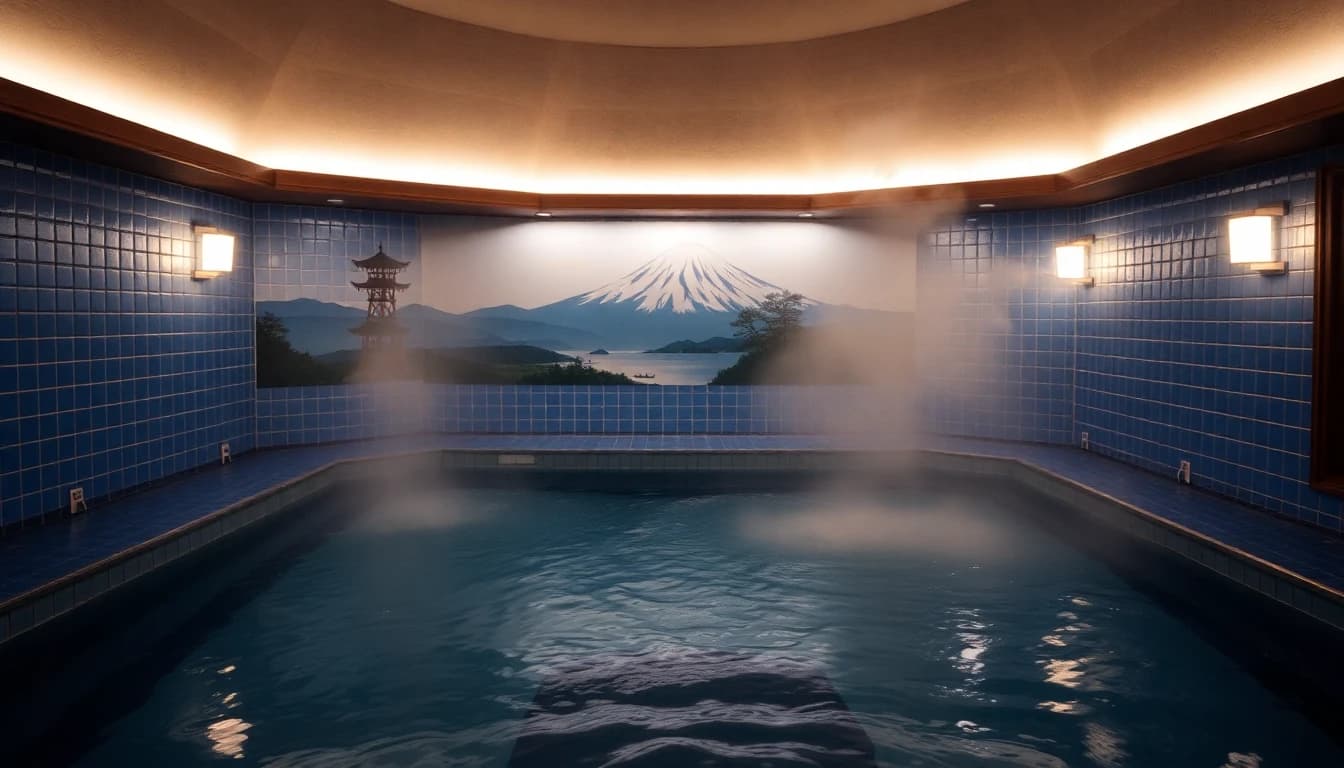
Six minutes from a residential apartment in Tokyo, a sento has been operating since 1952. The tiles are cracked in places. The ceiling mural of Mount Fuji has faded to a watercolor softness. The water is searingly hot. And for 520 yen -- about $3.50 -- it delivers the most effective stress reset available in any city on earth.
Sento are Japan's neighborhood public baths: no volcanic mineral water, no mountain views, no luxury robes. Just clean, scalding-hot tap water in a communal room where salary workers, retirees, university students, and the occasional bewildered tourist sit shoulder to shoulder on plastic stools, scrub themselves clean, and then sink into a shared tub without a word. The silence is not awkward. It is the point.
Japan had nearly 18,000 sento at the peak in 1968. Today, fewer than 2,000 remain nationwide, and Tokyo alone has dropped from over 2,600 to roughly 420 (Source: Tokyo Metropolitan Government / SoraNews24). But something unexpected is happening: a new generation of architects, designers, and young owners is reinventing the sento without destroying what made it essential. This guide introduces you to both the old guard and the new wave.
Sento vs. Onsen: What Is the Difference?
Before we go further, the distinction matters.
- Onsen uses naturally heated, mineral-rich geothermal water. Legally defined by Japan's Hot Spring Law, onsen water must emerge at 25 degrees Celsius or higher and contain at least one of 19 specified minerals (Source: JNTO)
- Sento uses municipal tap water, heated by boilers. No mineral requirements. Regulated under the Public Bathhouse Law as a community necessity
- Price: Sento admission is government-regulated at 520 yen (~$3.50) in Tokyo as of 2026. Onsen prices vary from 800 to 3,000+ yen
- Location: Sento exist inside cities, often in residential neighborhoods. Onsen are concentrated in volcanic regions and resort towns
- Tattoo policy: Sento are generally more accepting of tattoos because they are classified as essential public facilities. Onsen policies vary widely, and many still prohibit visible tattoos
- Atmosphere: Sento are everyday, utilitarian, neighborhood-focused. Onsen are destination experiences, often paired with ryokan stays
Sento Etiquette: The Essential Rules
The rules are simple, universal, and non-negotiable. Follow them and you will be welcomed anywhere.
⚕️ Disclaimer
Best Sento in Tokyo
Tokyo is the heartland of sento culture. Even as numbers decline, the city's remaining bathhouses range from untouched 1950s gems to architect-designed spaces that belong in design magazines.
1. Koganeyu (Sumida)
- Neighborhood: Kinshicho, Sumida-ku
- Built: Originally 1950s, renovated 2020 by Schemata Architects
- Price: 520 yen (bath only), craft beer from 700 yen
- Hours: 11:00-25:00 (weekdays), 8:00-25:00 (weekends)
- Tattoo policy: Tattoo-friendly
- What makes it special: Koganeyu is the poster child of the designer sento movement. Architect Jo Nagasaka (Schemata Architects) stripped the interior back to concrete and steel, added a craft beer taproom in the lobby, and commissioned artist Yoriko Hoshi to paint a shared Mount Fuji mural across both the men's and women's bathing areas. The water is still 520 yen. The beer is extra. The vibe is unmistakably contemporary Tokyo
(Source: TimeOut Tokyo)
2. Daikoku-yu (Sumida)
- Neighborhood: Oshiage, Sumida-ku (walking distance from Tokyo Skytree)
- Built: 1927, rebuilt in the 1950s
- Price: 520 yen
- Hours: 15:00-24:00 (closed Mondays)
- Tattoo policy: Tattoo-friendly
- What makes it special: Daikoku-yu is the sento that appears in every Tokyo bathhouse documentary. The building itself is a registered tangible cultural property with a temple-like karahafu roof. Inside, the penki-e (painted mural) of Mount Fuji behind the main tub is one of the most photographed in Japan. The hot water comes from a natural well, giving it a softness unusual for a city sento
(Source: Japan Objects)
3. Shimizu-yu (Minami-Aoyama)
- Neighborhood: Minami-Aoyama, Minato-ku
- Built: Originally 1950s, renovated 2022
- Price: 520 yen
- Hours: 12:00-24:00 (closed Fridays)
- Tattoo policy: Tattoo-friendly
- What makes it special: Located in one of Tokyo's most fashionable districts, Shimizu-yu was redesigned with a minimalist aesthetic that would not look out of place in a Minami-Aoyama gallery. The juxtaposition of a 520-yen neighborhood bathhouse surrounded by designer boutiques is pure Tokyo. A cold plunge tub and sauna are available for an additional fee
4. Kotobuki-yu (Taito)
- Neighborhood: Iriya, Taito-ku (10 min walk from Ueno)
- Built: 1950s, renovated 2015 by architect Kentaro Imai
- Price: 520 yen
- Hours: 14:00-23:30 (closed Tuesdays)
- Tattoo policy: Tattoo-friendly
- What makes it special: Architect Kentaro Imai, who has become the unofficial patron saint of sento renovation, redesigned this bathhouse with a rooftop open-air bath (rotenburo) overlooking the Taito-ku skyline. It is one of the few sento in central Tokyo where you can soak outdoors
(Source: Metropolis Japan)
5. Hasunuma Onsen (Ota)
- Neighborhood: Hasunuma, Ota-ku (near Kamata Station)
- Built: 1927, renovated multiple times
- Price: 520 yen
- Hours: 10:00-24:00 (daily)
- Tattoo policy: Tattoo-friendly
- What makes it special: Despite its name, Hasunuma Onsen operates as a sento but draws naturally occurring "black water" (kuroyu) from a deep underground well. The water is dark brown, rich in plant-derived humic acid, and has a silky texture on the skin. It is the closest you can get to an onsen experience within the Tokyo city limits
Best Sento in Kyoto
Kyoto's sento carry a different weight. Many are housed in pre-war wooden buildings and serve the same neighborhoods that support the city's textile and pottery workshops.
6. Funaoka Onsen (Kita-ku)
- Neighborhood: Murasakino, Kita-ku
- Built: 1923, designated Tangible Cultural Property
- Price: 490 yen
- Hours: 15:00-1:00 (Monday-Saturday), 8:00-1:00 (Sunday)
- Tattoo policy: Tattoo-friendly
- What makes it special: Funaoka is widely considered the most beautiful traditional sento in Japan. The karahafu-curved roof, carved ranma (wooden transoms) depicting scenes from Japanese mythology, and majolica tile work in the changing room are museum-quality. The outdoor cypress and rock bath rotates between men's and women's days. Said to be the first bathhouse in Japan to introduce an electric bath
(Source: Kyoto Sento Association)
7. Nishiki-yu (Nakagyo-ku)
- Neighborhood: Near Nishiki Market, Nakagyo-ku
- Built: 1927
- Price: 490 yen
- Hours: 14:00-24:00 (closed Wednesdays)
- Tattoo policy: Tattoo-friendly
- What makes it special: Nishiki-yu plays jazz through the bathhouse speakers, hosts occasional live events, and is beloved by Kyoto's maiko and geiko community. The traditional "willow wicker baskets" (yanagi kago) used for storing clothes in the changing room are a Kyoto sento tradition that has nearly vanished elsewhere
(Source: Leaf Kyoto)
Best Sento in Osaka
Osaka's bathing culture is characteristically direct: hotter water, bigger tubs, more conversation. The city's sento reflect the same no-nonsense warmth that defines its food culture.
8. Tsuruhashi Onsen (Ikuno-ku)
- Neighborhood: Tsuruhashi, Ikuno-ku
- Price: 490 yen
- Hours: 14:00-24:00 (closed Thursdays)
- Tattoo policy: Generally accepting
- What makes it special: Located steps from Tsuruhashi's famous Korean barbecue street, this sento is the perfect post-yakiniku cooldown. The building is a classic two-story Showa-era structure with a high ceiling and well-maintained tile work. The contrast between the grilled meat aroma outside and the clean steam inside captures Osaka's sensory overload in miniature
9. Mikokuyu (Nishi-ku)
- Neighborhood: Kujo, Nishi-ku
- Price: 490 yen + sauna supplement
- Hours: 14:00-2:00 (daily)
- Tattoo policy: Tattoo-friendly
- What makes it special: Part of the growing "sento + sauna" movement in Osaka, Mikokuyu pairs traditional bathing with a well-equipped dry sauna and cold plunge. The renovation maintained the original tile work while adding modern sauna infrastructure. Popular with Osaka's young professional crowd
Modern Designer Sento: The New Wave
A quiet revolution is reshaping Japan's sento landscape. Rather than letting aging bathhouses close, a new generation of architects and entrepreneurs is renovating them into design-forward spaces that attract younger bathers without alienating regulars.
Key Figures in the Movement
- Kentaro Imai -- Architect behind renovations at Kotobuki-yu, Kohmeisen, and over a dozen other sento across Japan. His philosophy: preserve the communal function, update the infrastructure, respect the neighborhood
- Jo Nagasaka (Schemata Architects) -- Designed the Koganeyu renovation that became a global architecture media sensation
- Atelier Omoya -- Art collective that introduced projection mapping to sento interiors at Hisamatsuyu in Tokyo
What Makes a Designer Sento Different?
- Architecture: Open layouts, exposed concrete, natural light through clerestory windows
- Amenities: Craft beer taprooms, cafe spaces, co-working corners
- Programming: Live music events, art exhibitions, morning yoga sessions
- Same price: The 520-yen cap still applies because designer sento remain legally classified as public bathhouses
Tattoo-Friendly Sento: A Practical Guide
Japan's tattoo-bath relationship is evolving rapidly. Here is the current reality for tattooed visitors.
General Rules
- Sento are legally public facilities and most do not enforce tattoo bans. Unlike private onsen resorts, sento exist to serve everyone in the neighborhood
- Small tattoos are almost never an issue. A wrist tattoo or ankle piece will not draw attention
- Full sleeves and large pieces may attract stares at traditional sento, but you will rarely be turned away
- Tattoo cover stickers (irezumi shiiru) are sold at convenience stores and pharmacies. They cost 500-1,000 yen and cover areas up to about 15 x 20 cm
Confirmed Tattoo-Friendly Sento
All nine sento reviewed in this article are tattoo-friendly. Beyond this list, Tokyo's WELCOME SENTO campaign (launched 2025) specifically identifies bathhouses that welcome international visitors with tattoos (Source: WELCOME SENTO).
For tattoo-friendly onsen and hot spring options, see our hidden onsen guide and ryokan guide, both of which include tattoo policy information.
Why Sento Matter: The Case for Going Before They Disappear
Japan lost over 15,000 sento between 1968 and 2025 -- a decline of roughly 90% (Source: Japan Experience). The primary causes are aging owners, rising maintenance costs, and the universal adoption of home bathrooms. Every year, another handful of irreplaceable Showa-era bathhouses close their doors permanently.
But the remaining sento are not relics. They are active community infrastructure. The regulars who visit three or four times a week are not there because they lack a shower at home. They are there because the sento provides something a private bathroom cannot:
- Thermal therapy at scale. A home bathtub holds 200 liters. A sento tub holds 2,000+. The heat penetrates differently when you can fully stretch out
- Silence without isolation. You are alone with your thoughts but surrounded by other humans. The paradox is calming
- Neighborhood connection. Sento are one of the last spaces in Japanese cities where strangers share physical proximity without transactional purpose
Visiting a sento is not tourism. It is participation. And every 520-yen admission directly supports the survival of an institution that has no equivalent anywhere else in the world.
For more on Japan's bathing culture beyond sento, explore our guides to hidden onsen across Japan and wellness tourism in Japan. If you are planning an overnight stay, our best ryokan guide covers traditional inns where bathing is central to the experience.
Frequently Asked Questions
Written by Hiro Miyamoto
Founder & CEO of Scratch Second. Starting from corporate sales at a South American food supplier, Hiro went on to spearhead the Japan market launch as VP of Sales at a Silicon Valley foodtech company — placing products in 2,400+ convenience stores and supplying ingredients for an international expo. He currently leads business development across Asia at one of the world's largest tech companies. Off the clock, he's a dedicated yachtsman, yogi, and sauna enthusiast who writes about the intersection of modern healthtech and Japan's timeless wellness traditions.
Related Articles
travel
Wellness Tourism in Japan: 7 Hidden Onsen Towns for the Healing Traveler
Discover 7 secret onsen towns in Japan where ancient toji healing meets modern wellness tourism. Practical guide with budgets, access, and insider tips.
travel
Tea Ceremony Experience in Japan: A First-Timer's Complete Guide to Chado
Everything you need to know about experiencing a Japanese tea ceremony: etiquette, what to expect, best venues in Kyoto, Tokyo, and Kanazawa, and booking tips.
travel
Craft Tourism in Japan 2026: A Guide to Pottery, Bladesmithing & Indigo Dyeing
The complete guide to hands-on craft experiences in Japan for 2026. Pottery, bladesmithing, and indigo dyeing — with booking tips, prices, access, and recommended regions.