
craft · 8min read · 2026-03-17
How to Care for Japanese Knives: The Complete Maintenance Guide
Learn how to care for Japanese knives with this step-by-step guide covering daily cleaning, whetstone sharpening, carbon steel maintenance, and storage solut...
Key Takeaways
- Proper daily knife maintenance takes less than 60 seconds
- Japanese knives must be hand-washed and dried immediately after every use
- Whetstone sharpening is the only recommended method for Japanese knives
- Carbon steel blades are more chip-prone and rust-susceptible than stainless
- Single-bevel knives require a different sharpening approach than Western knives
A Japanese knife is not just a kitchen tool. It is a piece of forged precision, shaped by centuries of bladesmithing tradition. And like any precision instrument, it demands a specific kind of care.
The good news: proper maintenance takes less than 60 seconds a day. The reward is a blade that stays sharper, lasts longer, and performs better than anything else in your kitchen.
This guide covers everything from daily routines to emergency repairs, based on techniques used by craftsmen in Seki, Japan's historic blade-making capital.
“I've visited knife workshops in Seki and spoken with third-generation blacksmiths about how they maintain their own blades. Their advice is simpler than you might expect, and it starts with just keeping the blade dry.
Why Japanese Knives Need Special Care
Japanese knives differ from Western knives in three fundamental ways. Each difference changes how you should maintain the blade.
- Harder steel (HRC 60-67 vs 54-58): Japanese blades use harder steel alloys like Shirogami (White Steel) and Aogami (Blue Steel). Harder steel holds a sharper edge longer but is more brittle and chip-prone
- Thinner edge geometry (15 degrees vs 20-25 degrees): The acute angle creates exceptional cutting performance but requires gentler handling and precise sharpening technique
- Single-bevel or asymmetric grind: Many traditional Japanese knives sharpen on one side only, requiring a different approach than the symmetrical Western grind Japanese Knife vs Western Knife:
- Steel Hardness (HRC) — Japanese: 60-67 / Western: 54-58
- Edge Angle — Japanese: 10-15 degrees per side / Western: 20-25 degrees per side
- Blade Thickness — Japanese: Thinner, lighter / Western: Thicker, heavier
- Sharpening Method — Japanese: Whetstones only / Western: Honing rod, pull-through, whetstones
- Dishwasher Safe — Japanese: Never / Western: Not recommended
- Rust Risk — Japanese: High (carbon steel) / Low (stainless) / Western: Low
- Chip Risk — Japanese: Higher (harder, more brittle) / Western: Lower (softer, more flexible)
Daily Care: The 60-Second Routine
The single most important habit is simple: wash and dry your knife immediately after every use. Moisture is the enemy.
🛑 Safety Notice
Your Daily Checklist
- Rinse the blade under warm water right after cutting
- Wash with mild dish soap and a soft sponge. Wipe from spine to edge, never along the blade
- Dry thoroughly with a clean, soft cloth. Do not air-dry
- Store in a protected spot: magnetic strip, knife block, or blade guard
Critical tip: Never leave a Japanese knife sitting in a sink of water, not even for five minutes. Acidic food residue (citrus, tomato, onion) accelerates corrosion on carbon steel.
Do's and Don'ts
Do:
- Hand wash immediately after use
- Use a soft sponge or cloth
- Cut on wood or soft plastic boards
- Use a smooth slicing motion
- Dry completely before storing
Don't:
- Put in the dishwasher (heat warps handles, detergent dulls edges)
- Scrub with steel wool or abrasive pads
- Cut on glass, marble, ceramic, or bamboo
- Twist or pry with the blade
- Air-dry or leave wet on the counter
Sharpening with Whetstones: Step by Step
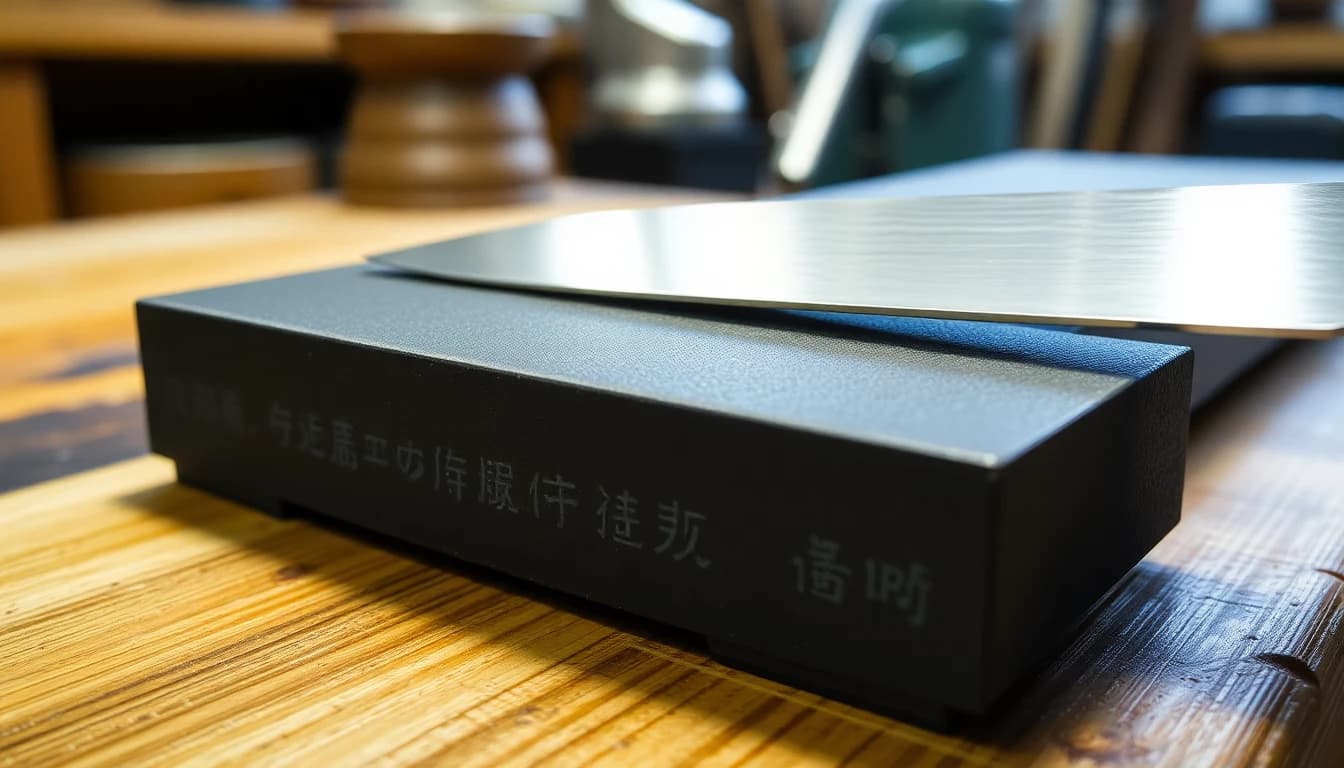
Whetstones (also called water stones) are the only recommended sharpening method for Japanese knives. Electric sharpeners and pull-through devices will damage the delicate edge geometry.
Choosing Your Whetstone: The Grit Guide
Grit numbers indicate coarseness. Lower numbers cut more aggressively; higher numbers polish and refine.
- 400-600 grit (Coarse) — Repairing chips, re-profiling damaged edges. Emergency repairs only.
- 1000 grit (Medium) — Regular sharpening when the knife feels dull. Everyone needs this (essential).
- 3000 grit (Medium-Fine) — Refining after the 1000 grit pass. Recommended for home cooks.
- 6000 grit (Fine) — Polishing. Ideal stopping point for meat prep. For enthusiasts.
- 8000+ grit (Ultra-Fine) — Mirror polish. Best for vegetable and sashimi work. For professionals and collectors.
*A combination 1000/3000 or 1000/6000 dual-sided stone covers most home sharpening needs. Budget around $30-$80 USD for a quality option. King, Shapton, and Suehiro are trusted brands.
The Sharpening Angle: 15 Degrees vs 20 Degrees
- Japanese knives: 10-15 degrees per side (or one side only for single-bevel). This is roughly the height of two stacked coins beneath the spine
- Western knives: 20-25 degrees per side. Wider angle for durability at the cost of sharpness
- Consistency matters more than precision. Holding a steady angle throughout each stroke is more important than hitting exactly 15 degrees
Step-by-Step Sharpening Technique
- Soak your whetstone in water for 10-15 minutes until bubbles stop rising. Keep a spray bottle nearby to re-wet during sharpening
- Place the stone on a stable, non-slip surface. A damp towel underneath works well
- Hold the knife at your chosen angle (10-15 degrees). Place your index and middle fingers on the flat of the blade near the edge
- Push forward along the stone with light, even pressure. The stroke should cover the full length of the blade. Lift on the return stroke
- Count your strokes: 10-15 strokes per section, working from heel to tip in overlapping zones
- Check for a burr by gently running your thumb perpendicular across the edge (never along it). A slight catch means metal has folded over and you are ready to flip
- Repeat on the other side with the same number of strokes (for double-bevel knives). For single-bevel, do 70% of strokes on the flat side and 30% on the angled side
- Move to a finer grit (3000 or 6000) and repeat with fewer, lighter strokes to polish the edge
- Strop on newspaper or leather (optional) for a final micro-polish
- Rinse and dry the knife thoroughly. Clean and dry your whetstone before storing flat
How Often to Sharpen
- Professional chef (daily, heavy use) — Every 1-2 weeks. Sign: Tomato skin tears instead of slicing cleanly.
- Enthusiast cook (daily, moderate use) — Every 1-2 months. Sign: Onions make you cry more than usual (crushing cells, not cutting them).
- Home cook (a few times per week) — Every 3-4 months. Sign: Blade slides off round vegetables instead of biting in.
- Occasional use — Every 6 months. Sign: Any noticeable loss of cutting performance.
Carbon Steel vs Stainless Steel: Different Care Routines
The steel type determines how much maintenance your knife needs. Here is a direct comparison. Carbon Steel (Hagane) vs Stainless Steel:
- Wash after use — Carbon: Immediately (reacts with acids) / Stainless: Promptly (less urgent)
- Dry after wash — Carbon: Immediately and thoroughly / Stainless: Thoroughly
- Oiling — Carbon: After every use with tsubaki (camellia) oil / Stainless: Not required
- Rust risk — Carbon: High / Stainless: Low (not zero)
- Patina — Carbon: Develops naturally (protective, desirable) / Stainless: Minimal
- Sharpening ease — Carbon: Easier (softer abrasion resistance) / Stainless: Takes more effort
- Edge retention — Carbon: Excellent / Stainless: Very good
- Long-term storage — Carbon: Oil + wrap in anti-rust paper / Stainless: Clean, dry, blade guard
Patina Development on Carbon Steel
Patina is a natural oxidation layer that forms on carbon steel over time. Far from being a defect, it is desirable.
- Patina protects. The oxidized layer acts as a barrier against deeper rust
- Patina tells a story. Blue, grey, and bronze tones develop based on what you cut. Onions create dark blues; proteins leave grey streaks
- You can encourage patina by cutting acidic foods (mustard, vinegar-soaked vegetables) intentionally during the knife's first weeks
- Tsubaki oil slows patina formation. If you want the patina to develop faster, reduce oiling frequency (but accept higher rust risk during this period)
About tsubaki oil: Camellia oil (tsubaki abura) has been used in Japan for centuries to protect blades, swords, and fine tools. It is food-safe, odorless, and creates an invisible moisture barrier. Apply a thin coat with a soft cloth after drying. A small bottle ($8-$15 USD) lasts months.
Storage Solutions
How you store your knife matters almost as much as how you sharpen it. The blade should never contact other metal objects.
1. Magnetic Wall Strip
- Pros: Easy access, displays beautifully, blade stays dry
- Cons: Risk of chipping if slapped on carelessly
- Best for: Daily-use knives in a dry kitchen
2. Knife Block
- Pros: Protected edges, countertop display
- Cons: Can trap moisture inside slots; harder to clean
- Best for: Knife sets, humid climates (if well-ventilated)
3. Edge Guard / Saya
- Pros: Portable, protects blade during travel or in drawers
- Cons: Can trap moisture if knife is stored wet
- Best for: Drawer storage, travel, carbon steel knives
4. Drawer Insert (In-Drawer Block)
- Pros: Hidden storage, organized, saves counter space
- Cons: Blades can shift and contact each other
- Best for: Minimalist kitchens with limited counter space
Seki craftsman's tip: Traditional Japanese knife makers use a wooden saya (sheath) lined with magnolia wood, which absorbs excess moisture. If you store a carbon steel knife long-term, wrap it in anti-rust paper (boushikami) after oiling.
Common Mistakes That Ruin Japanese Knives
- Dishwasher → Hand wash only. Dishwasher heat warps wooden handles. Detergent chemicals dull the edge. Other utensils bang against the blade
- Glass or marble cutting boards → Use wood or soft plastic. Hard surfaces chip Japanese steel on contact
- Electric or pull-through sharpeners → Whetstones only. Mechanical sharpeners remove too much metal and cannot match the precise angle Japanese edges require
- Prying, twisting, or cutting frozen food → Slice, never force. Japanese blades are thin and hard, not flexible. Lateral pressure causes chips or fractures
- Honing rod (for hard Japanese steel) → Use a ceramic honing rod if you must, never steel. Steel rods are too aggressive for HRC 60+ blades and can chip the edge
- Leaving wet in the sink → Wash, dry, store. Even 10 minutes of sitting in water starts oxidation on carbon steel
Emergency Fixes
🛑 Safety Notice
Chipped Edge
- Assess the chip size. Under 1mm: fix at home. Over 2mm: consult a professional sharpener
- Use a coarse stone (400-600 grit) to grind the entire edge down to the level of the chip
- Re-profile the edge with your 1000 grit stone, then polish with 3000+
- Accept material loss. Fixing a chip means removing metal. The blade will be slightly narrower
Prevention: Most chips come from lateral force, hard cutting boards, or cutting frozen ingredients. Address the cause, not just the symptom.
Rust Spots
- Light surface rust: Rub gently with a rust eraser (sabitori) or a paste of baking soda and water. Wipe clean, dry, and oil
- Moderate rust: Use a 2000+ grit whetstone with light pressure on the affected area
- Deep pitting: Professional restoration needed. The blade's structural integrity may be compromised
Loose Handle (Wa-Handle)
Traditional Japanese wa-handles are friction-fit, not glued. Over time, they can loosen.
- Quick fix: Soak the handle end in warm water briefly, then tap the butt of the handle firmly against a wooden surface. The wood swells and re-tightens
- Permanent fix: Remove handle, apply food-safe epoxy to the tang, re-seat the handle
- When to send for repair: If the tang is corroded or the handle is cracked, a professional re-handling is the safest option ($20-$60 USD at most knife shops)
Frequently Asked Questions
Can I use a honing steel on a Japanese knife?
A traditional steel honing rod is not recommended for Japanese knives. The steel is too hard (HRC 60+) and brittle for aggressive realignment. If you want to maintain the edge between sharpenings, use a ceramic honing rod with very light pressure. Better yet, touch up on a fine whetstone (3000+ grit) for two or three passes.
How do I know when my Japanese knife needs sharpening?
Try the tomato test: place the blade on a ripe tomato's skin without pressing down. A sharp knife bites in and glides through under its own weight. If the blade slides across the skin, it is time to sharpen. Other signs include tearing herbs instead of cutting them cleanly and difficulty slicing paper.
Is the patina on my carbon steel knife safe?
Yes. Patina is a layer of stable iron oxide that forms naturally when carbon steel reacts with food acids and moisture. It is completely food-safe and actually protects the blade from deeper, harmful rust. Many chefs deliberately encourage patina development on new knives.
What is the best cutting board for Japanese knives?
End-grain wood (hinoki cypress, maple, or walnut) is the top choice. The wood fibers absorb the blade's impact rather than resisting it, keeping the edge sharper for longer. Soft rubber boards are a good alternative. Avoid glass, marble, ceramic, and bamboo, as all of these are harder than the knife's steel and will dull or chip the edge.
How should I store my Japanese knife if I travel with it?
Use a blade guard (edge guard) or wooden saya for individual protection. For multiple knives, a padded knife roll made of canvas or leather keeps blades separated and secure. Always ensure the blade is clean, dry, and lightly oiled (if carbon steel) before packing. Wrap each knife individually so edges never contact other metal.
Summary: Your Weekly Knife Care Checklist
- Every use (60 seconds) — Hand wash with mild soap, dry immediately, store safely
- Every use, carbon steel (30 seconds) — Apply thin coat of tsubaki oil after drying
- Weekly (2 minutes) — Inspect edge for chips or dullness. Wipe handle with dry cloth
- Monthly, heavy use (10 minutes) — Touch-up sharpening on 3000+ grit whetstone
- Every 2-4 months (20-30 minutes) — Full sharpening session: 1000 → 3000 → 6000 grit
- Every 6 months (5 minutes) — Check handle tightness. Oil wooden handles with mineral oil
- Annually (Drop-off) — Professional assessment if edge geometry needs correction A well-maintained Japanese knife is a generational object. Blacksmiths in Seki forge blades that can outlast their makers. Your part of the bargain is simply this: wash, dry, sharpen, respect.
Ready to explore more Japanese craftsmanship? Browse our Craft collection, discover more articles on Japanese artisanship, or dive into our complete guide to Japanese kitchen knives. For those drawn to the makers behind the blades, our pottery comparison guide explores a parallel world of Japanese craft mastery. And if you want to visit these workshops yourself, start with our Travel guides.
Written by Hiro Miyamoto
Founder & CEO of Scratch Second. Starting from corporate sales at a South American food supplier, Hiro went on to spearhead the Japan market launch as VP of Sales at a Silicon Valley foodtech company — placing products in 2,400+ convenience stores and supplying ingredients for an international expo. He currently leads business development across Asia at one of the world's largest tech companies. Off the clock, he's a dedicated yachtsman, yogi, and sauna enthusiast who writes about the intersection of modern healthtech and Japan's timeless wellness traditions.
Related Articles
craft
Wajima Lacquerware: Why Japan's Most Resilient Craft Deserves Your Attention
A complete guide to Wajima-nuri lacquerware — the 124-step process, how it compares to other Japanese lacquer, what to buy, where to buy, and how Wajima is r...
craft
Japan's Matcha Exports Surpass 10,000 Tons for the First Time in 71 Years
In 2025, Japanese tea exports exceeded 10,000 tons for the first time since 1954. Behind the matcha boom lies a deepening supply shortage, soaring prices, and a structural shift in Japan's tea farming industry.
craft
Why HOSOO Moves the World — A 327-Year-Old Nishijin Weaver's Path to Dior and Chanel
How HOSOO, a 327-year-old Nishijin-ori weaving house in Kyoto, became the textile supplier to Dior, Chanel, and Hermes. An in-depth look at their 150cm-wide loom innovation, LVMH partnership, and Milan expansion.