
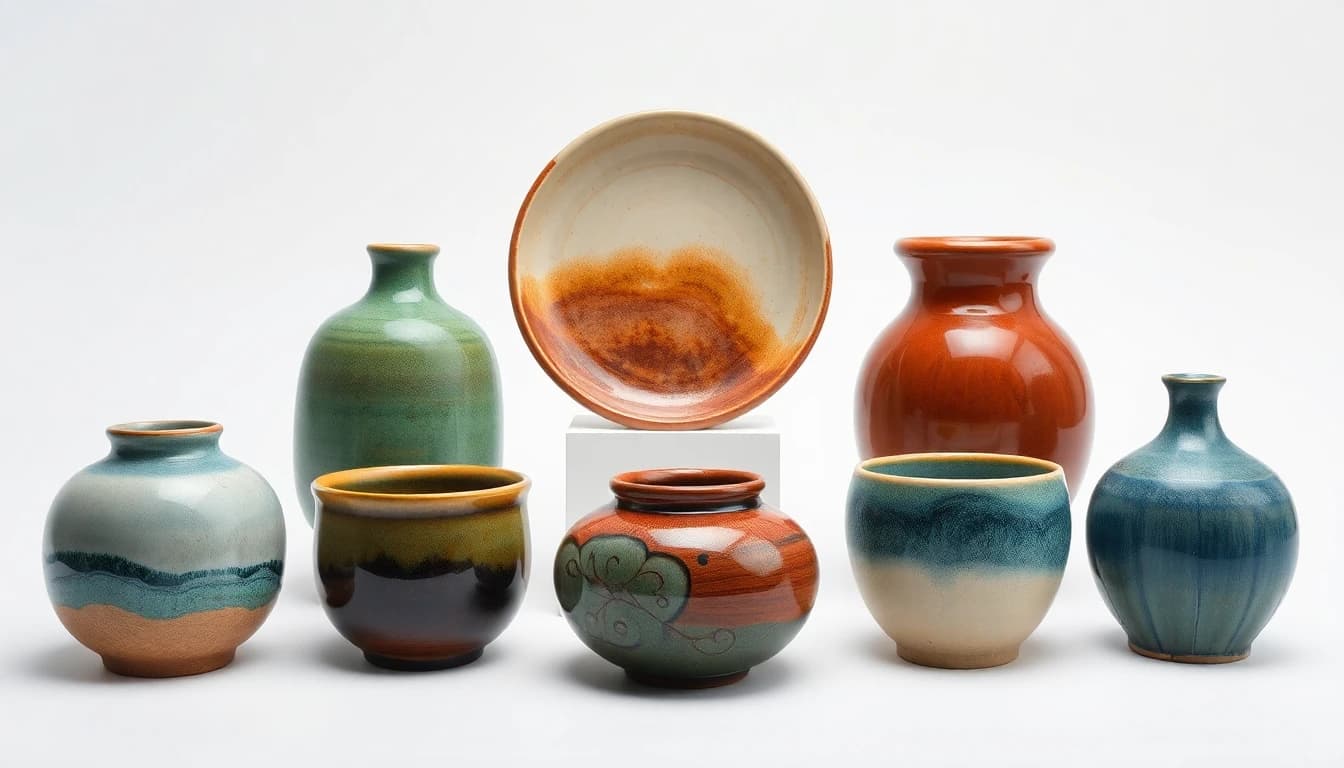
craft · 12min read · 2026-03-21
Best Japanese Pottery in 2026: 7 Styles Compared for Collectors and Home Cooks
Compare 7 major Japanese pottery styles — Arita, Bizen, Mashiko, Mino, Kutani, Shigaraki, and Karatsu — with price ranges, firing techniques, and buying advice.
Key Takeaways
- Seven major styles compared: Arita, Bizen, Mashiko, Mino, Kutani, Shigaraki, and Karatsu
- Bizen's unglazed porous surface keeps beer foam stable longer than glass
- Japanese antique ceramics have risen in value by nearly 40% since 2023
- Wood-fired anagama and noborigama kilns create unpredictable natural glazes
- The vessel is considered part of the meal in Japanese culinary tradition
A single ceramic bowl can hold centuries of tradition, the heat of a wood-fired kiln, and the fingerprints of its maker. In Japan, pottery is not decoration. It is daily ritual made tangible.
But with over forty recognized pottery traditions across the country, choosing the right style can feel overwhelming. Arita's luminous porcelain and Bizen's raw, earth-born stoneware could hardly look more different, yet both carry the weight of Japanese ceramic heritage.
This guide compares seven of Japan's most celebrated pottery styles side by side. Whether you are a collector seeking a museum-worthy tea bowl, a home cook who wants plates that honor the food they hold, or a gift-giver searching for something truly irreplaceable, the right style is here.
Why Japanese Pottery Deserves a Place in Your Kitchen
Japanese cuisine has long embraced a principle that most Western kitchens overlook: the vessel is part of the meal. A kaiseki chef may spend as much time selecting the plate as composing the dish. The Japanese term utsuwa (器) captures this — it means "vessel" but implies a relationship between container and content that borders on philosophical.
There is a practical dimension as well. Many Japanese pottery styles are engineered for daily use. Mashiko stoneware resists chipping. Mino ware survives the dishwasher. Bizen clay keeps beer foam stable longer than glass, a claim supported by the porous surface structure of unglazed stoneware (Source: Bizen Pottery Traditional Industry Association).Then there is the investment angle. Japanese antique ceramics have risen in value by nearly 40% since 2023, with the global ceramics market projected to reach $8.5 billion by 2032 at a 6.8% compound annual growth rate (Source: Bellmans Auction House, 2025). A handmade Japanese bowl purchased today is not just tableware. It is an appreciating asset you can eat breakfast from.
What to Look For in Japanese Pottery
Before comparing individual styles, it helps to understand the five criteria that matter most. These are the lenses through which potters, collectors, and chefs evaluate Japanese ceramics.
Firing Technique
The kiln defines the character of the clay. Japan's two most iconic kiln types are the anagama (single-chamber tunnel kiln, dating to the 5th century) and the noborigama (multi-chamber climbing kiln, used since the 17th century). In an anagama firing, wood ash settles directly onto the pottery, melting into unpredictable natural glazes over several days at temperatures above 1,200 degrees Celsius. A noborigama allows more control, with separate chambers producing varied atmospheres in a single firing.
Modern gas and electric kilns offer consistency but sacrifice the element of chance that wood-fired ceramics celebrate. When evaluating a piece, ask: was it born from fire and ash, or from temperature dials?
Glaze vs. Unglazed
Glazed pottery (Arita, Kutani, Mino) offers color, pattern, and a smooth surface. Unglazed pottery (Bizen, Shigaraki) offers texture, warmth, and surfaces that age with use. Neither is superior. The choice depends on whether you want visual drama or tactile intimacy.
Daily Use vs. Display
Some styles are built for the table. Mashiko and Mino are famously durable. Others, like fine Kutani or antique Arita, demand careful handling. Consider how you intend to live with the piece — not just where you will put it.
Price
Prices range from $15 for a simple Mino rice bowl to $50,000 or more for a Living National Treasure's tea bowl. Most collectors start in the $30 to $200 range, where quality and authenticity are both attainable. We include specific price ranges for each style below.
Authenticity
Genuine Arita porcelain comes from Saga Prefecture. Authentic Bizen ware is fired in Okayama.
Comparison: 7 Japanese Pottery Styles at a Glance
1. Arita (Arita-yaki)
- Region: Saga Prefecture
- Technique: Porcelain, painted overglaze, gas/electric kiln
- Look and Feel: Luminous white body with cobalt blue, red, or gold motifs
- Price Range: $25 -- $500+ (artisan pieces to $5,000+)
- Best For: Elegant table settings, gifts, collectors
2. Bizen (Bizen-yaki)
- Region: Okayama Prefecture
- Technique: Unglazed stoneware, wood-fired anagama, 10-14 day firings
- Look and Feel: Earthy reds and browns, natural ash marks, rough texture
- Price Range: $40 -- $300 (master works $1,000 -- $50,000+)
- Best For: Tea ceremony, sake vessels, serious collectors
3. Mashiko (Mashiko-yaki)
- Region: Tochigi Prefecture
- Technique: Stoneware, kick-wheel, climbing kiln or gas
- Look and Feel: Warm earth tones, thick glaze drips, sturdy form
- Price Range: $15 -- $150 (noted potters $200 -- $2,000)
- Best For: Daily tableware, folk craft lovers
4. Mino (Mino-yaki)
- Region: Gifu Prefecture
- Technique: Multiple sub-styles (Shino, Oribe, Setoguro, Ki-Seto)
- Look and Feel: Varies widely: white crackle, copper green, jet black, or yellow
- Price Range: $10 -- $200 (Oribe/Shino artisan $300 -- $3,000)
- Best For: Everyday use, restaurants, design enthusiasts
5. Kutani (Kutani-yaki)
- Region: Ishikawa Prefecture
- Technique: Porcelain, overglaze painting in 5 colors
- Look and Feel: Bold, vivid -- deep green, navy, red, purple, yellow on white
- Price Range: $30 -- $400 (antique Ko-Kutani $1,000 -- $20,000+)
- Best For: Statement pieces, display, luxury gifts
6. Shigaraki (Shigaraki-yaki)
- Region: Shiga Prefecture
- Technique: Stoneware, wood-fired or gas, natural ash glaze
- Look and Feel: Rough texture, warm orange-red with glassy green ash spots
- Price Range: $20 -- $200 (large sculptures $500 -- $5,000)
- Best For: Flower vases, garden ware, wabi-sabi lovers
7. Karatsu (Karatsu-yaki)
- Region: Saga Prefecture
- Technique: Stoneware, climbing kiln, Korean-influenced glazing
- Look and Feel: Subdued grays and whites over dark body, brushwork decoration
- Price Range: $30 -- $300 (tea ceremony pieces $500 -- $10,000+)
- Best For: Tea ceremony, understated elegance
Detailed Reviews
Arita Ware (Arita-yaki): The Porcelain Pioneer
Arita's story begins in 1616, when Korean potter Yi Sam-pyeong discovered porcelain stone near the town of Arita in Saga Prefecture. Within decades, Arita porcelain was shipping to Europe aboard Dutch East India Company vessels, where it was prized by royalty and gave rise to the name "Imari ware" — after the port from which it departed.
What defines Arita is its luminous white body and the precision of its painted decoration. Cobalt blue underglaze (sometsuke) is the most traditional style, but Arita also encompasses the vivid reds and golds of Kakiemon and Nabeshima traditions. The late Sakaida Kakiemon XIV, a designated Living National Treasure, elevated nigoshide (milky white porcelain) to a fine art (Source: Artsy).
Today, the Arita Porcelain Lab and several hundred active studios continue the tradition. Modern Arita ranges from faithful Edo-period reproductions to strikingly minimal contemporary designs. A simple plate starts around $25. A hand-painted Kakiemon-style vase from a noted studio can reach $5,000 or more.
Best for: Those who want porcelain that carries four centuries of unbroken lineage. Ideal for formal table settings and gifts that recipients will remember.
Bizen Ware (Bizen-yaki): Earth, Fire, and Nothing Else
Bizen is radical in its simplicity. No glaze. No decoration. No painting. Just local clay from Okayama Prefecture, shaped by hand, and fired in an anagama kiln for 10 to 14 continuous days at temperatures reaching 1,300 degrees Celsius. The result is entirely dependent on where the piece sits in the kiln, how the ash falls, and how the flames travel.
This makes every Bizen piece genuinely one of a kind. The hidasuki pattern (red lines created by wrapping straw around the clay before firing) and goma (sesame-seed-like ash spots) are not applied by the potter. They are gifts from the kiln. Kaneshige Toyo, designated a Living National Treasure in 1956, is credited with reviving Bizen ware in the modern era (Source: Kogei Japonica).
Bizen's porous surface is not just aesthetic. Sake served in a Bizen cup tastes subtly different — the clay's iron content is said to mellow the flavor. Beer poured into a Bizen tumbler holds its foam visibly longer than in glass, thanks to the micro-texture of the unglazed surface.
Contemporary artists including Kakurezaki Ryuichi and Kosuke Kaneshige continue pushing Bizen into contemporary territory. Prices for daily-use pieces begin around $40. Works by established masters command $1,000 to $50,000 at auction.
Best for: Collectors who value process over decoration. Bizen rewards patience and a willingness to see beauty in imperfection — the essence of wabi-sabi.
Mashiko Ware (Mashiko-yaki): The People's Pottery
Mashiko's fame is inseparable from one man: Shoji Hamada. In 1924, Hamada moved to the rural town of Mashiko in Tochigi Prefecture, drawn by the quality of its iron-rich clay. He set up his kiln and, alongside philosopher Soetsu Yanagi, championed the mingei (folk craft) movement — the idea that true beauty lives in humble, handmade objects created for daily use.
Hamada was designated a Living National Treasure in 1955. His student Tatsuzo Shimaoka earned the same honor in 1996 for his innovative jomon zogan (rope-impressed inlay) technique (Source: Kogei Japonica).
Mashiko pottery is thick, sturdy, and unapologetically functional. The clay's high iron content produces warm reddish-brown tones when fired. Glazes tend toward earthy persimmon, tenmoku black, and ash gray. A Mashiko rice bowl feels substantial in the hand — it was designed to be used twice a day, every day, for decades.
Today, over 250 potters work in and around Mashiko. The town's biannual ceramics fair draws over 600,000 visitors. A well-made Mashiko mug starts at $15. Works by noted contemporary potters reach $200 to $2,000.
Best for: Anyone who wants pottery they can actually use without anxiety. Mashiko is where craft meets daily life, exactly as Hamada intended.
Mino Ware (Mino-yaki): The Shape-Shifter
Mino is Japan's most prolific pottery region, producing over half of all ceramics made in the country. Located in Gifu Prefecture, with a history spanning over 1,300 years, Mino is not one style but many. Its four most celebrated sub-styles each have their own aesthetic identity.
Shino features a thick, milky-white glaze dotted with tiny pinholes, creating a surface that looks almost like fresh snow. Oribe, named after the tea master Furuta Oribe, is instantly recognizable for its bold copper-green glaze and asymmetric shapes. Setoguro produces an intense jet-black finish through rapid cooling. Ki-Seto offers a subtle, warm yellow that is among the most understated of all Japanese glazes.
This variety makes Mino the most versatile choice on this list. Restaurants across Japan rely on Mino ware because it offers diversity within a single tradition. A Shino plate and an Oribe bowl look nothing alike, yet both carry the authority of Mino's heritage.
Prices reflect this range. Mass-produced Mino tableware starts as low as $10. Handmade Oribe or Shino pieces from recognized studios run $300 to $3,000.
Best for: Design enthusiasts and restaurant owners who want variety without sacrificing heritage. Mino is the gateway drug to Japanese pottery — accessible, diverse, and endlessly rewarding.
Kutani Ware (Kutani-yaki): Color That Commands Attention
If Bizen whispers, Kutani shouts. Originating in the Kaga region of Ishikawa Prefecture over 350 years ago, Kutani porcelain is defined by its overglaze painting in five signature colors: deep green, navy blue, purple, red, and yellow — collectively known as Kutani gosai (the five Kutani colors).
The effect is dramatic. A single Kutani sake cup can contain a landscape, a dragon, a garden of peonies — rendered with a level of detail that borders on obsessive. The bold, vivid designs are applied over a white porcelain body and then re-fired to fix the overglaze, a process that demands extraordinary skill and patience.
Historical Kutani divides into two eras. Ko-Kutani (old Kutani, 17th century) is among the most sought-after and debated categories in Japanese ceramics — some scholars still argue about its exact origins. Modern Kutani continues to produce both traditional and contemporary designs. Retailers like Japan Kutani Shop and Musubi Kiln offer pieces with worldwide shipping.
Contemporary Kutani pieces start around $30 for small cups. Elaborately painted platters run $200 to $400. Antique Ko-Kutani can reach $20,000 or more at auction.
Best for: Those who want ceramics that stop conversations. Kutani is statement pottery — it demands to be noticed and rewards close inspection.
Shigaraki Ware (Shigaraki-yaki): Wabi-Sabi Made Tangible
Shigaraki, in Shiga Prefecture near Lake Biwa, is one of Japan's Six Ancient Kilns — a designation recognizing continuous pottery production since the medieval period. If you have visited Japan, you have almost certainly seen Shigaraki ware without knowing it: the rotund tanuki (raccoon dog) statues guarding restaurant entrances are Shigaraki's most famous export.
Look past the tanuki and you find a tradition of remarkable depth. Shigaraki clay, rich in feldspar from the ancient lakebed, produces a distinctive warm, orange-red body. During wood firing, falling ash creates glassy green spots (biidoro) and a rough, sandy texture that feels like holding a piece of the earth itself.
Shigaraki ware has deep connections to the tea ceremony. The natural, unforced quality of its surfaces embodies wabi-sabi — the beauty of impermanence and imperfection — more directly than almost any other tradition. Sen no Rikyu, the legendary tea master, favored simple, humble vessels. Shigaraki delivers exactly that.
Everyday pieces start around $20. Large planters and garden sculptures run $500 to $5,000. Tea ceremony water jars from established kilns can reach several thousand dollars.
Best for: Gardeners, tea practitioners, and anyone drawn to the raw beauty of earth and ash. Shigaraki is pottery at its most elemental.
Karatsu Ware (Karatsu-yaki): The Tea Master's Choice
Karatsu occupies a unique position in Japanese ceramic history. Located in Saga Prefecture (the same region as Arita, though the two could not be more different), Karatsu ware traces its techniques to Korean potters who arrived during the late 16th century. This Korean influence gives Karatsu a restraint and subtlety that set it apart from other Japanese styles.
The classic Karatsu aesthetic features a dark clay body partially covered with a grayish-white or straw-ash glaze. Brushwork decorations, when present, are spare and calligraphic — a few swift strokes suggesting grasses, flowers, or waves. The tea ceremony proverb "first Raku, second Hagi, third Karatsu" (Ichi Raku, Ni Hagi, San Karatsu) speaks to the reverence tea practitioners hold for Karatsu ware.
E-Garatsu (painted Karatsu) features iron-oxide brushwork under a translucent glaze. Madara-Garatsu shows a mottled, milky surface. Chosen-Garatsu (Korean Karatsu) layers a white glaze over a black one, creating a dramatic two-tone effect where the boundary between glazes becomes the point of beauty.
Daily-use Karatsu pieces start around $30. Tea ceremony bowls from respected kilns range from $500 to $10,000 or more. The market for antique Momoyama-era Karatsu is fiercely competitive among collectors.
Best for: Tea ceremony practitioners and those who appreciate Korean-Japanese ceramic dialogue. Karatsu rewards a quiet eye and a patient hand.
Best for Your Needs
Best for Daily Use on a Budget
Mashiko and Mino offer the best combination of durability, beauty, and affordability. Both styles were designed for daily use. Mashiko gives you folk-craft warmth. Mino gives you variety. Either will serve you well for decades. Budget: $15 to $60 per piece.
Best for Serious Collectors
Bizen and Karatsu offer the deepest collecting experiences. Each piece is unique, the market rewards knowledge, and the connection to tea ceremony history adds cultural weight. Start with a sake cup or a small tea bowl before investing in larger works. Budget: $200 to $5,000+ per piece.
Best for Gifts
Arita and Kutani make the strongest visual impression. Their refined surfaces and vivid colors communicate quality immediately, even to recipients who know nothing about Japanese pottery. A paired set of Kutani sake cups or an Arita plate in a paulownia wood box is a gift that transcends cultures. Budget: $50 to $300 per gift.
Best for Wabi-Sabi Aesthetic
Shigaraki and Bizen embody the wabi-sabi philosophy most authentically. If you are drawn to raw surfaces, earth tones, and the beauty of imperfection, these two traditions will resonate. Budget: $40 to $500 per piece.
Where to Buy Authentic Japanese PotteryThe global market for Japanese ceramics is growing rapidly. The North American craft market alone reached $361 billion in 2024 and is projected to hit $768 billion by 2033 at an 8.7% compound annual growth rate (Source: Kogei Japonica, 2025 Overseas Market Report). Demand for authentic Japanese pottery is outpacing supply. Here is where to find genuine pieces.
Online Retailers with International Shipping
- Musubi Kiln — Curated selection across multiple styles, free furoshiki gift wrapping, worldwide shipping
- Japan Objects Store — Authentic pottery with free worldwide shipping
- Japan Classic — One-of-a-kind handmade pieces, flat $20 shipping worldwide (free over $118)
- Japanese Food Craftsman — Direct from artisan kilns, free worldwide shipping
- Kinsen Tokyo — Curated treasures with fast worldwide shipping
- Suigenkyo — Wide selection of traditional Japanese ceramics
B2B and Wholesale Platforms
- Faire — B2B wholesale marketplace increasingly popular for Japanese craft. Ideal for retailers and restaurants sourcing tableware
- 1stDibs — Higher-end pieces, antiques, and collector-grade pottery
In Japan
If you have the opportunity to visit, nothing compares to buying directly from the source. Mashiko's biannual ceramics fair (spring and autumn) offers access to over 500 potters. The Arita Ceramics Fair each spring draws a million visitors. Bizen's studios welcome visitors year-round, and many potters sell directly from their workshops.
For more on experiencing Japanese craft culture firsthand, see our guides to Japanese craft traditions and wellness travel in Japan.
How Japanese Pottery Connects to a Larger Story
The global ceramic tableware market was valued at $13.43 billion in 2025 and is projected to reach $24.91 billion by 2034, growing at a 7.11% CAGR (Source: W Magazine / Industry Data). Within this expanding market, Japanese pottery occupies a unique position. It is not competing on price. It is competing on story, craft, and irreplaceability.
Studios like Tokinoha Ceramic Studio in Kyoto, founded in 2009, now ship custom pottery to Michelin-starred restaurants worldwide. The model is instructive: a small workshop, led by artisans with deep knowledge of their materials, serving discerning clients who value authenticity above all else. As covered in our craft articles, this is the future of Japanese craft export — not mass production, but curated excellence.
When you choose a piece of Japanese pottery, you are not just buying a bowl. You are supporting a tradition that stretches back centuries, sustaining a living artisan, and bringing a piece of that unbroken lineage into your daily life. That is worth more than any price tag.
Explore our full collection of Japanese craft disciplines, from kitchen knives to textiles and lacquerware. And if you are planning a trip to visit these pottery regions in person, our Japan travel guides and wellness resources can help you plan a journey that feeds both body and spirit.
Frequently Asked Questions
What is the most valuable type of Japanese pottery?
Bizen ware and antique Ko-Kutani tend to command the highest prices at auction. A Living National Treasure Bizen tea bowl can exceed $50,000. However, antique Arita (Imari) and Momoyama-era Karatsu also reach significant sums. Value depends on the artisan, age, condition, and provenance of the piece.
Is Japanese pottery safe for everyday use?
Yes. Styles like Mashiko, Mino, and modern Arita are specifically designed for daily use and are dishwasher-safe in most cases. Unglazed styles like Bizen and Shigaraki require slightly more care — hand washing is recommended — but they are built to be used, not just displayed.
How can I tell if Japanese pottery is authentic?
Look for three indicators: a named artisan or studio, a regional certification mark (many Japanese pottery traditions have official designations as Traditional Craft Products), and a kiln signature or stamp on the base. Reputable sellers provide provenance information. If the seller cannot identify the maker, approach with caution.
What is the difference between Japanese pottery and porcelain?
Pottery (toki, 陶器) uses earthenware or stoneware clay and is fired at lower temperatures, producing a thicker, more porous body. Porcelain (jiki, 磁器) uses kaolin-rich clay fired at higher temperatures, producing a thin, translucent, non-porous body. Bizen, Mashiko, and Shigaraki are pottery. Arita and Kutani are porcelain. Mino and Karatsu include both categories.
Can I buy Japanese pottery online and have it shipped internationally?
Yes. Retailers like Musubi Kiln, Japan Objects Store, and Japan Classic offer worldwide shipping with careful packaging. Expect shipping from Japan to take 5 to 14 days. Pieces are typically wrapped in multiple layers of protection. Breakage rates from reputable Japanese shippers are extremely low.
What is the best Japanese pottery for tea ceremony?
The traditional hierarchy is "first Raku, second Hagi, third Karatsu" for tea bowls (chawan). Bizen and Shigaraki are also highly valued in tea ceremony contexts. The choice depends on the school of tea you practice and your personal aesthetic. For beginners, a Karatsu or Shigaraki tea bowl in the $100 to $300 range is an excellent starting point.
How should I care for Japanese pottery?
Glazed porcelain (Arita, Kutani) can generally go in the dishwasher. Unglazed stoneware (Bizen, Shigaraki) should be hand-washed and allowed to dry completely before storage. New unglazed pottery benefits from soaking in water for 30 minutes before first use, which prevents staining. Avoid sudden temperature changes with all pottery — do not move pieces directly from refrigerator to microwave.
Written by Hiro Miyamoto
Founder & CEO of Scratch Second. Starting from corporate sales at a South American food supplier, Hiro went on to spearhead the Japan market launch as VP of Sales at a Silicon Valley foodtech company — placing products in 2,400+ convenience stores and supplying ingredients for an international expo. He currently leads business development across Asia at one of the world's largest tech companies. Off the clock, he's a dedicated yachtsman, yogi, and sauna enthusiast who writes about the intersection of modern healthtech and Japan's timeless wellness traditions.
Related Articles
craft
Wajima Lacquerware: Why Japan's Most Resilient Craft Deserves Your Attention
A complete guide to Wajima-nuri lacquerware — the 124-step process, how it compares to other Japanese lacquer, what to buy, where to buy, and how Wajima is r...
craft
Japan's Matcha Exports Surpass 10,000 Tons for the First Time in 71 Years
In 2025, Japanese tea exports exceeded 10,000 tons for the first time since 1954. Behind the matcha boom lies a deepening supply shortage, soaring prices, and a structural shift in Japan's tea farming industry.
craft
Why HOSOO Moves the World — A 327-Year-Old Nishijin Weaver's Path to Dior and Chanel
How HOSOO, a 327-year-old Nishijin-ori weaving house in Kyoto, became the textile supplier to Dior, Chanel, and Hermes. An in-depth look at their 150cm-wide loom innovation, LVMH partnership, and Milan expansion.