
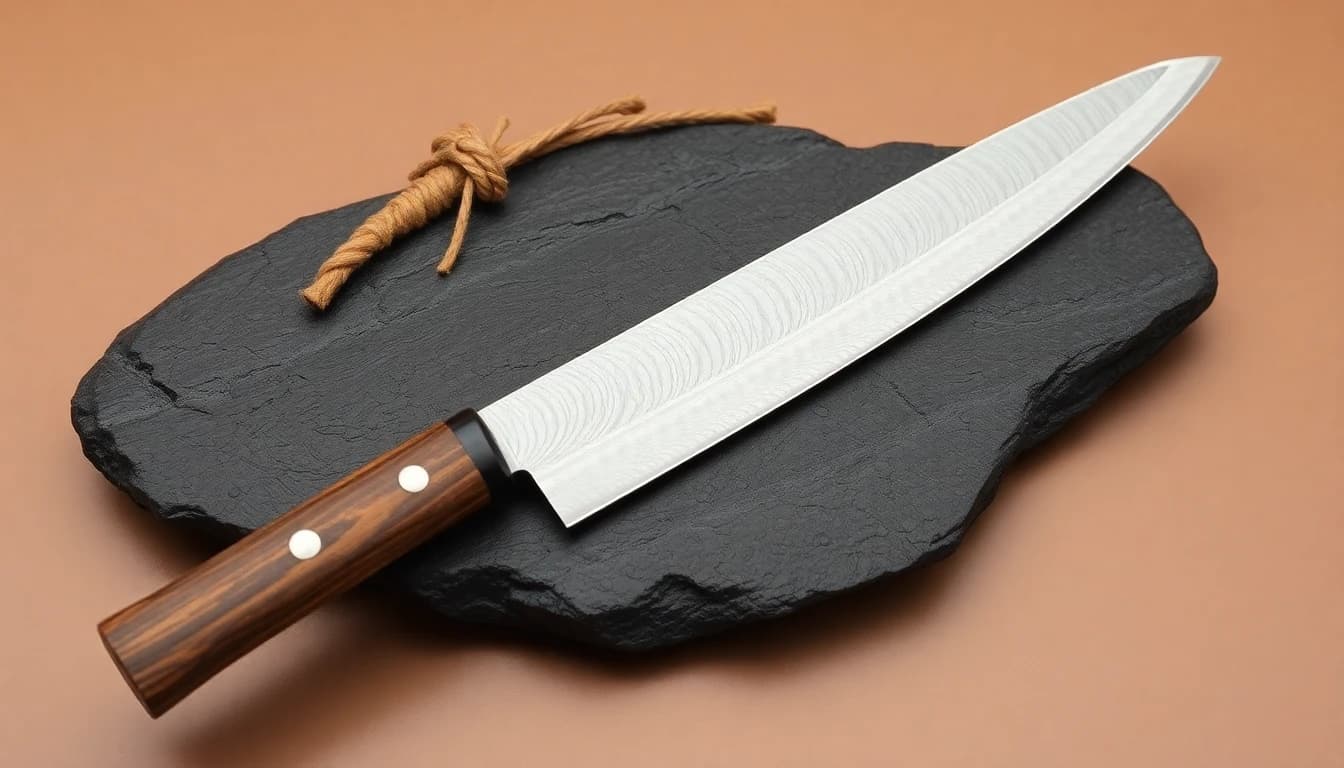
craft · 10min read · 2026-03-13
The Ultimate Guide to Japanese Kitchen Knives
From sword forgers to modern workshops. Types, regions, steel, and care.
Key Takeaways
- Japanese knife-making evolved from a 700-year sword-forging tradition
- The 1868 samurai sword ban redirected metallurgical expertise to kitchen knives
- Sakai produces 98% of Japan's professional chef knives
- Shirogami, Aogami, VG-10, and Damascus are the key steel types
- Japanese carbon steel knife exports grew 11.6% in 2023
Why the World Fell in Love with Japanese Knives
Centuries of refined craftsmanship.
From Sword to Kitchen
Sakai produces 98% of professional chef knives.
Five Regions
Sakai, Seki, Tsubame-Sanjo, Tosa, Echizen.
Types
Gyuto, Santoku, Yanagiba, Deba, Usuba.
Steel
Shirogami, Aogami, VG-10, Damascus.
How to Choose
🛑 Safety Notice
Beginner: Gyuto VG-10 210mm.
Written by Hiro Miyamoto
Founder & CEO of Scratch Second. Starting from corporate sales at a South American food supplier, Hiro went on to spearhead the Japan market launch as VP of Sales at a Silicon Valley foodtech company — placing products in 2,400+ convenience stores and supplying ingredients for an international expo. He currently leads business development across Asia at one of the world's largest tech companies. Off the clock, he's a dedicated yachtsman, yogi, and sauna enthusiast who writes about the intersection of modern healthtech and Japan's timeless wellness traditions.
Related Articles
craft
Wajima Lacquerware: Why Japan's Most Resilient Craft Deserves Your Attention
A complete guide to Wajima-nuri lacquerware — the 124-step process, how it compares to other Japanese lacquer, what to buy, where to buy, and how Wajima is r...
craft
Japan's Matcha Exports Surpass 10,000 Tons for the First Time in 71 Years
In 2025, Japanese tea exports exceeded 10,000 tons for the first time since 1954. Behind the matcha boom lies a deepening supply shortage, soaring prices, and a structural shift in Japan's tea farming industry.
craft
Why HOSOO Moves the World — A 327-Year-Old Nishijin Weaver's Path to Dior and Chanel
How HOSOO, a 327-year-old Nishijin-ori weaving house in Kyoto, became the textile supplier to Dior, Chanel, and Hermes. An in-depth look at their 150cm-wide loom innovation, LVMH partnership, and Milan expansion.