
craft · 10min read · 2026-03-25
Japanese Sake Vessels Guide: Cups, Materials, and How Shape Affects Taste
Explore Japanese sake vessels from ochoko to masu. Learn how cup shape and material affect flavor, compare ceramics vs glass vs lacquer, and find recommended artisans.
Key Takeaways
- The same sake tastes different in five different vessel types
- Cup width, rim thickness, and material all affect flavor perception
- Ochoko, guinomi, sakazuki, tokkuri, and masu are the main vessel types
- Bizen pottery softens acidity while cedar masu adds woody sweetness
- Vessel selection depends on sake style, temperature, and social context
Why the Vessel Matters
Pour the same sake into five different vessels and you will taste five different drinks. This is not mysticism. It is physics, chemistry, and physiology working together. The width of the opening controls how much aromatic compound reaches your nose before the liquid reaches your lips. The thickness of the rim determines where on your tongue the sake first lands. The thermal conductivity of the material affects how quickly the liquid warms in your hands. The texture of the interior surface alters how sake flows across your palate.
Japanese sake culture understood this long before oenologists began mapping the relationship between glass shape and wine perception. The result is an ecosystem of vessel types, each designed for a specific sake style, serving temperature, and social context. Choosing the right vessel is not ceremony for ceremony's sake. It is a practical decision that directly improves the drinking experience.
I discovered this firsthand during a tasting session at a craft sake brewery in Niigata. The brewer lined up the same junmai daiginjo in six different vessels: a thin-rimmed glass, a wide sakazuki, a deep guinomi in rough Bizen pottery, a lacquered cup, a cedar masu, and a standard wine glass. The differences were startling. The glass emphasized floral aromatics. The Bizen guinomi softened the acidity. The masu added a woody sweetness that transformed the sake entirely. That afternoon changed how I think about Japanese drinkware.
Types of Sake Vessels
Ochoko: The Standard Sake Cup
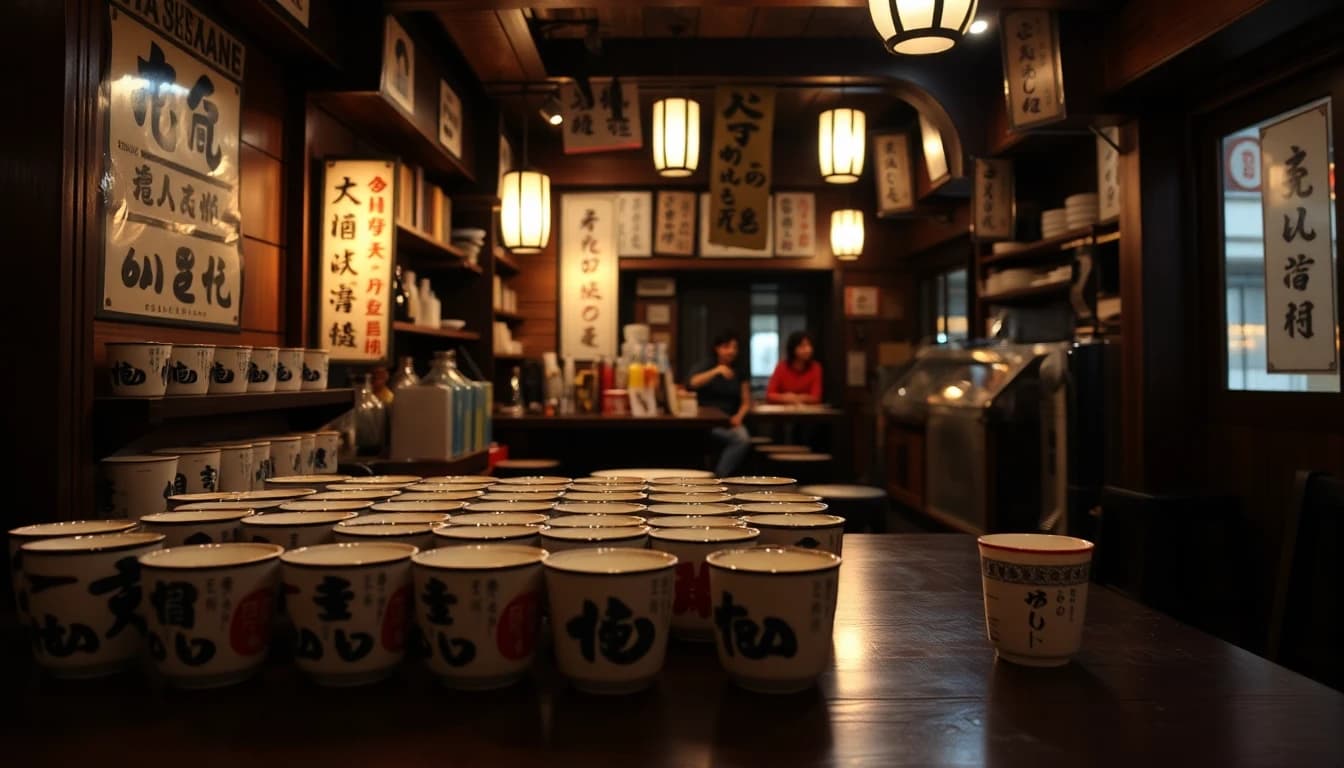
The ochoko is the vessel most people picture when they think of sake. Small, typically holding 30-60ml, it is designed for communal drinking where the ritual of pouring for others is central to the social experience.
- Capacity: 30-60ml (1-2 oz)
- Shape: Usually cylindrical or slightly tapered, with a wide mouth relative to depth
- Best for: Junmai sake, warm sake (kan), formal dining, traditional izakaya settings
- Temperature range: Ideal for room temperature to hot (40-55 degrees C)
- Price range: $5-200 depending on material and artisan
The small capacity is intentional. It keeps sake at the optimal temperature for a few sips before the next pour. In formal settings, allowing your cup to sit empty is an invitation for someone to refill it, creating a rhythm of hospitality that is central to Japanese drinking culture.
Guinomi: The Connoisseur's Cup
Larger than an ochoko, the guinomi ("gulp drink") holds 60-120ml and is the preferred vessel of serious sake drinkers. The larger format allows room for swirling and nosing, similar to how wine enthusiasts use wider glasses.
- Capacity: 60-120ml (2-4 oz)
- Shape: Wider and deeper than ochoko. Often features a thicker wall and more sculptural form
- Best for: Premium junmai, ginjo, daiginjo. Tasting sessions. Solo drinking
- Temperature range: Full range from chilled to warm
- Price range: $15-500 depending on pottery tradition and artisan
Guinomi are the most collectible sake vessels. Their larger surface area gives potters room for expressive glazing, texture, and form. A guinomi by a recognized ceramic artist can function simultaneously as a drinking vessel and a small sculpture. Many collectors display guinomi on shelves and rotate them into use based on the season, the sake being served, or their mood.
Sakazuki: The Ceremonial Flat Cup
The sakazuki is the wide, flat cup used in formal ceremonies, particularly weddings (san-san-kudo, the ritual exchange of three cups) and New Year celebrations. Its extremely wide mouth and shallow depth expose a large surface area of sake to air.
- Capacity: 30-80ml, but rarely filled fully
- Shape: Flat and wide, resembling a small saucer. Often lacquered
- Best for: Ceremonial occasions, very smooth sake, cold sake
- Temperature range: Room temperature to chilled
- Price range: $10-300 (lacquered ceremonial sets can exceed $1,000)
The sakazuki's wide shape means sake warms quickly and aromatics dissipate fast. This is not a flaw. In ceremonial contexts, the act of raising, sipping, and placing the cup matters more than optimal flavor delivery. For daily drinking, a sakazuki is impractical. For cultural occasions, nothing else will do.
Masu: The Cedar Box
The masu is a square wooden box, traditionally made from Japanese cedar (sugi) or cypress (hinoki). Originally a measuring device for rice, the masu was repurposed for sake drinking and now occupies a unique position in Japanese beverage culture.
- Capacity: Standard 180ml (one "go" of sake)
- Shape: Square box, usually unfinished wood interior
- Best for: Robust junmai sake, celebratory occasions, outdoor drinking
- Temperature range: Room temperature only (hot sake warps wood, cold sake condenses on exterior)
- Price range: $5-50
The masu adds cedar flavor to sake. For some drinkers, this woody sweetness enhances the experience, particularly with earthier junmai styles. For others, it overwhelms delicate ginjo aromatics. Masu drinking also has a tactile dimension that no other vessel matches. The sharp corners against your lips, the grain of the wood against your fingertips, the faint fragrance of cedar as you raise it to drink.
A common serving style in izakaya places a glass inside a masu and overfills the glass so sake cascades into the masu. This "mokkiri" presentation symbolizes generosity.
Tokkuri: The Pouring Vessel
Not a drinking cup but essential to the sake experience, the tokkuri is the flask used to serve sake. Its narrow neck concentrates heat (for warm sake) and its bulbous body holds a standard 180ml serving.
- Capacity: Standard 180ml (1 go) or 360ml (2 go)
- Shape: Bulbous body tapering to a narrow neck. Some feature a pour lip, others do not
- Best for: Warm and hot sake service. Communal dining
- Temperature range: Designed specifically for heated sake
- Price range: $15-400
The tokkuri's shape serves thermal physics. The narrow neck minimizes the surface area exposed to air, retaining heat longer. The bulbous body maximizes contact with the hot water bath used to warm sake (yukan). A well-designed tokkuri keeps sake at serving temperature for 15-20 minutes.
Katakuchi: The Spouted Bowl
An increasingly popular alternative to the tokkuri, the katakuchi is a small bowl with a pouring spout. It is the vessel of choice for chilled and room-temperature sake.
- Capacity: 200-350ml
- Shape: Open bowl with a single pour spout
- Best for: Chilled sake, ginjo and daiginjo, visual presentation
- Temperature range: Chilled to room temperature (not suitable for hot sake due to open shape)
- Price range: $20-300
The katakuchi's open shape allows the drinker to see the sake's color and clarity before pouring. For premium daiginjo sake where visual presentation matters, the katakuchi is superior to the closed tokkuri.
Materials: How They Shape the Experience
Ceramic and Pottery
Ceramic is the traditional and most common material for sake vessels. Within the ceramic world, the differences between traditions are significant.
Glazed stoneware (Mino, Seto, Arita):
- Smooth interior surface allows sake to flow cleanly across the palate
- Minimal flavor interaction between vessel and liquid
- Wide range of colors and decorative possibilities
- Best for: Delicate ginjo and daiginjo where you want to taste the sake itself
Rough stoneware (Bizen, Shigaraki, Iga):
- Unglazed or partially glazed surfaces create micro-texture
- Sake interacts with the clay surface, reportedly softening rough edges and rounding out acidity
- Some studies suggest infrared emission from Bizen clay affects water molecule clustering, though peer-reviewed evidence remains limited (Source: Bizen Pottery Traditional and Contemporary Art Museum)
- Best for: Robust junmai and honjozo styles
Porcelain (Arita, Kutani):
- Thin walls, smooth surfaces, often elaborately decorated
- Minimal flavor interaction
- Elegant appearance for formal settings
- Best for: Premium sake in formal dining contexts
Our Japanese pottery comparison guide provides a deep dive into the major ceramic traditions and their distinctive characteristics.
Glass
Glass sake vessels have surged in popularity, particularly for chilled premium sake. Glass is flavor-neutral, allowing the purest expression of the sake itself. It also provides visual pleasure: watching the clarity and slight coloring of premium sake through transparent glass adds a dimension that opaque ceramic cannot offer.
- Thin-rimmed glass cups direct sake to the front of the tongue, emphasizing sweetness and delicacy
- Wide-mouthed glass cups allow aromatic compounds to gather before reaching the nose
- Edo Kiriko cut glass adds a tactile and visual dimension while maintaining glass's flavor neutrality
For collectors interested in Japanese glass craft, our Edo Kiriko guide covers Tokyo's cut glass tradition in detail.
Lacquerware
Lacquered sake cups (sakazuki) are primarily ceremonial objects. The urushi lacquer coating creates a perfectly smooth, warm-feeling surface that is pleasant against the lips. Lacquer is also naturally antibacterial.
- Visually striking, especially vermillion and black lacquer with gold maki-e decoration
- The warmth of lacquer against lips creates a sensation distinct from cold ceramic or glass
- Lacquer is delicate and requires careful handling (no dishwasher, no prolonged soaking)
- Limited to flat sakazuki shapes in traditional practice
For more on the lacquer tradition, our Wajima lacquerware guide explores Japan's most prestigious lacquerware region.
Wood (Cedar and Cypress)
Wooden vessels (masu and some cups) add their own flavor to sake. This can be wonderful or overwhelming, depending on the sake and the drinker's preference.
- Cedar (sugi) adds a distinctive sweet, woody aroma
- Cypress (hinoki) adds a cleaner, more resinous note
- New masu have stronger flavor contribution. As the wood ages, the effect mellows
- Not suitable for delicate ginjo sake. Best with robust, earthy styles
Metal (Tin, Pewter, Silver)
Tin and pewter sake vessels have a long history in Japan. The material's high thermal conductivity makes it excellent for serving chilled sake. Tin is also said to soften the perceived harshness of young sake, though scientific evidence for this claim is anecdotal (Source: Osaka Naniwa Suzuki tin workshop documentation).
- Excellent thermal conductivity keeps sake cold
- Heavy, substantial feel in the hand
- Premium price point ($100-500 for artisan pieces)
- Limited aesthetic range compared to ceramic
Material Comparison---
How Vessel Shape Affects Taste
The relationship between vessel shape and flavor perception is not subjective opinion. It follows predictable principles.
Opening Width
- Wide opening (sakazuki, wide guinomi): Sake spreads across the full tongue simultaneously. Aromatics dissipate quickly. Emphasizes initial impact and mouthfeel. Better for sake with bold, full-bodied profiles
- Narrow opening (deep ochoko, some guinomi): Sake is directed to the center or front of the tongue. Aromatics concentrate in the space above the liquid. Emphasizes aroma, sweetness, and delicacy. Better for ginjo and daiginjo
Rim Thickness
- Thin rim: Sake enters the mouth quickly and hits the front of the tongue first, where sweetness receptors are concentrated. Creates a perception of lightness and elegance
- Thick rim: Sake enters more slowly and spreads wider across the palate. Creates a perception of body and richness
Depth and Volume
- Shallow vessel: Sake warms quickly. Large surface-to-volume ratio means rapid aromatic release. Best for sake intended to be consumed quickly
- Deep vessel: Sake retains temperature longer. Concentrated aromatics above the surface. Better for savoring
Internal Texture
- Smooth interior: Clean, unimpeded flow. Sake tastes as the brewer intended
- Rough interior: Sake tumbles and aerates slightly as it flows. Edges soften, acidity rounds out. The effect is subtle but real
Pairing Vessels with Sake Types
Junmai (Pure Rice, No Added Alcohol)
Rich, full-bodied, umami-forward. Best in vessels that can handle and complement robust flavor.
- Recommended vessels: Bizen or Shigaraki guinomi (rough stoneware rounds out acidity), wide-mouth ceramic ochoko, masu for casual settings
- Temperature: Room temperature to warm (40-45 degrees C)
- Vessel temperature: Pre-warm the vessel with hot water for warm sake service
Junmai Ginjo (Premium, 60% Polishing Ratio)
Balanced between aromatic elegance and rice body. The most versatile sake category.
- Recommended vessels: Medium-width guinomi in glazed stoneware, glass cups, thin-rimmed ceramic ochoko
- Temperature: Chilled to room temperature (8-18 degrees C)
- Vessel temperature: Chill glass vessels in the refrigerator. Room-temperature ceramic is fine
Junmai Daiginjo (Ultra-Premium, 50% Polishing Ratio)
Highly aromatic, delicate, complex. The vessel must not compete with the sake.
- Recommended vessels: Thin-rimmed glass (wine glass shape is excellent), narrow-mouth porcelain guinomi, Edo Kiriko for special occasions
- Temperature: Chilled (8-12 degrees C)
- Vessel temperature: Cold glass is ideal
Honjozo (Added Distilled Alcohol)
Light, clean, and easy-drinking. Benefits from vessels that emphasize its smoothness.
- Recommended vessels: Standard glazed ochoko, small glass cups, porcelain
- Temperature: Full range from chilled to warm
- Vessel temperature: Match to sake temperature
Nigori (Cloudy/Unfiltered)
Creamy, textured, often sweet. The visual element of cloudy sake matters.
- Recommended vessels: Glass (to see the beautiful cloudy suspension), wide-mouth ceramic
- Temperature: Chilled (6-10 degrees C)
- Vessel temperature: Cold glass
Aged Sake (Koshu)
Dark, complex, sherry-like. Rich enough to stand up to strong-flavored vessels.
- Recommended vessels: Rough stoneware guinomi, lacquered sakazuki, even masu for the most robust styles. Small brandy snifter also works
- Temperature: Room temperature to slightly warm (15-35 degrees C)
- Vessel temperature: Room temperature
Recommended Artisans and Shops
For Ceramic Vessels
- Bizen pottery workshops (Okayama): Look for Isezaki, Kakurezaki, and Mori families for traditional Bizen guinomi. Prices start at $40 for student work, $200-1,000 for established potters
- Mino pottery (Gifu): The widest selection of styles including Oribe, Shino, and Ki-Seto traditions. Toki City Ceramic Festival (April) is an excellent buying opportunity
- Arita/Imari (Saga): Porcelain sake sets with painted decoration. Elegant and formal. The Arita Porcelain Fair (late April/early May) offers direct access to kilns
For Glass Vessels
- Sghr (Sugahara Glass, Chiba): Contemporary glass design studio producing beautiful sake ware. $30-150
- Kimura Glass (Tokyo): Known for ultra-thin "Usuhari" glasses that transform sake tasting. $20-80
- Edo Kiriko workshops (Tokyo): Cut glass sake cups from $40. See our complete Edo Kiriko guide
For Lacquer Vessels
- Wajima lacquerware (Ishikawa): The gold standard for lacquered sakazuki. $100-1,000+. See our Wajima lacquerware guide
- Joboji lacquerware (Iwate): More rustic, less formal lacquer ware. Excellent value. $50-300
For Masu
- Ohashi Ryoki (Gifu): Traditional masu maker using Kiso hinoki cypress. $10-30 per masu
- Masuda Kiribako (Tokyo): Paulownia wood masu and wooden sake ware. $15-50
Retail Shops (Tokyo)
- Japan Traditional Crafts Aoyama Square: Government-backed showroom featuring designated traditional crafts from across Japan. Excellent curation
- Bingoya (Shinjuku): Five floors of folk craft including extensive sake vessel selection
- d47 Museum Shop (Shibuya Hikarie): Design-focused craft selection organized by prefecture
Building a Starter Collection
A well-rounded sake vessel collection does not require dozens of pieces. Here is a practical approach.
Essential four pieces (total investment: $150-400):
- One glazed ceramic guinomi for everyday drinking
- One rough stoneware guinomi (Bizen or Shigaraki) for robust sake
- One thin glass cup for chilled ginjo and daiginjo
- One tokkuri for warm sake service
Expanding to eight (add $150-350):
- One set of ochoko (2-4 matching cups) for hosting
- One masu for casual occasions
- One porcelain or lacquer sakazuki for formal moments
- One katakuchi for chilled sake presentation
Advanced collection additions:
- Edo Kiriko cut glass pieces for special occasions
- Seasonal-themed vessels (spring cherry blossom motifs, autumn maple leaves)
- Pieces from specific pottery traditions you have visited
Caring for Sake Vessels
Ceramic
- Hand wash with mild detergent. Rough stoneware may absorb flavors over time, which is considered desirable (the vessel develops "taste memory")
- Unglazed pottery should be soaked in water for 10 minutes before use to prevent sake from penetrating the clay
- Store dry. Damp ceramic can develop mold
Glass
- Hand wash recommended, though quality glass can tolerate dishwashers
- Store upright with space between pieces
- Edo Kiriko and other cut glass should never go in a dishwasher
Lacquerware
- Hand wash only with lukewarm water and a soft cloth
- Never soak. Never use abrasive cleaners
- Store away from direct sunlight (UV degrades lacquer over time)
- Use regularly. Lacquerware that sits unused for years can dry out and crack
Wood (Masu)
- Rinse with water after use. Do not use soap (it penetrates the wood)
- Air dry completely before storing
- New masu benefit from soaking in water for 30 minutes before first use to reduce strong wood flavor
Frequently Asked Questions
Written by Hiro Miyamoto
Founder & CEO of Scratch Second. Starting from corporate sales at a South American food supplier, Hiro went on to spearhead the Japan market launch as VP of Sales at a Silicon Valley foodtech company — placing products in 2,400+ convenience stores and supplying ingredients for an international expo. He currently leads business development across Asia at one of the world's largest tech companies. Off the clock, he's a dedicated yachtsman, yogi, and sauna enthusiast who writes about the intersection of modern healthtech and Japan's timeless wellness traditions.
Related Articles
craft
Wajima Lacquerware: Why Japan's Most Resilient Craft Deserves Your Attention
A complete guide to Wajima-nuri lacquerware — the 124-step process, how it compares to other Japanese lacquer, what to buy, where to buy, and how Wajima is r...
craft
Japan's Matcha Exports Surpass 10,000 Tons for the First Time in 71 Years
In 2025, Japanese tea exports exceeded 10,000 tons for the first time since 1954. Behind the matcha boom lies a deepening supply shortage, soaring prices, and a structural shift in Japan's tea farming industry.
craft
Why HOSOO Moves the World — A 327-Year-Old Nishijin Weaver's Path to Dior and Chanel
How HOSOO, a 327-year-old Nishijin-ori weaving house in Kyoto, became the textile supplier to Dior, Chanel, and Hermes. An in-depth look at their 150cm-wide loom innovation, LVMH partnership, and Milan expansion.