
craft · 11min read · 2026-03-05
Japanese Incense Guide: Types, Top Brands, and How to Choose
Explore Japanese incense (koh) history, types, top makers like Shoyeido and Nippon Kodo, the art of koh-do, and how to choose the right incense for you.
Key Takeaways
- Japanese incense tradition began in 595 AD with driftwood on Awaji Island
- Koh-do, the Way of Incense, is a formal art alongside tea and flower arrangement
- Awaji Island produces over 70% of Japan's incense output
- Shoyeido, Baieido, and Nippon Kodo are the three major historic producers
- Premium agarwood sticks can cost $100 to $500 or more per box
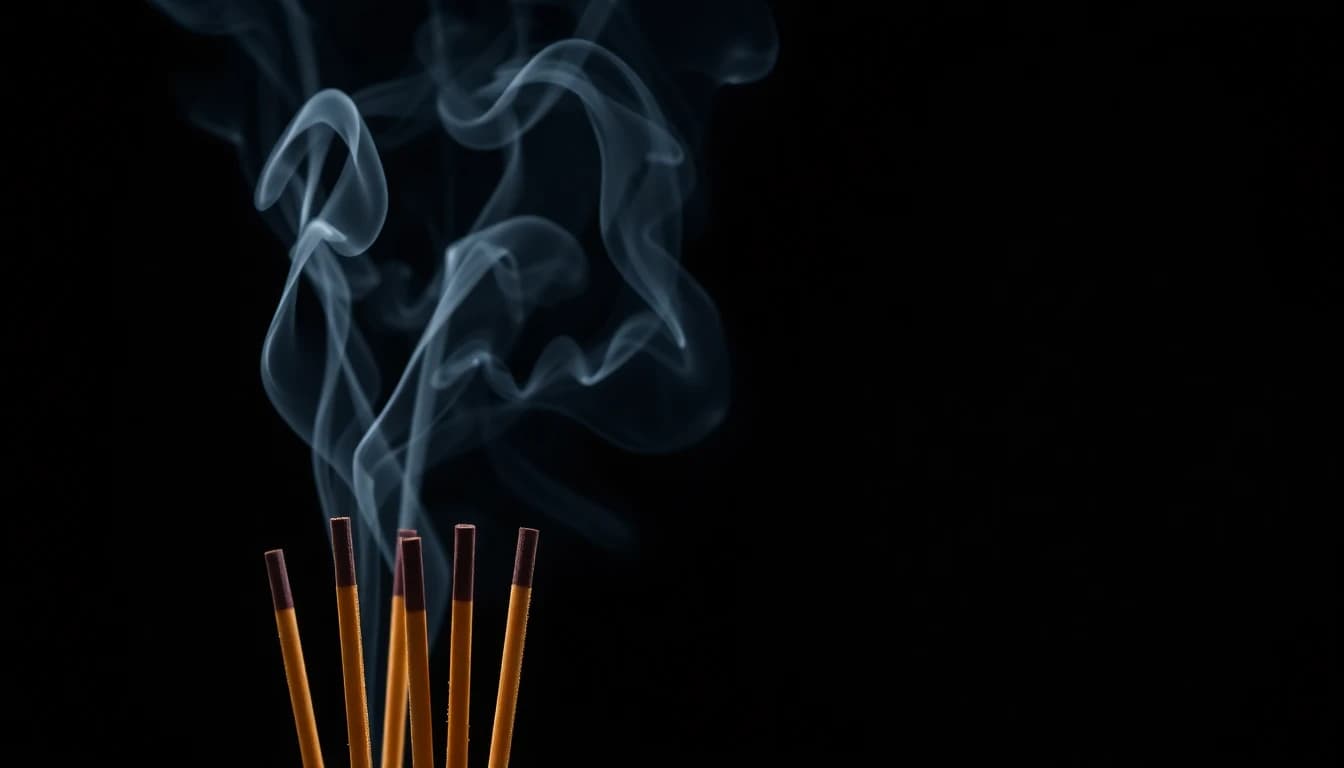
A thin column of smoke rises from a ceramic holder on a wooden shelf. No flame. No wick. Just a smoldering thread of compressed agarwood, sandalwood, and cinnamon releasing a scent that was already ancient when the samurai class emerged.
In Japan, incense is not air freshener. It is a practice -- a ritual technology for marking time, clearing the mind, and connecting with something older than language. The Japanese word for enjoying incense is not "smelling" but monkoh (聞香): "listening to the fragrance." You do not smell incense. You listen to it.
Yet standing before the incense counter at a Kyoto specialty shop -- dozens of boxes in muted tones, price tags ranging from $5 to $500, names referencing court poetry and mountain temples -- the uninitiated buyer faces a genuine challenge. What separates a $7 box of everyday senkoh from a $200 box of temple-grade agarwood sticks?
This guide answers that question. It traces the history of Japanese incense from its literal arrival on the shores of Awaji Island in 595 AD, compares the major forms and producers, introduces koh-do (the way of incense), and offers practical guidance for choosing the right koh for your space, practice, and budget.
A Brief History of Japanese Incense
The story of Japanese incense begins with a piece of driftwood.
Today, Awaji Island remains the heart of Japanese incense production, supplying over 70% of the nation's output. An estimated one in four residents of the island are involved in some aspect of incense making (Source: Japan House Los Angeles, Sensory Journeys).
Types of Japanese Incense
Japanese incense falls into several distinct categories, each with its own purpose, preparation method, and sensory character. Understanding these forms is the first step toward choosing well.
1. Stick Incense (Senkoh)
The most familiar form worldwide. Ground aromatic woods and herbs are mixed with a natural binding agent (typically tabuko, the bark of the Machilus thunbergii tree) and extruded into slender sticks. Japanese senkoh is coreless -- unlike Indian agarbatti, there is no bamboo core, which means no woody burning smell to compete with the fragrance.
- Burn time: 20-50 minutes depending on length
- Best for: Daily use, meditation, room fragrance
- Price range: $5-$50 (everyday) to $100-$500+ (premium agarwood)
- Skill required: None. Light the tip, blow out the flame, place in a holder
2. Cone Incense
The same materials as stick incense, shaped into small cones. Cones produce a slightly more concentrated fragrance because the burning surface area increases as the cone burns down. They tend to generate more smoke than sticks.
- Burn time: 10-25 minutes
- Best for: Smaller rooms, quick fragrance sessions
- Price range: $5-$30
- Skill required: Minimal. Place on a heat-resistant surface, light the tip
3. Coil Incense
Long incense material wound into a flat spiral. Coils are designed for extended burn times -- a single coil can last several hours or even an entire day. Temples use large coils that burn for weeks.
- Burn time: 2-12 hours (some temple coils last days)
- Best for: Extended ambiance, large spaces, temple offerings
- Price range: $8-$40
- Skill required: Low. Hang from a hook or place in a dedicated coil holder
4. Kneaded Incense (Nerikoh)
The most ancient and arguably most refined form of Japanese incense. Powdered aromatic ingredients -- sometimes over twenty varieties -- are ground, blended, and kneaded with honey or plum paste into small balls. Nerikoh is not burned directly. Instead, a ball is placed near a heated piece of charcoal buried in ash inside a koh-ro (incense burner), releasing fragrance through gentle warmth rather than combustion.
- Burn time: 30-60 minutes per ball
- Best for: Koh-do ceremony, tea ceremony accompaniment, refined fragrance
- Price range: $30-$200+ per box
- Skill required: Moderate to high. Requires charcoal, ash, and a koh-ro
5. Fragrant Wood (Koboku)
Not manufactured incense at all, but raw aromatic wood -- typically agarwood (jinko) or sandalwood (byakudan). Small chips or shavings are heated on charcoal or an electric heater to release their natural fragrance. The finest agarwood, called kyara, is among the most expensive natural materials on earth, sometimes exceeding $10,000 per gram.
- Burn time: Variable, 30-60 minutes per heating
- Best for: Serious koh-do practice, collectors, connoisseurs
- Price range: $20-$500 (sandalwood) to $1,000-$100,000+ (rare kyara)
- Skill required: High. Requires knowledge of wood types and heating technique
Major Japanese Incense Houses Compared
Three houses dominate the Japanese incense world. Each has a distinct philosophy, production approach, and price position.
1. Nippon Kodo (est. 1575 lineage)
The largest incense manufacturer in the world. Nippon Kodo traces its heritage to Juemon Takai, a craftsman who perfected a technique called koju (fragrance excellence) in the late 16th century. Today, the company produces everything from accessible everyday sticks to museum-quality agarwood.
- Headquarters: Tokyo
- Philosophy: Making Japanese incense accessible to the world
- Signature lines: Morning Star (everyday), Ka-fuh (mid-range), Kayuragi (premium everyday), Jinkoh Juzan (ultra-premium)
- Price range: $5-$300+
- Best for: Beginners, everyday use, gift-giving
- Where to buy: Widely available internationally, Amazon, specialty shops
2. Shoyeido (est. 1705)
Kyoto-based and still family-owned after over three centuries, Shoyeido occupies the premium-artisan middle ground. The company uses only natural ingredients -- no synthetic fragrance, no charcoal fillers -- and guards its blending recipes as oral traditions passed within the Hata family.
- Headquarters: Kyoto
- Philosophy: Pure, natural ingredients with no synthetics or charcoal
- Signature lines: Daily Incense (approachable), Angelic (popular worldwide), Premium (temple-grade), Horin (masterwork)
- Price range: $8-$200+
- Best for: Purists, meditation practitioners, gift-giving
- Where to buy: Shoyeido retail stores in Kyoto, online (shoyeido.com), select international retailers
3. Baieido (est. 1657)
The oldest of the three major houses, Baieido traces its roots to a medicinal herb wholesaler named Jinkoya Sakubei in Sakai, Osaka -- historically the center of Japan's spice and incense trade. Baieido is known for a deeper, more traditional fragrance profile that favors rich, woody, and resinous notes.
- Headquarters: Sakai, Osaka Prefecture
- Philosophy: Preserving traditional formulations with a focus on woody depth
- Signature lines: Kobunboku (Plum Blossom, their flagship), Tobiume, Kai Un Koh (fortune incense), Byakudan Kobunboku
- Price range: $8-$150+
- Best for: Traditionalists, woody/resinous fragrance lovers, collectors
- Where to buy: Japanese specialty shops, online retailers, Baieido USA
Quick Comparison
- Best for beginners: Nippon Kodo Morning Star or Shoyeido Daily Incense
- Best all-natural commitment: Shoyeido (no synthetics across entire range)
- Best for woody depth: Baieido Kobunboku
- Best budget entry: Nippon Kodo Morning Star ($5-8 per box)
- Best premium gift: Shoyeido Horin series or Nippon Kodo Jinkoh Juzan
- Best historical authenticity: Baieido (founded 1657)
Koh-do: The Way of Incense
Koh-do (香道) is one of Japan's three classical refinement arts, alongside chado (tea ceremony) and kado (flower arrangement). While tea ceremony is widely known internationally, koh-do remains comparatively obscure -- which is part of its appeal.
What Happens in a Koh-do Ceremony
A koh-do session is structured around kumikoh -- incense listening games that train the nose and quiet the mind. The most common format is genjikoh, named after The Tale of Genji.
In a typical genjikoh session, the host prepares five small cups of incense, each containing a fragment of fragrant wood heated over buried charcoal. Participants pass each cup in turn, cupping it in both hands and "listening" to the fragrance through three slow inhalations. They then guess which of the five cups contain the same wood.
The experience is less about identifying specific scents and more about developing presence. There is no talking during listening. There is no rushing. The entire ceremony can last one to two hours for just five cups of fragrance.
The Two Major Schools
- Oie-ryu: Descended from the aristocratic tradition, emphasizing elegance, literary allusion, and seasonal awareness. Ceremonies often reference classical poetry
- Shino-ryu: Rooted in the Muromachi warrior class, favoring structure, precision, and meditative stillness. More austere and ritualized in approach
Both schools are active today, offering classes and public demonstrations in Kyoto, Tokyo, and occasionally abroad.
Where to Experience Koh-do
- Kyoto: Shoyeido's main store offers introductory koh-do experiences. Yamada Matsu (founded 1700s) also hosts sessions
- Tokyo: Nippon Kodo's flagship in Ginza occasionally holds workshops
- Awaji Island: The birthplace of Japanese incense offers hands-on incense-making experiences at Kunjudo and other workshops
- International: Some Japanese cultural centers in New York, London, and Los Angeles offer periodic koh-do introductions
How to Choose Japanese Incense
Consider Your Purpose
For meditation or yoga: Choose low-smoke sticks with calming profiles -- sandalwood, lavender-adjacent blends, or Shoyeido's Angelic series. A consistent burn time (25-30 minutes) doubles as a session timer.
For room fragrance: Cones or short sticks work well. Look for lighter, fresher profiles if the incense will be ambient background rather than the focus of attention.
For tea ceremony accompaniment: Kneaded incense (nerikoh) is traditional. Its smokeless, gentle fragrance complements the delicate aromas of matcha without overpowering them.
For spiritual practice: Temple-grade stick incense or fragrant wood. Nippon Kodo's Mainichi-koh or Baieido's Kobunboku are classic choices.
For gift-giving: Shoyeido's boxed sets or Nippon Kodo's Kayuragi series present beautifully. Japanese incense is a meaningful gift that avoids the size, preference, and allergy concerns of perfume.
Consider Your Sensitivity
Japanese incense generally produces less smoke than Indian or Tibetan styles because of the coreless stick design and natural binding agents. However, if you are sensitive to smoke, prioritize Shoyeido (all-natural, low-smoke) or consider smokeless options like nerikoh or electric fragrant wood heaters.
Price Guidance
- Under $10: Nippon Kodo Morning Star, Baieido Kobunboku. Genuine Japanese quality at accessible prices
- $10-$30: Shoyeido Daily and Premium, Nippon Kodo Ka-fuh. Step up in complexity and refinement
- $30-$80: Shoyeido Horin, Baieido premium lines. Connoisseur territory
- $80+: Aloeswood and agarwood sticks, kyara-blended products. Collector and ceremony-grade
Essential Accessories
- Incense holder (koh-tate): A simple ceramic or brass holder is sufficient for sticks. Look for one with an ash-catching tray
- Incense burner (koh-ro): For kneaded incense and fragrant wood. Traditional ceramic, often with a lid. Prices range from $20 to several thousand for antique pieces
- Charcoal (tadon): Small, odorless charcoal discs for heating nerikoh and koboku. Available from any incense retailer
- Ash (hai): White rice-hull ash fills the koh-ro and insulates the charcoal. Essential for temperature control
Incense and Wellness
The connection between fragrance and well-being has deep roots in Japanese culture. The 12th-century text Kissa Yojoki (Drinking Tea for Health) discusses aromatics alongside tea as tools for physical and mental equilibrium. Modern research is beginning to quantify what incense practitioners have known for centuries.
A 2017 study published in Scientific Reports found that incensole acetate, a compound in frankincense resin, activated ion channels in the brain associated with warmth and anxiety reduction (Source: Moussaieff et al., Scientific Reports, 2017). While Japanese incense uses different materials, the principle of aromatic compounds influencing mood is well-established across fragrance traditions.
I light Shoyeido's Angelic series every morning before my meditation and yoga practice. The ritual of striking a match, touching it to the incense tip, watching the flame catch and then blowing it to a glowing ember -- this sequence is itself a transition. It tells my nervous system: we are shifting now. The twenty-five-minute burn time of a single stick aligns almost perfectly with my morning sitting practice. When the smoke stops, the session is complete. No timer needed.
Connecting Japanese Incense to the Broader Craft Tradition
Incense does not exist in isolation within Japanese material culture. The same reverence for natural materials, seasonal awareness, and refined simplicity that shapes koh also runs through Japan's other great craft traditions.
The ceramics used for incense burners connect directly to traditions like Bizen and Arita pottery. The lacquerware boxes that store precious agarwood chips come from the same workshops that produce Wajima-nuri dining ware. And the quiet, meditative quality of incense listening mirrors the contemplative spirit of the Japanese tea ceremony.
These connections are not accidental. Japanese craft traditions developed alongside one another, sharing artisans, patrons, materials, and philosophical foundations. To understand one deeply is to begin understanding them all.
Frequently Asked Questions
Written by Hiro Miyamoto
Founder & CEO of Scratch Second. Starting from corporate sales at a South American food supplier, Hiro went on to spearhead the Japan market launch as VP of Sales at a Silicon Valley foodtech company — placing products in 2,400+ convenience stores and supplying ingredients for an international expo. He currently leads business development across Asia at one of the world's largest tech companies. Off the clock, he's a dedicated yachtsman, yogi, and sauna enthusiast who writes about the intersection of modern healthtech and Japan's timeless wellness traditions.
Related Articles
craft
Wajima Lacquerware: Why Japan's Most Resilient Craft Deserves Your Attention
A complete guide to Wajima-nuri lacquerware — the 124-step process, how it compares to other Japanese lacquer, what to buy, where to buy, and how Wajima is r...
craft
Japan's Matcha Exports Surpass 10,000 Tons for the First Time in 71 Years
In 2025, Japanese tea exports exceeded 10,000 tons for the first time since 1954. Behind the matcha boom lies a deepening supply shortage, soaring prices, and a structural shift in Japan's tea farming industry.
craft
Why HOSOO Moves the World — A 327-Year-Old Nishijin Weaver's Path to Dior and Chanel
How HOSOO, a 327-year-old Nishijin-ori weaving house in Kyoto, became the textile supplier to Dior, Chanel, and Hermes. An in-depth look at their 150cm-wide loom innovation, LVMH partnership, and Milan expansion.