
craft · 11min read · 2026-02-14
Edo Kiriko Glass: A Collector's Guide to Japanese Cut Glass
Explore Edo Kiriko, Tokyo's cut glass tradition since 1834. Compare with Satsuma Kiriko, learn patterns, top workshops, price ranges, and how to identify authentic pieces.
Key Takeaways
- Edo Kiriko is Tokyo's cut glass tradition dating back to 1834
- Geometric patterns carry symbolic meanings like abundance and protection
- Edo Kiriko uses soda-lime glass while Satsuma Kiriko uses heavier lead glass
- Over 100 active artisans work across approximately 50 Tokyo workshops
- Entry-level pieces start around $30 for sake cups and small glasses
What Is Edo Kiriko? Tokyo's Cut Glass Heritage
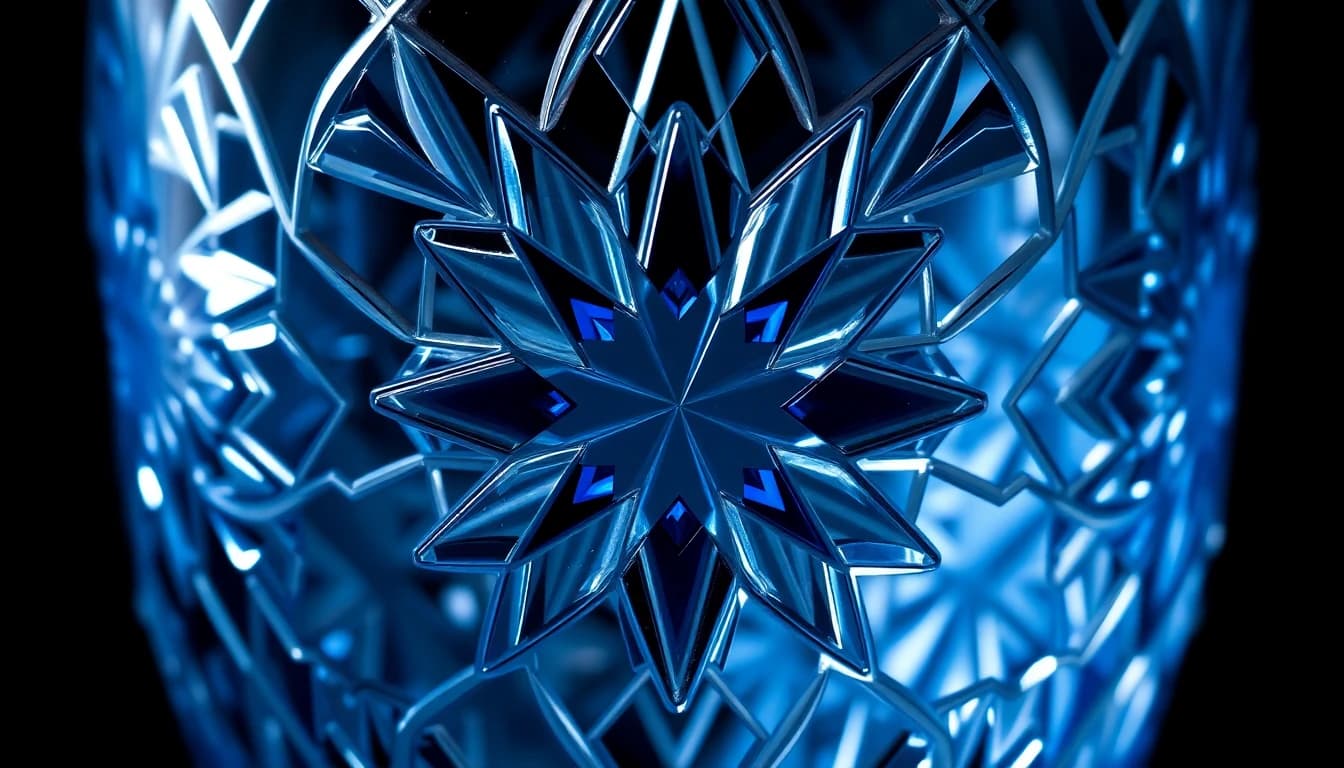
Hold an Edo Kiriko glass up to the light and something remarkable happens. The geometric cuts fracture and scatter the light into patterns that shift as you rotate the glass, transforming a drinking vessel into a small prism. This is not decoration applied to glass. It is glass reimagined through subtraction.
Edo Kiriko is the art of cutting intricate geometric patterns into glass using diamond-tipped wheels and polishing abrasives. Born in the Nihonbashi district of Tokyo in 1834, the tradition emerged when a skilled vidro (glass) artisan named Kagaya Kyubei began applying the pattern-cutting techniques he had studied to transparent glassware (Source: Edo Kiriko Cooperative Association). What began as one artisan's experiment became a defining craft of Tokyo.
The term "kiriko" itself means "cut glass" in Japanese. "Edo" refers to the old name for Tokyo. Together, they denote a specific tradition: geometric cut glass produced in Tokyo and surrounding areas, recognized as a Traditional Craft by Japan's Minister of Economy, Trade and Industry since 2002 (Source: Association for the Promotion of Traditional Craft Industries).
What separates Edo Kiriko from decorative cut glass traditions elsewhere is the depth of the cultural vocabulary encoded in its patterns. Each geometric motif carries a name, a meaning, and centuries of aesthetic context. A nanako (fish roe) pattern is not merely a grid of tiny cuts. It is a wish for abundance. A yarai (arrow fence) pattern is not simply a zigzag. It is a symbol of protection.
Edo Kiriko vs. Satsuma Kiriko: Understanding the Difference
No discussion of Japanese cut glass is complete without addressing its southern counterpart: Satsuma Kiriko. These two traditions share a common ancestry in European cut glass but have evolved into fundamentally different art forms.
Origins
Edo Kiriko began in 1834 in Tokyo when Kagaya Kyubei started cutting patterns into transparent glass. The tradition developed commercially, producing functional tableware for merchants and eventually for the broader public.
Satsuma Kiriko originated around the same period in Kagoshima (then Satsuma Domain) under the patronage of Lord Shimazu Nariakira. Unlike Edo Kiriko's commercial roots, Satsuma Kiriko was a feudal project. Shimazu brought European glassblowers to train local artisans as part of his broader modernization program (Source: Satsuma Glass Kogei Co., Ltd.).
The Satsuma tradition was effectively destroyed during the Boshin War (1868-69) and subsequent upheaval. It was revived only in 1985 after decades of research into lost techniques.
Technical Differences
- Glass type: Edo Kiriko traditionally uses soda-lime glass (transparent or color-cased). Satsuma Kiriko uses lead glass (heavier, with greater light refraction)
- Color technique: Edo Kiriko applies a thin layer of colored glass over clear glass, then cuts through the color to reveal the clear layer beneath. Satsuma Kiriko uses a much thicker colored layer, creating the distinctive "bokashi" (gradation) effect where cuts transition from deep color to transparent
- Cut depth: Edo Kiriko cuts are precise and relatively shallow, emphasizing geometric pattern. Satsuma Kiriko cuts are deeper, emphasizing the gradation between colored and clear glass
- Weight: Satsuma Kiriko pieces are notably heavier due to lead glass content
- Production volume: Edo Kiriko has over 100 active artisans across approximately 50 workshops. Satsuma Kiriko has fewer than 20 artisans in a handful of workshops
Aesthetic Comparison
Edo Kiriko celebrates precision. Its patterns are architectural, its lines sharp, its geometry exact. The effect is urban, refined, contemporary. Satsuma Kiriko celebrates depth. Its gradations are painterly, its colors saturated, its weight substantial. The effect is more overtly luxurious, almost baroque.
Neither is superior. They represent fundamentally different philosophies expressed through the same medium.The ProsCons above reflect Edo Kiriko specifically. Satsuma Kiriko's strengths are Edo Kiriko's limitations and vice versa: Satsuma offers dramatic bokashi gradation, superior light refraction from lead glass, and extreme rarity, but at significantly higher prices ($300-3,000+), heavier weight, fewer artisan choices, and limited availability outside Kagoshima.
The Patterns: Reading Edo Kiriko's Visual Language
Edo Kiriko's patterns are not arbitrary designs. They belong to a shared vocabulary of traditional Japanese motifs, many borrowed from textile and ceramic traditions. Understanding the major patterns transforms collecting from aesthetic appreciation into cultural literacy.
Core Patterns
- Nanako (fish roe): A grid of tiny raised dots created by intersecting fine cuts. Symbolizes abundance and prosperity. One of the most technically demanding patterns due to the precision required
- Kikko (tortoiseshell): Interlocking hexagons inspired by turtle shell geometry. Represents longevity and good fortune. Often used as a background pattern
- Yarai (arrow fence): Overlapping V-shapes resembling a bamboo fence. Symbolizes protection and warding off evil. Creates dynamic visual movement
- Kiku (chrysanthemum): Radial cuts emanating from a central point, forming a flower pattern. Associated with the Imperial family and longevity
- Kagome (woven bamboo): Star-shaped pattern created by overlapping triangles. Traditionally believed to ward off evil spirits. Named after the hexagonal holes in bamboo baskets
- Rokkaku Kagome (hexagonal basket weave): A more complex variation of kagome with six-pointed star formations
- Hishi (diamond): Simple diamond shapes that create optical depth when layered. Clean, modern aesthetic
- Sensuji (thousand lines): Parallel fine lines covering the surface. Creates a shimmering effect as light catches each cut at different angles
Pattern Combinations
Master artisans rarely use a single pattern across an entire piece. The art lies in combining motifs, transitioning between patterns, and using negative space. A single glass might feature nanako on the lower third, transitioning to chrysanthemum on the upper portion, with sensuji lines framing the rim.
Top Workshops and Brands
The Edo Kiriko ecosystem ranges from individual master artisans working alone to larger workshop-brands employing multiple cutters. Here are the most notable.
Horiguchi Kiriko
Founded in 1946, Horiguchi Kiriko operates from Koto-ku in eastern Tokyo. The workshop is led by third-generation artisan Horiguchi Toru, whose work has been featured in international design exhibitions.
- Style: Clean, contemporary interpretations of traditional patterns. Known for innovative color combinations
- Price range: $80-500
- Signature: Bold use of black glass (rare in Edo Kiriko) and asymmetric pattern placement
- Where to buy: Direct from workshop showroom, department stores (Mitsukoshi, Takashimaya), online
- Best for: Collectors seeking modern sensibility with traditional technique
Kagami Crystal
The largest and most commercially successful Edo Kiriko producer. Founded in 1934, Kagami Crystal operates a factory in Ryugasaki, Ibaraki Prefecture, with a showroom in Ginza, Tokyo.
- Style: Classic, refined patterns with emphasis on clarity and precision. Color range includes traditional cobalt, red, and amber plus innovative hues
- Price range: $60-1,500
- Signature: Flawless execution and consistency across pieces. Their Imperial collection pieces are used for state gifts
- Where to buy: Ginza showroom, major department stores, online, duty-free shops
- Best for: Gift giving, starting a collection, visitors to Tokyo seeking a reliable purchase
Hanashyo
A smaller workshop in Koto-ku known for pushing Edo Kiriko into contemporary design territory. Their pieces often appear in lifestyle magazines and design exhibitions.
- Style: Minimalist, modern, occasionally playful. They are not afraid to break from traditional patterns
- Price range: $100-800
- Signature: Negative space use, unusual vessel shapes, collaboration pieces with contemporary designers
- Where to buy: Workshop showroom, select design shops, online
- Best for: Design-conscious collectors who want Edo Kiriko that reads as contemporary art
Shimizu Glass
A workshop distinguished by their mastery of traditional techniques and their commitment to training young artisans. Shimizu operates as both a production workshop and a teaching studio.
- Style: Faithful to classical Edo Kiriko aesthetics. Emphasis on pattern mastery rather than innovation
- Price range: $70-400
- Signature: Exceptionally precise nanako and kagome patterns. Their pieces are often used to demonstrate what "textbook" Edo Kiriko looks like
- Where to buy: Workshop showroom, traditional craft shops, online
- Best for: Purists who want to understand the tradition before exploring contemporary interpretations
Tajima Glass (Edo Kiriko Cooperative)
Tajima Glass is one of the founding members of the Edo Kiriko Cooperative Association and produces some of the most affordable authentic pieces on the market.
- Style: Accessible, well-executed standard patterns. Good introduction to the craft
- Price range: $50-250
- Signature: Reliable quality at price points that make daily use guilt-free
- Where to buy: Tokyo Skytree Solamachi, tourist-oriented craft shops, online
- Best for: First-time buyers, daily-use pieces, gifts
Price Guide: What to Expect
Edo Kiriko pricing reflects the intersection of artisan skill, glass quality, pattern complexity, and brand reputation.
By Category
- Entry level (tourist pieces): $30-80. Machine-pressed glass with hand-cut patterns. Acceptable quality but limited artistry. Fine for gifts
- Mid-range (artisan standard): $80-300. Hand-blown or quality pressed glass with skilled cutting. This is where the best value lives for collectors. Daily-use pieces from reputable workshops
- High-end (master artisan): $300-800. Complex pattern combinations, exceptional precision, named artisan pieces. Investment-grade craft
- Museum/exhibition grade: $800-3,000+. One-of-a-kind pieces, competition winners, pieces by designated Traditional Craftsmen. Strictly for serious collectors
By Vessel Type
- Sake cups (ochoko/guinomi): $40-200. The most affordable way to start collecting. Small size means less glass and less cutting time, but demanding precision
- Old-fashioned/rocks glasses: $80-400. The most popular vessel for Edo Kiriko. Enough surface area to showcase patterns
- Highball glasses: $80-350. Taller format allows for vertical pattern development
- Wine glasses: $150-600. Technically challenging due to the stem and bowl shape
- Decanters and vases: $200-1,500. Larger pieces that function as sculptural objects
- Plates and bowls: $100-500. Less common but striking when used for food presentation
For those interested in the world of sake vessels specifically, our Japanese sake vessels guide covers the full range of traditional drinkware.
How to Identify Authentic Edo Kiriko
The growing popularity of Edo Kiriko has attracted imitators. Machine-cut glass from China and Southeast Asia is sometimes marketed as "kiriko" without the Edo designation. Here is how to distinguish authentic pieces.
The Certification Seal
Authentic Edo Kiriko pieces carry a holographic sticker issued by the Edo Kiriko Cooperative Association. The sticker features a distinctive design and is individually numbered. No sticker does not automatically mean fake (some established artisans sell outside the cooperative), but its presence guarantees authenticity.
Physical Indicators
- Cut edges: Run your finger along a cut line. Authentic Edo Kiriko cuts are sharp and precise, with clean edges. Machine-cut glass often has slightly rounded or rough edges
- Pattern regularity: Paradoxically, slight variations in pattern spacing indicate handwork. Machine-cut patterns are perfectly uniform in ways that human hands cannot replicate
- Glass quality: Hold the piece up to light. Authentic pieces use high-quality glass free of bubbles, striations, or color inconsistencies (unless intentional)
- Weight: Edo Kiriko uses soda-lime glass, which is lighter than the lead glass used in Satsuma Kiriko or European crystal. If a piece marketed as Edo Kiriko feels unusually heavy, question its provenance
- Base finish: Many authentic pieces have a polished pontil mark or characteristic base finish. Mass-produced imitations often have molded bases
Red Flags
- Price too low: Authentic Edo Kiriko from a reputable artisan starts at approximately $50 for small pieces. A "set of 6 Edo Kiriko glasses" for $40 is almost certainly not authentic
- Vague origin: Authentic pieces come with documentation naming the workshop or artisan. "Made in Japan" without further attribution is insufficient
- Online marketplace risk: Amazon, Rakuten, and similar platforms mix authentic and imitation products. Buy from verified workshop stores or authorized retailers
Experiencing Edo Kiriko in Tokyo
Workshops and Showrooms
The heart of Edo Kiriko production lies in the Sumida and Koto wards of eastern Tokyo, the same neighborhoods where the tradition has been practiced since the 19th century.
- Sumida Edo Kiriko Museum (Sumida-ku): Small but focused museum attached to a working workshop. Free admission. You can watch artisans cutting glass in real time
- Horiguchi Kiriko Showroom (Koto-ku): Appointment recommended. See the full range and discuss custom orders
- Kagami Crystal Ginza Showroom: The most polished retail experience. Convenient location for visitors staying in central Tokyo
Hands-On Experiences
Several workshops offer cutting experiences where visitors can create their own Edo Kiriko piece under artisan guidance.
- Sumida Edo Kiriko Taiken (Sumida-ku): 90-minute sessions, approximately $50-70. You cut a simple pattern into a provided glass
- Hanashyo Workshop Experience (Koto-ku): More design-oriented sessions with greater creative freedom
- Kagami Crystal Factory Tour (Ryugasaki, Ibaraki): Day trip from Tokyo. Factory tour plus cutting experience
Caring for Edo Kiriko
Edo Kiriko is more durable than it looks, but the cuts create surfaces that require specific care.
- Washing: Hand wash only with mild detergent and a soft sponge. Never use abrasive cleaners or scouring pads. The cuts trap residue, so rinse thoroughly
- Dishwasher: Strictly prohibited. Thermal shock from dishwasher heating cycles can crack the glass, and detergent chemicals can cloud the cut surfaces over time
- Drying: Air dry upside down on a soft cloth. Do not stack pieces inside each other
- Storage: Store upright with space between pieces. Wrapping in soft cloth prevents surface scratches. Avoid direct sunlight for colored pieces, as prolonged UV exposure can affect some glass colorants over time
- Temperature: Avoid extreme temperature changes. Do not pour boiling water into an Edo Kiriko glass. Room temperature to chilled is the safe range
Edo Kiriko connects to the broader ecosystem of Japanese craftsmanship that includes Japanese pottery and Wajima lacquerware. Each tradition represents a different material mastery, but all share the principle that functional objects can carry cultural weight.
Frequently Asked Questions
Written by Hiro Miyamoto
Founder & CEO of Scratch Second. Starting from corporate sales at a South American food supplier, Hiro went on to spearhead the Japan market launch as VP of Sales at a Silicon Valley foodtech company — placing products in 2,400+ convenience stores and supplying ingredients for an international expo. He currently leads business development across Asia at one of the world's largest tech companies. Off the clock, he's a dedicated yachtsman, yogi, and sauna enthusiast who writes about the intersection of modern healthtech and Japan's timeless wellness traditions.
Related Articles
craft
Wajima Lacquerware: Why Japan's Most Resilient Craft Deserves Your Attention
A complete guide to Wajima-nuri lacquerware — the 124-step process, how it compares to other Japanese lacquer, what to buy, where to buy, and how Wajima is r...
craft
Japan's Matcha Exports Surpass 10,000 Tons for the First Time in 71 Years
In 2025, Japanese tea exports exceeded 10,000 tons for the first time since 1954. Behind the matcha boom lies a deepening supply shortage, soaring prices, and a structural shift in Japan's tea farming industry.
craft
Why HOSOO Moves the World — A 327-Year-Old Nishijin Weaver's Path to Dior and Chanel
How HOSOO, a 327-year-old Nishijin-ori weaving house in Kyoto, became the textile supplier to Dior, Chanel, and Hermes. An in-depth look at their 150cm-wide loom innovation, LVMH partnership, and Milan expansion.